Elevating Chinese Fish Hot Pot to Premium Dining
Summary
Fisherman’s Wharf is a premium seafood restaurant in Yangon specializing in Chinese-style fish hot pot—a category typically associated with casual, communal dining. The challenge: elevate hot pot from street-level comfort food to premium dining experience worthy of high-end pricing and upscale clientele. We built complete brand infrastructure—strategic positioning, visual identity, and premium signaling system—that transformed perception from “hot pot joint” to sophisticated seafood destination.
Project Type: Brand Strategy, Positioning & Visual Identity
Client: Fisherman’s Wharf, Yangon, Myanmar
Industry: Food & Beverage (High-End Seafood)
The Situation
Yangon’s dining market had dozens of hot pot restaurants, nearly all positioned as casual, affordable, and functional. Fish hot pot specifically carried strong associations with informal dining, group meals, and mid-market pricing.
Fisherman’s Wharf had the operational capability for premium positioning—superior ingredient quality, refined preparation, upscale ambiance—but lacked the brand infrastructure to signal this distinction. Without strategic positioning and identity, they risked being perceived as another casual hot pot restaurant despite premium product and pricing.
In premium dining, perception precedes reality. Customers need brand signals to justify premium pricing before they taste the food. Fisherman’s Wharf needed brand architecture that immediately communicated sophistication, quality, and legitimacy at the high end.
The Challenge
Category Perception Problem
Hot pot carries strong casual dining associations. Customers expect communal tables, loud atmosphere, budget pricing. Fisherman’s Wharf needed to reframe hot pot as premium dining experience without losing category recognition.
No Differentiated Position
Among Yangon’s seafood restaurants, Fisherman’s Wharf had no articulated distinction beyond “we specialize in fish hot pot.” This wasn’t a position—it was a menu description. They needed strategic territory that separated them from casual hot pot venues and generic seafood restaurants.
Unclear Visual Language
The restaurant needed identity that signaled premium positioning while maintaining seafood/maritime authenticity. Too casual = price resistance. Too formal = category disconnect. Too nautical = theme restaurant cliche.
Premium Pricing Justification
High-end pricing requires brand credibility. Without visual and strategic signals communicating quality, craft, and legitimacy, customers resist premium prices regardless of actual food quality.
The Strategy
Core Positioning: Maritime Sophistication
We positioned Fisherman’s Wharf at the intersection of Chinese culinary tradition and contemporary premium dining—where hot pot craftsmanship meets refined seafood culture.
Strategic Anchor: Yangon’s destination for Chinese fish hot pot elevated to art form—premium ingredients, masterful preparation, sophisticated atmosphere.
Target Audience: Affluent locals and expats seeking authentic Chinese hot pot without casual dining compromises, business diners requiring upscale environment, food enthusiasts valuing craft and quality over convenience.
Differentiation:
Not casual hot pot (we’re refined and premium)
Not generic seafood (we’re hot pot specialists with mastery)
Not theme restaurant (we’re authentic with contemporary sophistication)
Ownable Territory: The premium Chinese fish hot pot authority—where traditional preparation meets contemporary dining refinement.
The Identity
Visual Strategy
The identity needed to accomplish three objectives simultaneously:
- Signal premium positioning (justify high-end pricing)
- Communicate seafood/maritime authenticity (category credibility)
- Express Chinese culinary heritage (cultural legitimacy)
Design Foundation
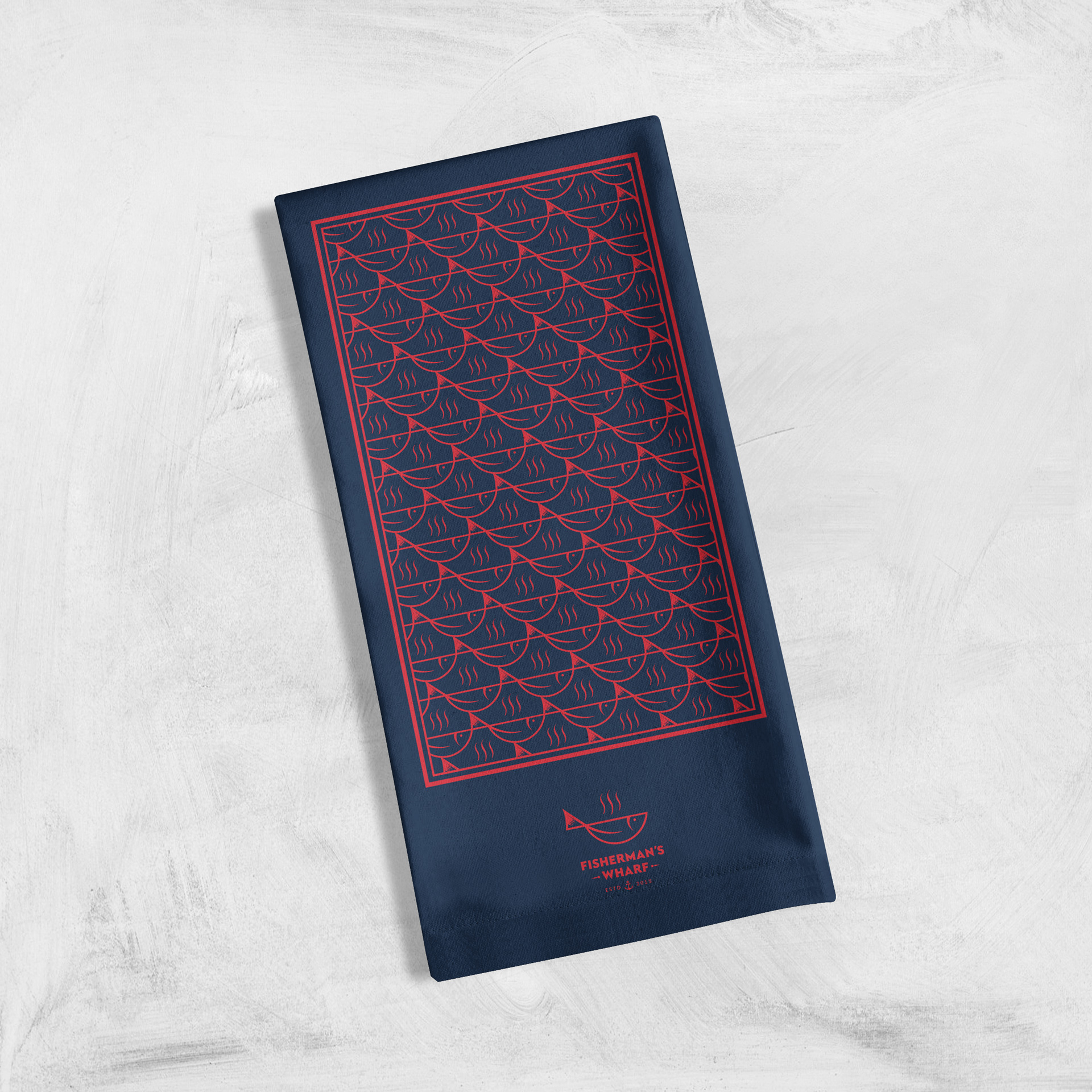
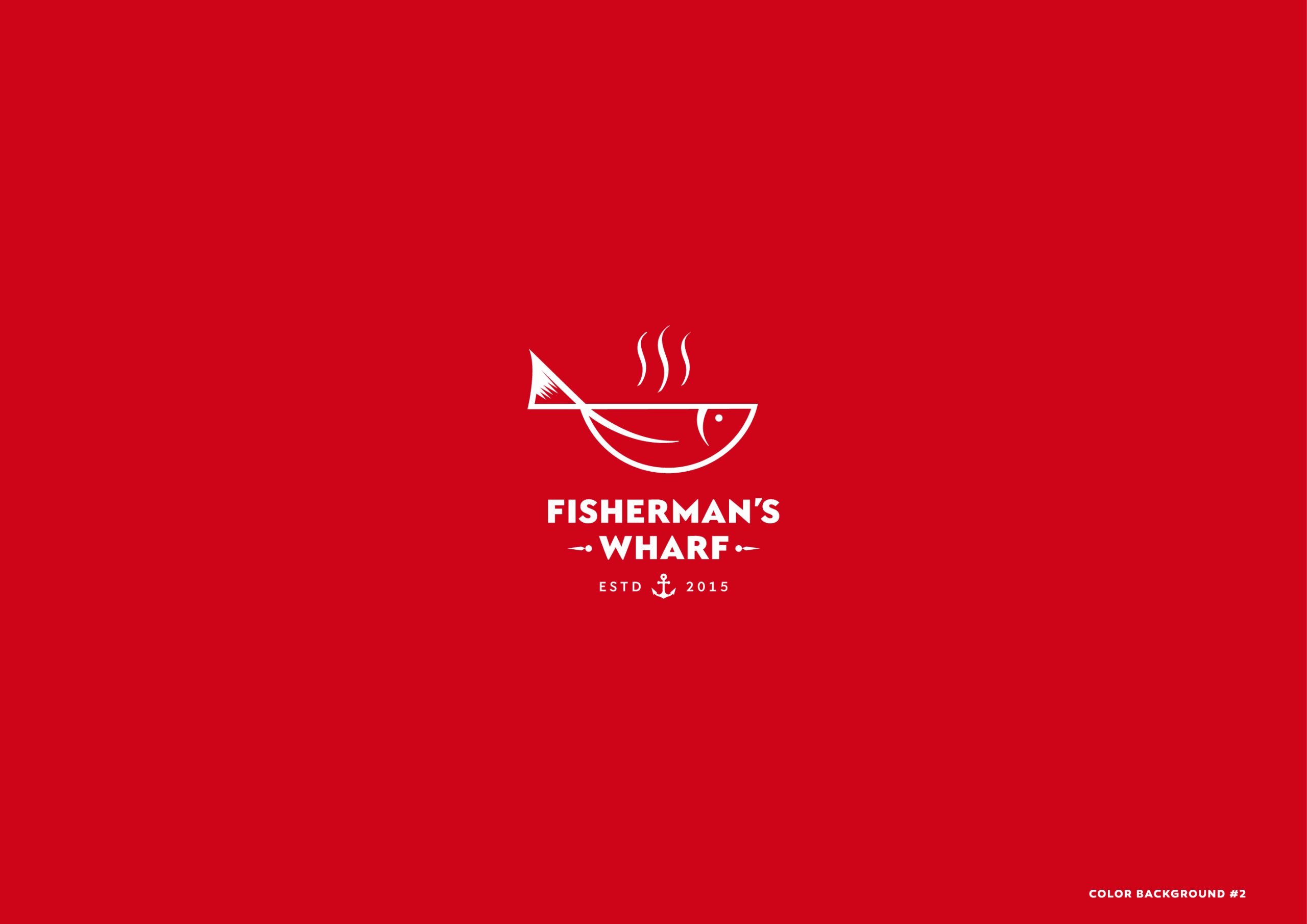
Color Architecture: Navy Blue & Red
Navy blue: Maritime authority, sophistication, depth, premium credibility
Red: Chinese culinary tradition, vitality, prosperity, appetite stimulation
This pairing grounds the brand in both maritime and Chinese cultural contexts while avoiding casual seafood restaurant cliches (bright blues, nautical stripes, literal anchors).
The Marque
Clean, contemporary mark balancing Chinese design sensibility with modern refinement. Avoided literal fish imagery (too casual) and nautical cliches (theme restaurant territory). Instead, created sophisticated symbol suggesting waves, steam, and fluid movement—abstract enough for premium positioning, evocative enough for category connection.
Typography
Primary: Contemporary serif with subtle Chinese calligraphic influence—refined, authoritative, culturally grounded
Secondary: Clean sans-serif for functional applications—modern, readable, sophisticated
Visual Language
Established design system using:
- Fluid wave patterns (hot pot steam, ocean movement)
- Geometric structure (order, craft, precision)
- Rich textures (premium materials, depth, quality)
- Restrained maritime references (authentic without becoming theme)
Applications
Menu Design: Sophisticated layouts with clear hierarchy, premium paper stock, refined photography focusing on ingredient quality and preparation craft rather than casual abundance.
Environmental Graphics: Subtle maritime elements integrated into refined interiors—wave patterns, deep blues, red accents—creating atmosphere without overwhelming space.
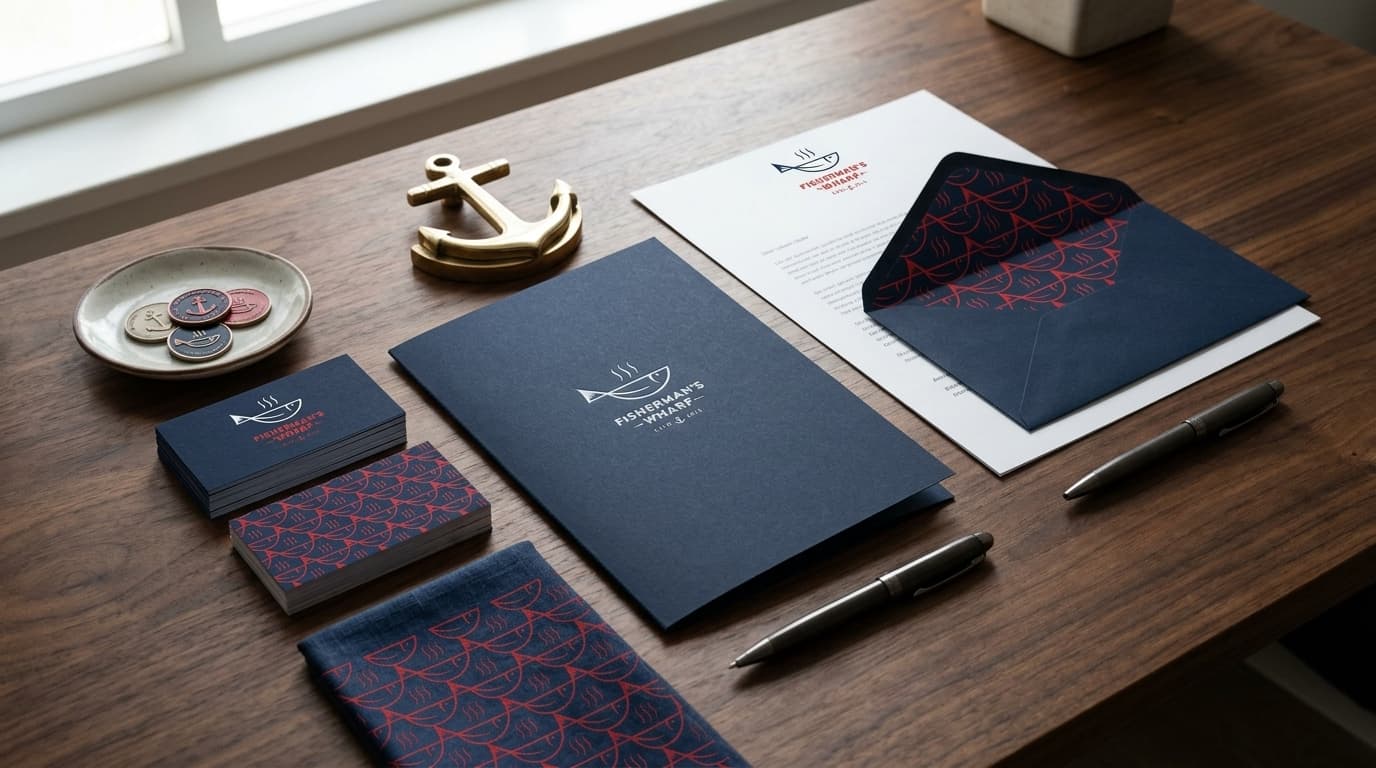
Collateral: Business cards, chopstick sleeves, wet towel packaging, takeaway materials—every touchpoint reinforcing premium positioning.
Signage: Bold exterior presence combining navy and red in confident, contemporary compositions—immediately signaling upscale destination rather than neighborhood joint.
Results & Takeaways
Results
Clear Premium Position: Fisherman’s Wharf now occupies distinct territory as Yangon’s premier Chinese fish hot pot destination. No longer competing with casual hot pot venues—competing with high-end seafood restaurants.
Pricing Credibility: The identity system supports premium pricing by signaling quality, craft, and sophistication at every touchpoint. Customers accept higher prices because brand communicates value.
Category Elevation: Successfully reframed fish hot pot from casual comfort food to refined culinary experience, opening premium market segment.
Brand Recognition: Distinctive navy and red palette creates immediate recognition in crowded Yangon dining market.
Takeaways
Color Does Strategic Work: Navy and red simultaneously communicate maritime authenticity, Chinese heritage, and premium positioning—strategic color architecture delivers multiple positioning objectives.
Abstraction Enables Premium: Literal seafood imagery (fish, nets, anchors) signals casual dining. Abstract maritime references enable premium positioning while maintaining category credibility.
Category Reframing Requires Confidence: Elevating hot pot required bold positioning and consistent premium signals across all touchpoints. Half measures create confusion—full commitment creates new category perception.
Cultural Authenticity + Contemporary Refinement: The brand succeeds by honoring Chinese culinary tradition while expressing it through contemporary design language—respecting heritage without becoming nostalgic or dated.
The Bottom Line
Fisherman’s Wharf transformed from undefined seafood restaurant to Yangon’s premium Chinese fish hot pot authority through strategic positioning and sophisticated visual identity that elevates category perception while maintaining cultural authenticity.
The result: A brand that justifies premium pricing, attracts upscale clientele, and redefines what fish hot pot can be in Myanmar’s dining market.