From Generic Bistro to Memorable Brand
The Situation
The Beestro had strong culinary fundamentals—gourmet food, quality ingredients, skilled execution. But in Bangkok’s saturated F&B market where dozens of new cafes and bistros open monthly, culinary competence is the baseline, not the differentiator.
The real problem: The Beestro was launching without strategic positioning or brand identity. They had a food concept but no brand concept. A menu but no story. Operational capability but no emotional connection point.
In competitive hospitality markets, customers don’t choose restaurants for food quality alone—they choose for identity alignment, atmosphere, and the story they can tell about where they ate. The Beestro needed complete brand infrastructure: strategic positioning, naming, visual identity, and tone of voice that would transform a gourmet bistro into a memorable brand customers feel connected to.
Client
Project Type: Brand Strategy, Naming, Positioning & Visual Identity
Client: The Beestro, Bangkok
Industry: Food & Beverage (Gourmet Café & Bistro)
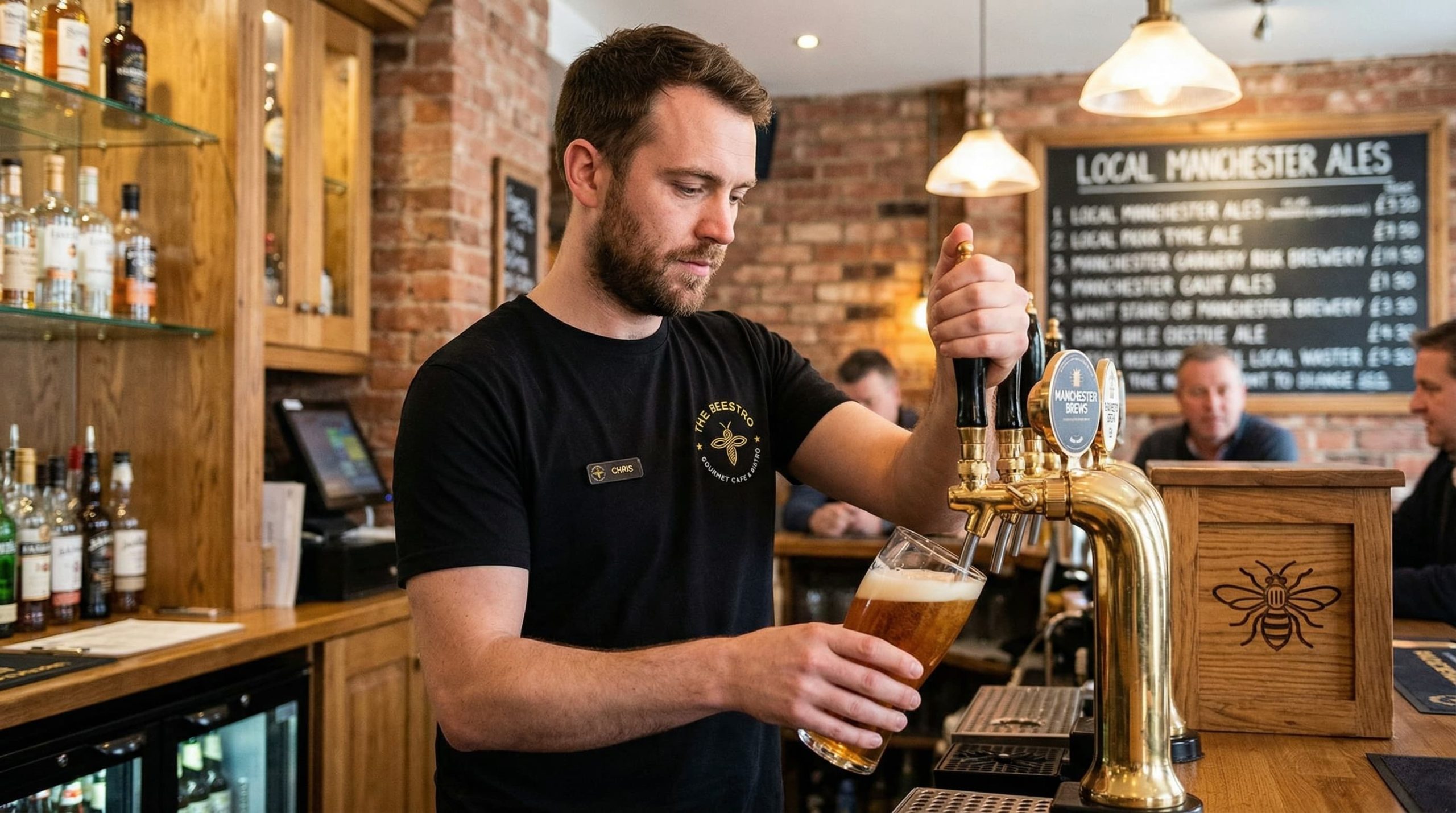
Strategic Gaps
No Brand Position or Story
The Beestro existed as a collection of menu items and operational decisions without coherent strategic foundation. Beyond “serve gourmet food in a bistro format,” there was no articulated brand purpose, no perspective on what a modern bistro should be, no reason for existence beyond commercial transaction.
The question they couldn’t answer: What makes this bistro different from the 47 other bistros within 3km? Why should customers choose us, remember us, return to us?
No Naming Strategy
The venue needed a name that worked across cultures (Thai and expat audiences), conveyed personality without pretension, and remained memorable in a market where most F&B concepts use generic descriptors (“The Kitchen,” “Urban Cafe,” “Modern Bistro”).
Zero Visual Identity
Starting from blank canvas—no logo, no color palette, no typography system, no visual language. The identity needed to express refinement and approachability simultaneously, work across all touchpoints (menus, packaging, signage, merchandise), and remain timeless rather than trendy.
Unclear Target Position
Bangkok’s F&B market operates across distinct tiers: street food, casual dining, mid-market comfort, upscale casual, fine dining. The Beestro’s food quality and pricing positioned them as upscale casual, but without brand infrastructure to match, they risked being perceived as generic mid-market.
The Competitive Context
Bangkok F&B positioning typically falls into predictable patterns:
Trendy/Instagram-First: Prioritize visual impact over substance, chase trends, high turnover
Traditional/Heritage: Lean on cultural authenticity, conventional presentation, established formulas
Western/Imported: Replicate overseas concepts, premium pricing, limited local resonance
Generic/Functional: Competent food, forgettable experience, compete on convenience
The Beestro needed to escape these tired categories and occupy distinct positioning: modern bistro with nostalgic soul—refined but unpretentious, contemporary but warm, design-conscious but accessible.
The objective: Build complete brand infrastructure (strategy, naming, identity, voice) that positions The Beestro as Bangkok’s modern eatery with personality and staying power.
The Strategic Foundation
Core Insight: Sophistication Without Pretension
Through analysis of Bangkok’s upscale casual dining landscape and target customer behavior, we identified the central tension:
Customers want sophistication but reject pretension.
Bangkok’s upscale casual diners—expats, affluent locals, design-conscious professionals—want refined food and atmosphere but despise exclusivity, stuffiness, and attitude. They’re seeking the sweet spot: gourmet quality with neighborhood warmth, design excellence without intimidation.
This insight became our strategic anchor: The Beestro exists at the intersection of refinement and approachability—a place where culinary craftsmanship meets laid-back confidence.
Strategic Positioning
Category: Modern Gourmet Bistro (upscale casual)
Core Purpose: Deliver gourmet experiences without the gourmet attitude
Target Audience:
Design-conscious professionals (28-45), expat community seeking quality without pretension, affluent locals who value craftsmanship over status signaling, food enthusiasts who appreciate nuance
Positioning Statement:
The Beestro is where Bangkok’s discerning diners find gourmet food and refined atmosphere without the exclusivity or attitude. We’re the neighborhood bistro for people who know good food doesn’t require pretense.
Differentiation:
- Versus trendy cafes: Substance over Instagram-bait, lasting over fleeting
- Versus fine dining: Approachable not intimidating, warm not formal
- Versus casual comfort: Refined not basic, crafted not convenient
- Ownable territory: Modern sophistication with nostalgic soul—the bistro for people who appreciate quality but reject snobbery
The Naming Strategy
The name needed to accomplish multiple objectives:
- Memorable and distinctive (avoid generic descriptors)
- Work across Thai and English speakers
- Signal personality and approachability
- Suggest bistro format without stating it literally
- Function as a conversation starter
Solution: “The Beestro”
The name blends “bee” with “bistro”—quirky, memorable, and immediately communicative. It’s playful without being childish, distinctive without being difficult, and creates natural curiosity (“Why bee? What’s the story?”).
The bee association carries positive connotations: community, industriousness, craft, sweetness, warmth—all aligned with brand values. The name also enabled visual opportunities (patterns, icons, textures) inspired by natural bee aesthetics: hexagonal structures, warm tones, organic geometry.

The Identity System
Visual Strategy
The identity needed to deliver three critical outcomes:
- Communicate refinement (signal upscale casual positioning)
- Express approachability (avoid pretentious fine-dining aesthetics)
- Create timelessness (resist trend-chasing that dates quickly)
Core Elements
The Marque
Elegant serif typography combined with subtle bee iconography—sophisticated without being stuffy. The mark balances classical refinement (serif letterforms) with modern simplicity (clean geometry), avoiding both dated traditionalism and cold minimalism.
The bee icon integrates subtly into the mark’s architecture rather than sitting as obvious decoration. This restraint signals sophistication—the brand doesn’t need to shout its concept.
Typography System
Primary: Refined serif with humanist warmth—communicates craft and permanence
Secondary: Contemporary sans-serif for functional text—readable, approachable, modern
The typographic pairing establishes hierarchy and versatility: serif for brand expression, sans-serif for information architecture.
Color Architecture
Earth tones, warm neutrals, accent honey:
- Deep charcoal and rich brown (sophistication, grounding)
- Warm cream and soft beige (approachability, comfort)
- Accent amber and honey tones (warmth, craft, bee connection)
The palette deliberately avoids bright primaries (too casual) and stark monochromes (too cold). Instead, it creates warmth and depth—colors that feel substantial, natural, crafted.
Textures & Patterns
Custom textures inspired by natural materials: wood grain, paper stock, organic geometry. Hexagonal pattern system derived from honeycomb structure—used sparingly for accent and depth, never overpowering primary brand elements.
These tactile qualities make the brand feel handcrafted and considered rather than digitally produced.
Applications
Menu Design
The menu system balances form and function: elegant presentation that guides rather than overwhelms. Clear hierarchy draws attention to signature items and specials, encouraging upsell while maintaining sophistication.
Multiple menu formats: main dining, drinks, desserts, seasonal specials—each maintaining visual consistency while serving distinct functional needs.
Packaging System
Takeaway boxes, bags, and retail items extend brand presence beyond the physical space. Every package designed with same attention to detail as dine-in experience—customers receive the same level of craft whether eating in or taking away.
Environmental Identity
Signage, wayfinding, and interior brand elements integrate into spatial design. The identity enhances the space without competing with it—supporting architecture rather than overwhelming it.
Collateral & Merchandise
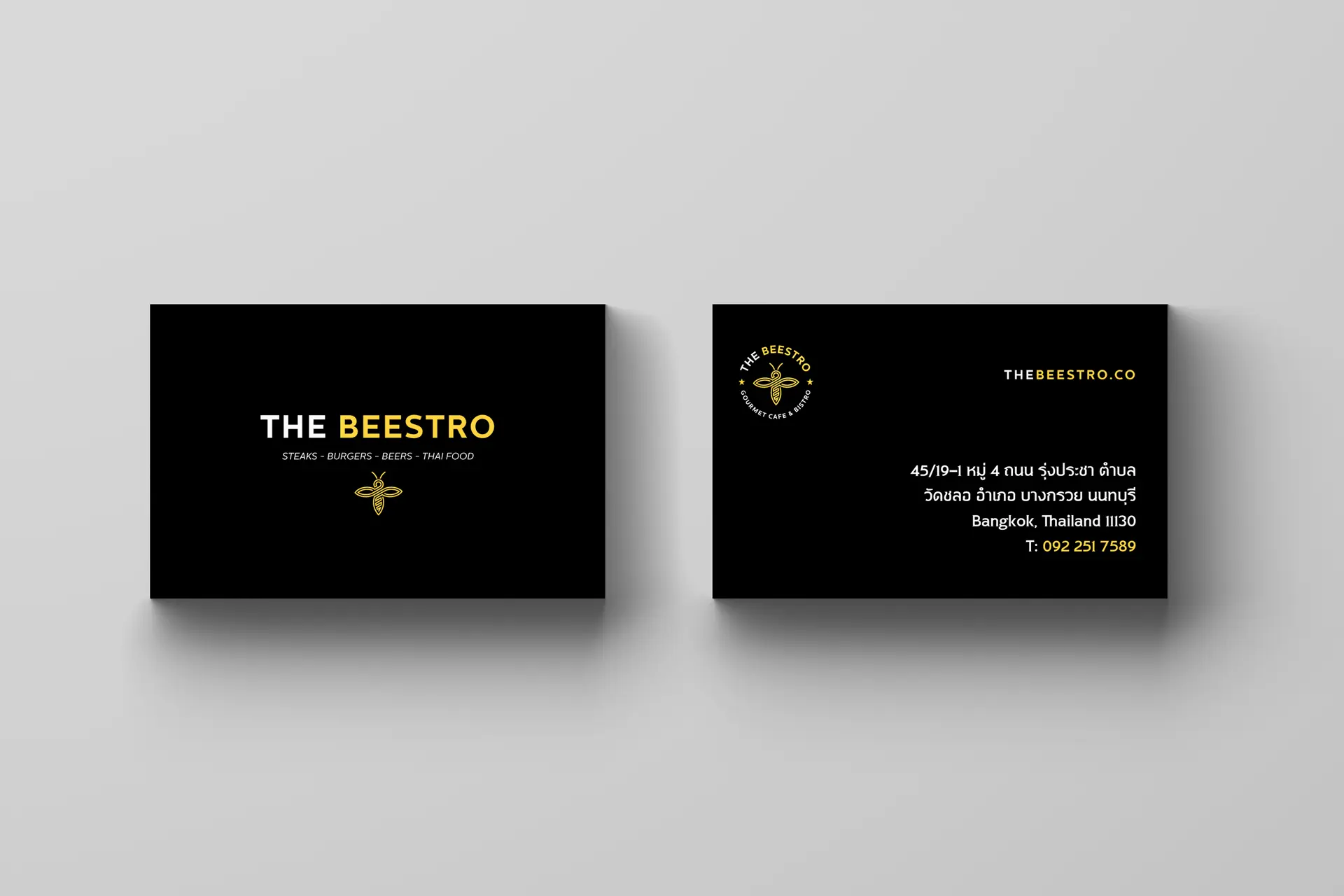
Business cards, coasters, aprons, staff uniforms, branded merchandise—every touchpoint reinforces brand story. Items customers interact with (coasters, menus, packaging) receive particular attention as brand ambassadors.
Tone of Voice
Crafted communication style: confident without arrogance, knowledgeable without condescension, warm without excessive casualness. The voice reflects someone who knows good food and design but doesn’t need to prove it—quiet confidence rather than loud claims.
The Results
Strategic Impact
Clear Market Position
The Beestro now occupies distinct psychological territory in Bangkok’s F&B landscape: the upscale casual bistro for people who want refinement without pretension. They’re no longer competing on generic “good food” claims—they compete on brand meaning and emotional resonance.
Brand Recognition & Recall
The distinctive name and cohesive visual identity create immediate recognition. Customers remember The Beestro where they’d forget generic competitors. The brand has conversation value—people talk about the name, the design, the experience.
Premium Positioning Credibility
The identity system supports premium pricing by signaling quality, craft, and consideration at every touchpoint. Customers accept higher prices because the brand communicates value beyond commodity food service.
Expansion Foundation
The complete brand system enables consistent deployment across future locations. The identity is distinctive enough to maintain recognition while flexible enough to adapt to different spaces and formats.
Cultural Resonance
The Beestro became recognized within Bangkok’s F&B community for brand execution that matches food quality—a complete experience rather than just good food in generic packaging.
The brand delivers on its promise: customers get gourmet quality without pretentious attitude, modern sophistication with neighborhood warmth.
The Takeaways
1. Strategy Precedes Design
A beautiful logo without strategic foundation is cosmetic. The Beestro’s identity works because it’s built on clear positioning: modern sophistication with approachable soul. Every design decision reinforces this strategy.
2. Naming Creates Differentiation
In crowded markets, distinctive naming delivers immediate competitive advantage. “The Beestro” is more memorable than “Modern Bistro” or “Urban Kitchen”—the name itself creates brand equity.
3. Timelessness Requires Restraint
Trend-resistant branding comes from classical design principles applied with modern sensibility. The Beestro avoids trendy aesthetics (which date quickly) in favor of refined fundamentals (which endure).
4. Consistency Compounds Value
Every touchpoint reinforcing the same brand story creates cumulative impact. The Beestro’s identity works because coasters, menus, packaging, signage, and tone of voice all tell the same story.
5. Sophistication Doesn’t Require Coldness
Refined branding can be warm. The Beestro proves upscale positioning doesn’t demand austere minimalism or pretentious distance—sophistication and approachability can coexist.
The Bottom Line
The Beestro moved from undefined concept to recognized brand by building strategic infrastructure first, then expressing that strategy through cohesive, timeless visual identity and voice.
The result: A brand that communicates quality, personality, and staying power—a bistro customers remember, return to, and recommend.