The Circle Café had a fundamental positioning problem common to lifestyle-driven cafes: they were operationally excellent but strategically invisible. The brand existed as a series of tactical choices—a logo, some Instagram posts, decent coffee—without a coherent strategic foundation answering the critical questions: Why does this cafe exist? What does it stand for beyond caffeine? Why should anyone care?
In Thailand’s saturated Bangkok cafe market, functional parity is the baseline. Every cafe has good coffee, attractive interiors, and Instagram-worthy presentation. The Circle Café needed to move beyond functional “we serve coffee” positioning into ideological territory—a brand customers feel emotionally connected to, proud to belong to, and compelled to advocate for.
The challenge: Build a brand strategy and identity system that transforms a transactional coffee shop into a cultural destination for Thailand’s design-conscious, socially connected youth audience.
Project Capabilities
Deliverables: Brand strategy, positioning, visual identity system, Strategy framework, positioning architecture, visual identity, packaging design, environmental graphics, digital applications
Agency: Highly Persuasive
Agency: Highly Persuasive
Client
The Circle Cafe – Bangkok, Thailand
Strategic Gaps
No Differentiated Position
Competing on the same functional attributes as every competitor: coffee quality, aesthetic interiors, convenient location. In a market where everyone claims “premium coffee” and “great atmosphere,” these deliver zero distinction.
Unclear Brand Purpose
Beyond “serve good coffee,” The Circle Café couldn’t answer: Why do we exist? If we disappeared, what would customers lose? What cultural void would remain?
Generic Visual Identity
The existing identity was aesthetically competent but strategically inert. It looked like a cafe but didn’t communicate what kind of cafe or why anyone should care.
Zero Social Currency
The brand provided nothing customers wanted to share, wear, or associate with publicly. No badge value. No identity signal. No cultural credibility.
The Competitive Context
Bangkok’s cafe market operates on two tiers:
Tier 1: Chain Functional (Starbucks, chains)
Convenient, reliable, transactional. No cultural meaning. Compete on accessibility.
Tier 2: Independent Aspirational (specialty, third-wave)
Design-driven, culture-connected, ideological. High social currency. Compete on cultural resonance and belonging.
The Circle Café was stuck between tiers—aspiring to be Tier 2 but executing like Tier 1. They had the operational capability for aspirational positioning but none of the strategic infrastructure.
The objective: Build complete strategic and visual identity infrastructure to position The Circle Café as a cultural destination customers don’t just visit—they belong to.
The Strategic Foundation
Cafes aren’t chosen for coffee—they’re chosen for conversation.
The actual job customers hire a cafe to perform: facilitate social connection, creative collaboration, meaningful exchange. Coffee is the entry fee. Atmosphere is the container. Conversation is the value.
This became the strategic anchor: The Circle Café exists to enable conversation—between friends, collaborators, strangers, ideas. The brand stands for dialogue, connection, and the creative collisions that happen when people gather intentionally.
Strategic Positioning
Category: Cultural Gathering Space (not “coffee shop”)
Core Purpose: Create spaces where conversation, creativity, and cafe culture intersect
Target Audience:
Design-conscious youth (18-35), creative professionals, social connectors who curate experiences, status-conscious consumers seeking identity-aligned spaces
The Strategic Idea: The Circle
The name itself became the organizing principle. A circle represents inclusion, conversation, continuity, community. This conceptual foundation informed every decision: visual identity, spatial design, service philosophy, communications.
The Identity System
Visual Strategy
The identity needed to deliver three outcomes:
- Instant recognition in crowded social feeds
- Social currency customers want to share
- Cultural credibility signaling design sophistication
Core Elements
The Marque
Perfect circle enclosing contemporary typography—geometric precision with organic warmth. The circle functions as both container and invitation: a space where people gather. Simple enough for versatility, distinctive enough for instant recognition, bold enough to function as a social badge.
Typography System
Primary: Contemporary geometric sans-serif—clean, confident, accessible. Signals design awareness without pretension.
Secondary: Humanist sans-serif for longer-form—approachable, conversational, warm.
Color Architecture
Deep charcoal (sophistication), warm cream (approachability), accent terracotta (energy, connection). Deliberately avoids coffee-brown cliches, instead borrowing from design and architectural spaces—materials that signal cultural awareness rather than commodity category.
Brand Patterns
Geometric system derived from the circle mark—creates visual rhythm and consistency across packaging, environmental graphics, digital touchpoints while remaining flexible.
Applications
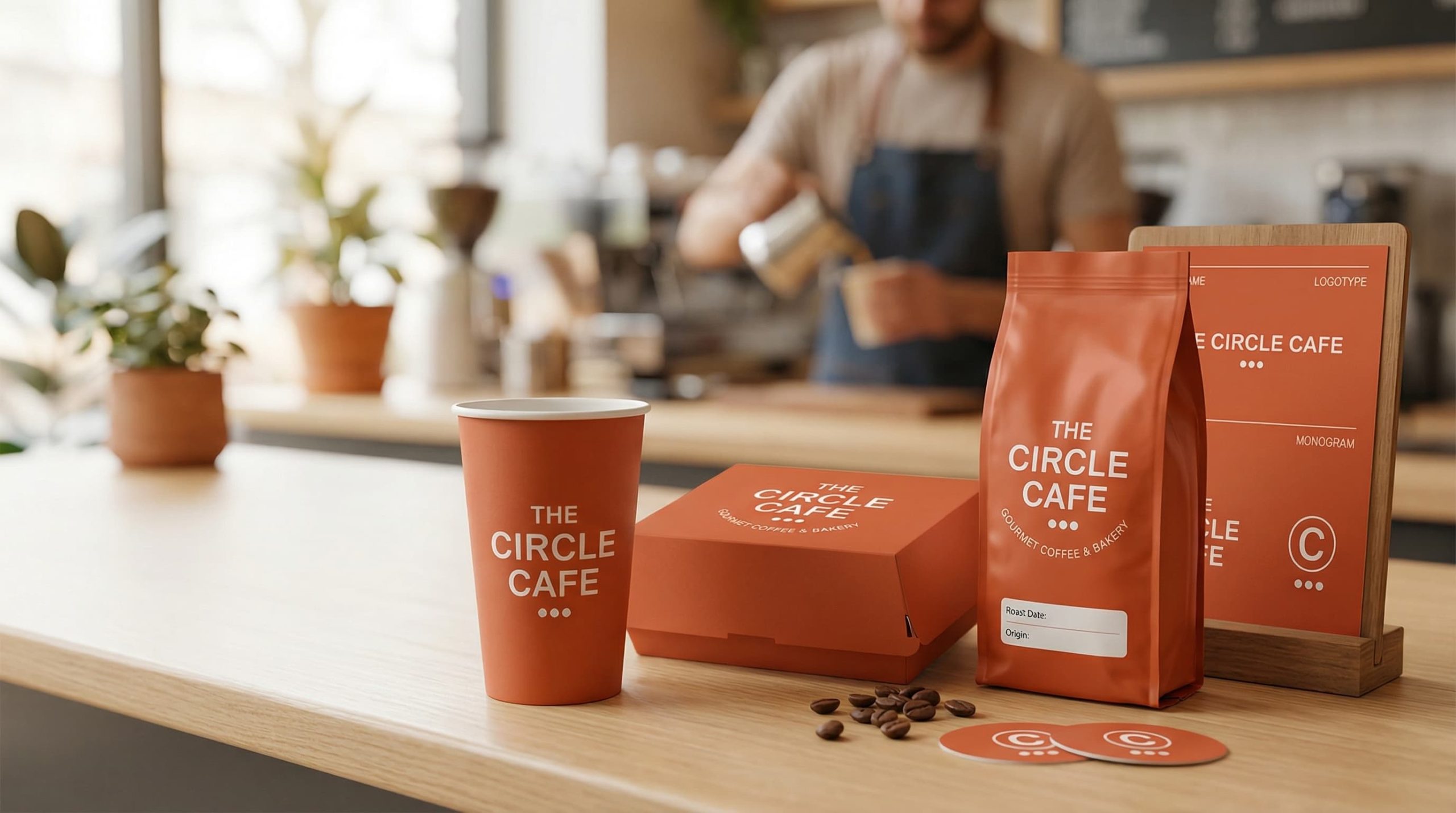
Packaging System
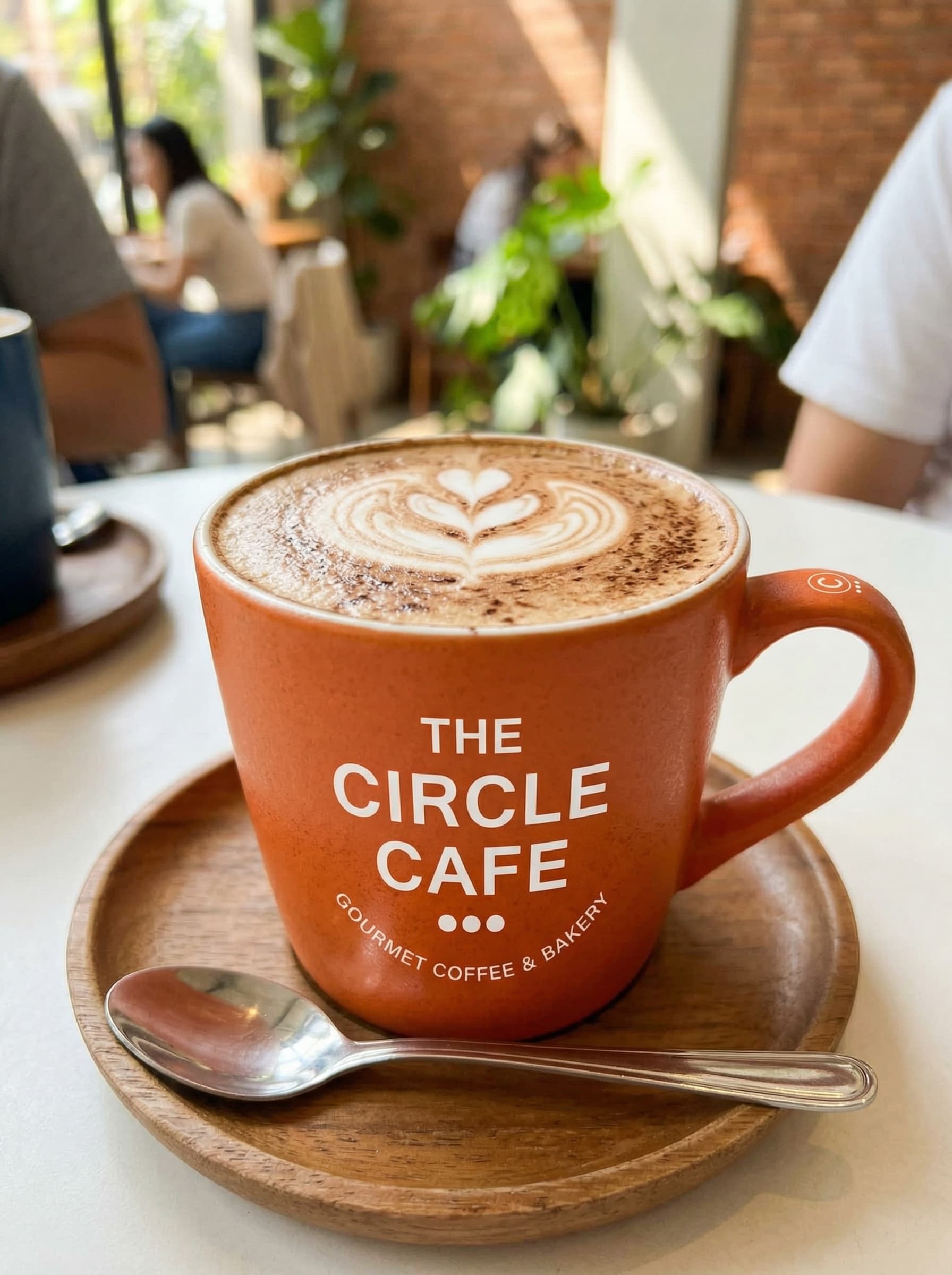
Coffee cups, bags, and retail packaging function as mobile brand ambassadors. Every package designed for social sharing—customers want to be photographed with these items because they deliver social currency.
Environmental Identity
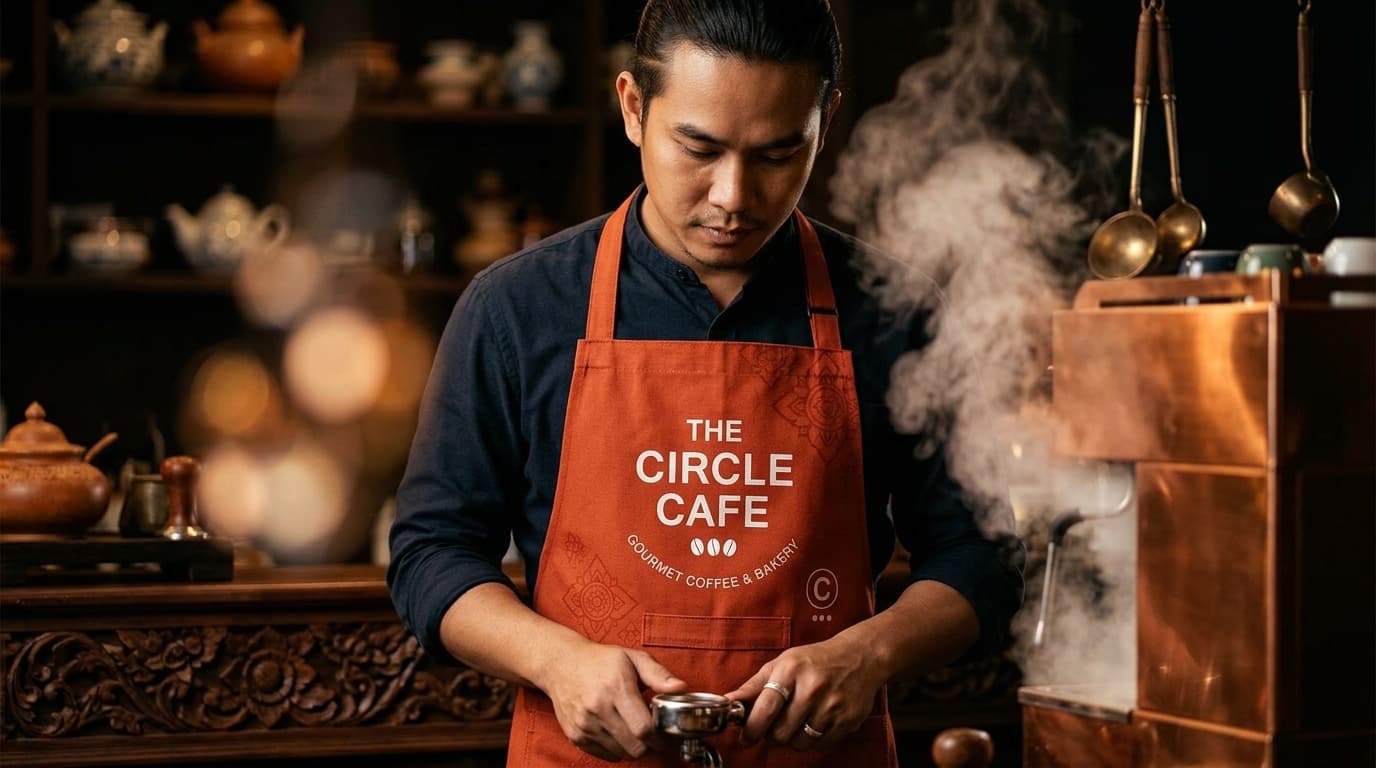
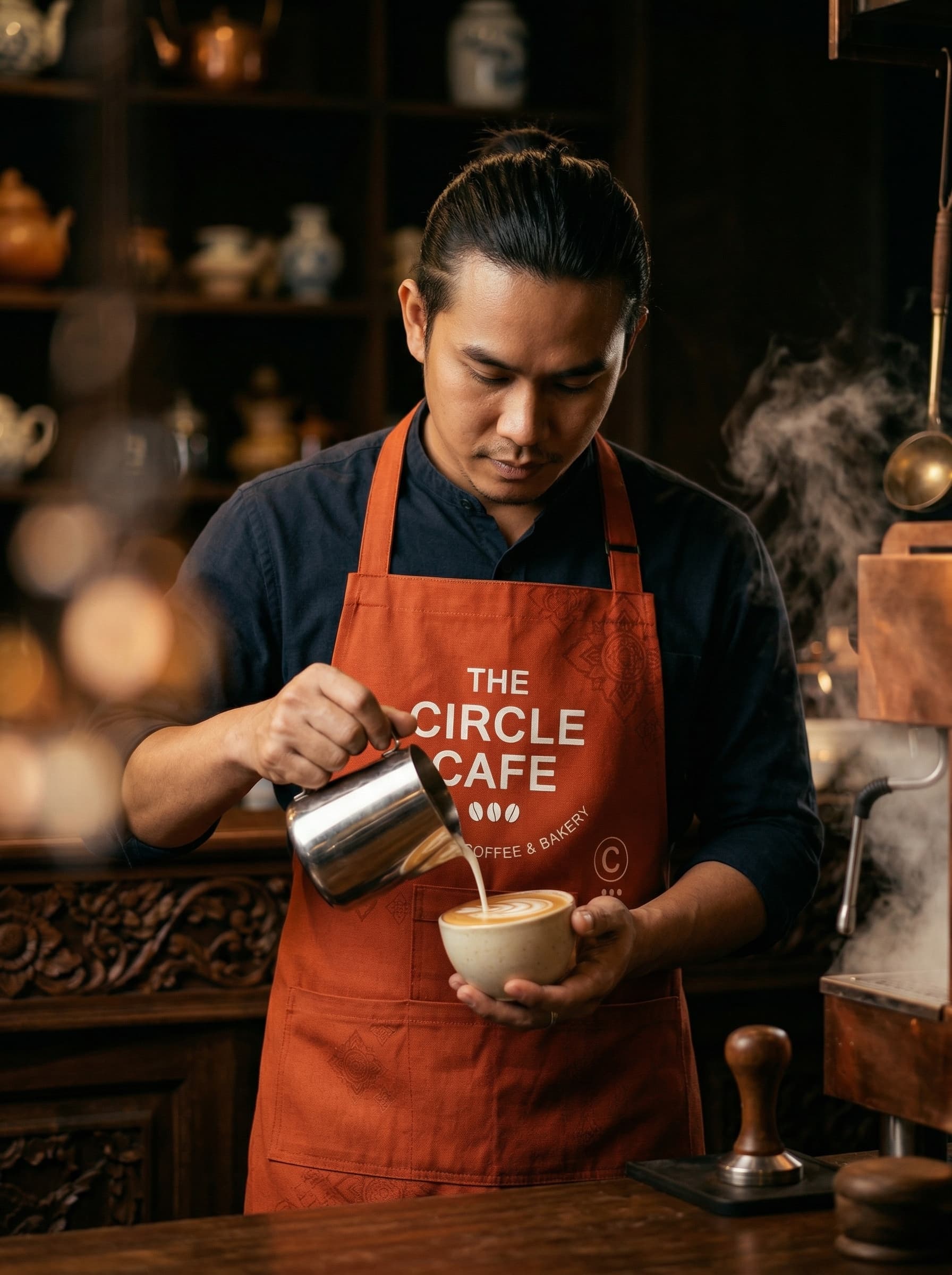
The identity doesn’t sit on top of the space—it’s embedded into architecture. Primary signage (bold, unmissable), interior wayfinding (subtle, integrated), menus, staff uniforms (casual, cohesive).
Digital Presence
Social templates, digital menus, web applications maintain visual consistency while allowing content flexibility. Structure without constraint.
The Results
Strategic Impact
Differentiated Market Position
The Circle Café now occupies distinct psychological territory: the cultural gathering space where design meets accessibility. No longer competing on functional coffee attributes—competing on cultural meaning and social belonging.
Social Currency Generation
Customers actively share branded content, wear branded merchandise, and use The Circle Café as an identity signal. The brand became a badge customers want to associate with.
Premium Pricing Power
With strategic positioning and identity credibility established, The Circle Café maintains premium pricing without resistance. Customers aren’t paying for coffee—they’re paying for membership in a culturally relevant community.
Expansion Foundation
The strategic and visual system is built for scale. Every new location deploys complete brand infrastructure without starting from scratch. Distinctive yet flexible enough to work across locations and formats.
Cultural Resonance
The Circle Café became a recognized cultural touchpoint within Bangkok’s youth and creative communities—featured in lifestyle media, used as a meeting point, referenced as a design benchmark.
The brand delivers on its promise: customers don’t just get coffee—they get a space where conversation, creativity, and connection happen.
The Takeaways
1. Positioning Beats Aesthetics
A beautiful logo without strategic foundation is decoration. The Circle Café’s identity works because it’s built on clear positioning: cultural gathering space for conversation-driven youth.
2. Social Currency Is Strategy
In lifestyle markets, brands that deliver social currency win. The identity isn’t just visually distinctive—it’s socially valuable. Customers gain status by associating with the brand.
3. Simplicity Scales
Geometric simplicity enables infinite applications without dilution. Complex identities break at scale. Simple, strategically grounded identities compound value across touchpoints.
4. Cultural Awareness Beats Category Convention
The Circle Café succeeds by rejecting coffee-shop cliches (brown, beans, steam) and instead borrowing from design and architectural spaces. The identity signals cultural sophistication, not commodity membership.
5. Purpose Precedes Presence
The brand works because it knows why it exists: to create spaces where conversation and creativity happen. This purpose informs everything—visual identity, service design, spatial strategy, communications.
The Bottom Line
The Circle Café moved from functional coffee shop to cultural destination by building strategic infrastructure first, then expressing that strategy through distinctive, socially valuable visual identity.
The result: A brand customers feel proud to belong to, compelled to share, and emotionally connected to.