The decision to walk in, sit down, and order happens before the menu is opened. It happens on the street, on the phone screen, and in the moment someone scans your window and makes a judgment about whether the experience inside will be worth the price on the menu. That judgment is a brand decision. The quality of the food is what keeps people coming back. The brand is what makes them walk in the first time — and what gives them the story they tell when they recommend you.
Engagements across fast casual, fine dining, concepts, franchises and food trucks — in Thailand, Singapore, Australia, the UK, Europe, and North America.
As Seen In:








BRAND CREDIBILITY GAP DIAGNOSTIC™
If you want to quantify the commercial cost before any conversation, the Brand Credibility Gap Cost Diagnostic™ maps the gap between your brand’s current signal and the revenue it should be generating — in under 5 minutes.
WHAT STRONG BRAND GRAVITY™ PRODUCES
F&B Brand Strategy, Positioning & Identity Design Services
Every deliverable serves a single objective: a brand that earns the guest’s preference before the experience justifies it.

F&B Brand Strategy & Positioning
The strategic foundation that every other element of the brand builds on. This covers positioning — what specific territory the concept occupies and why that territory is commercially valuable — alongside the audience definition, the competitive landscape, and the commercial argument the brand needs to make at every price point. This is the work that determines whether execution that follows addresses the right problem or a well-made version of the wrong one.

Website & Digital Brand Presence
The digital extension of the physical brand — built to the same standard as the in-venue experience, not as a separate project with separate visual logic. The website for a hospitality concept has specific commercial functions: it sets expectations before the visit, it drives direct bookings and reservations, and it provides the context that justifies the price point before the guest has tasted anything. Each of those functions requires a different kind of copy, design, and conversion architecture.

Brand Identity & Visual System
The complete visual architecture of the concept: mark, typography, color system, graphic language, and the application rules that keep the brand consistent across every surface it occupies. Built for the full range of contexts a hospitality brand inhabits — menus, signage, packaging, uniforms, website, delivery platforms, social media — and designed to remain recognizable and authoritative at every scale and context.

F&B Photography & Visual Content
The visual content library that makes the brand perform across every digital channel. Food photography, environment photography, and team photography built to a consistent visual standard — not decorative content produced in isolation, but a cohesive image system developed from the brand direction and designed to communicate the same commercial argument across the website, social media, delivery platforms, and press.

Menu Design & Engineering
The menu is the single most commercially consequential piece of design in a hospitality operation. The layout, the language, the hierarchy, and the visual treatment of every section are all variables that affect what guests order, how much they spend, and how they evaluate the value of their experience. Menu design at Highly Persuasive is built at the intersection of visual design and behavioral economics — the two disciplines that together determine whether a menu performs its commercial function.

Brand Systems for Multi-Location Growth
For concepts expanding beyond a single location, the brand system that keeps the identity consistent, the experience legible, and the commercial positioning coherent across every venue. This is where underinvestment in brand architecture most frequently costs operators — the second location dilutes the equity built in the first, and the third dilutes further. A properly designed brand system scales without losing the specificity that made the original concept worth replicating.

Signage, Packaging & Environmental Design
The physical layer of the brand — the elements that communicate quality, category, and confidence in the moment a guest encounters the concept for the first time. Signage, packaging, takeaway materials, and the environmental details that signal what kind of experience is inside. These are often the first and last brand impressions a guest receives and the most consistently underinvested components of the hospitality brand system.

Brand Refresh & Repositioning
For existing concepts where the brand has drifted from the positioning it needs to hold, or where the market has moved and the concept needs to reframe its commercial argument without losing the equity it has built. A brand refresh is not a rebrand. The distinction matters: a refresh sharpens and elevates what is working while addressing what is limiting commercial performance. A rebrand starts from a different strategic premise. The diagnostic determines which the situation requires.
Explore how every part of your business works harder when it’s part of a brand gravity system.
Recent Client Work

Cafe Brand Identity Design – The Hub Samui Case Study
Cafe Brand Identity Design – The Hub Samui Case Study
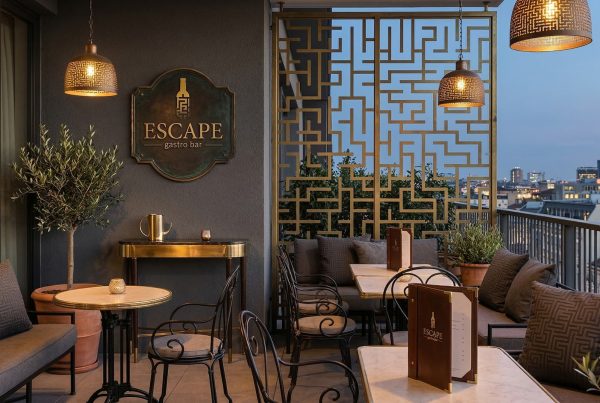
Restaurant Brand Strategy, Identity & Menu Design Case Study – Escape Gastro Pub
Restaurant Brand Strategy, Identity & Menu Design Case Study – Escape Gastro Pub
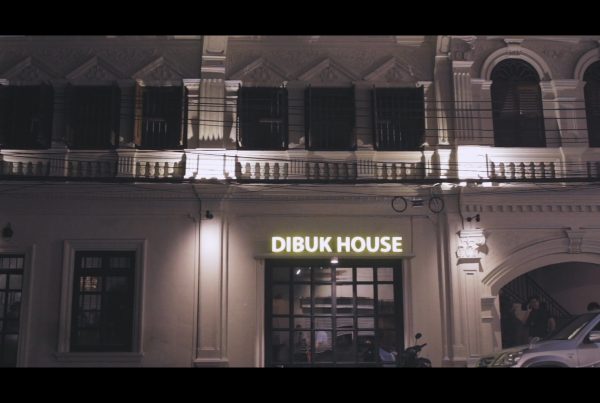
Dibuk House Phuket – Brand Video
Dibuk House Phuket – Brand Video
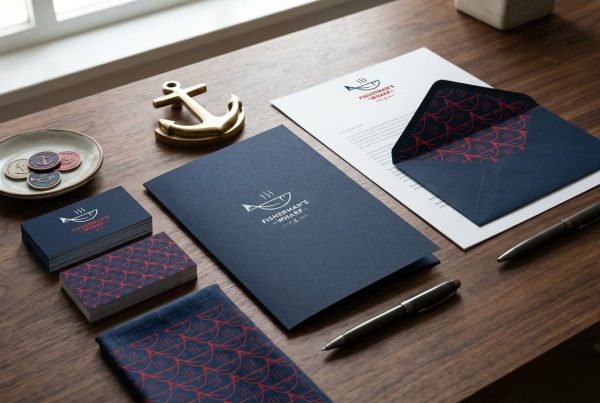
Brand Strategy & Identity Design for Fisherman’s Wharf
Brand Strategy & Identity Design for Fisherman’s Wharf
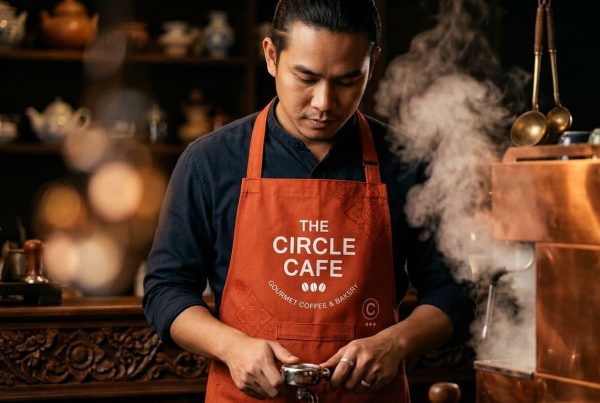
Café Brand Strategy & Identity Design for The Circle Café – Restaurant Branding
Café Brand Strategy & Identity Design for The Circle Café – Restaurant Branding
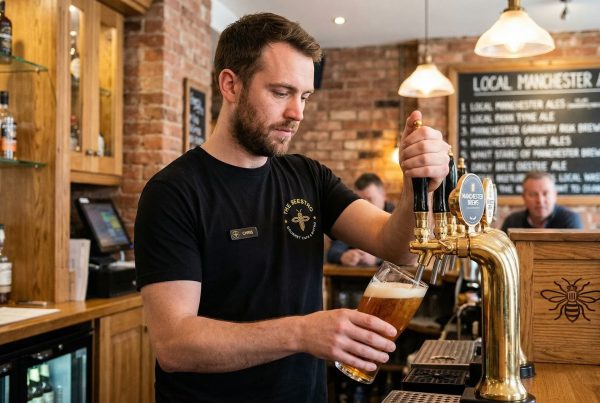
Brand Strategy & Identity Design for The Beestro – Pub Branding in Bangkok
Brand Strategy & Identity Design for The Beestro – Pub Branding in Bangkok
Trusted by F&B & Hospitality Brands Across Thailand, Asean & Globally.

Quality Work
“Our customers are incredibly diverse, from families to healthy-eaters and vegans. We needed a brand that could speak to all of them. Highly Persuasive delivered a fresh, modern identity that perfectly captures our vibe. The new menu is a perfect example—it’s clearer, more appealing, and our average check size has increased by 15% in the 6 months since the rebrand.”
Hassan M, – Owner – The Hub Samui
What Makes Up A Strategic F&B Brand Identity?
Most branding agency firms focus solely on design. Logo, corporate identity, website. But strategic branding take a more informed approach.
Big Picture Brand Thinking in 20 Minutes
A Brand That Closes the Gap Between the Quality of the Concept and the Quality of the Market’s Perception of It.
The Brand Gravity Momentum Session™ is a free, 20-minute diagnostic for restaurant and cafe operators. It identifies where the brand signal is creating the most commercial friction and what the highest-leverage interventions would be for your specific concept, market, and price point.
Frequently Asked Questions — Restaurant & Cafe Branding
1. What does F&B brand strategy actually involve, and how is it different from brand identity design?
Brand strategy is the work that precedes identity design and determines what the identity needs to communicate. It covers positioning — what specific territory the concept occupies in the guest’s mind and why that territory is commercially defensible — alongside the audience definition, the competitive landscape analysis, and the commercial argument the brand needs to make at each price point and context.
Identity design translates that strategy into a visual and verbal system: the mark, the color palette, the typography, the photographic style, and the language conventions that carry the brand’s positioning into every guest touchpoint. Identity design without a strategy brief produces work that looks professional but may not be solving the right commercial problem. Strategy without identity execution produces a document rather than a brand.
In most F&B engagements, the two are sequential: strategy establishes what the brand needs to do commercially, identity design executes on that brief. The quality of the execution is limited by the quality of the brief. That is why the diagnostic phase — the Brand Gravity Momentum Session™ and the brand discovery that follows — precedes any visual work.
2. How does restaurant branding affect pricing power and average spend?
The relationship between brand signal and pricing power in hospitality is consistent and well-documented in behavioral economics. Guests do not evaluate price in isolation — they evaluate it relative to the perception of value that the brand has already established. A concept where every element of the brand signal is consistent with the price point — the visual identity, the menu language, the environment, the digital presence — produces a guest who arrives with expectations aligned to what they are about to spend. That alignment reduces price sensitivity.
The mechanism operates in both directions. A concept with premium food but a brand signal that reads as mid-market will face pricing resistance regardless of the actual quality. A concept with a strong brand signal that clearly communicates its tier will find that guests accept its pricing as a reasonable reflection of what they are receiving — even before the food confirms it.
Menu design is a specific application of this principle. The layout, hierarchy, typography, and language of a menu are all variables that affect what guests order and how they evaluate the fairness of the price. These are not decorative decisions. They are pricing decisions in disguise.
3. Our concept already has a logo and some basic branding. Do we need to start over?
In most cases, no. A brand refresh — sharpening and elevating what is working while addressing what is limiting commercial performance — is a more efficient intervention than a full rebrand in situations where the concept has existing equity and the core positioning is sound. The diagnostic is the starting point: it identifies specifically where the current brand signal is creating friction and what the highest-value interventions are.
A full rebrand is the right answer when the positioning itself has shifted materially — the concept has moved upmarket, entered a new category, or is targeting a meaningfully different audience than the one the original identity was built for. When the brief has changed, the identity needs to change with it. When the brief is sound but the execution is limiting the concept’s commercial performance, a brand refresh is almost always the right answer.
The Brand Gravity Momentum Session™ is specifically designed to establish which situation applies. It produces a specific recommendation on scope before any commitment to execution is made.
4. We operate in Thailand / Southeast Asia. Does HP understand the specific market context?
Highly Persuasive is headquartered in Bangkok and works across the ASEAN market — Thailand, Singapore, Indonesia, Malaysia, Myanmar, and the broader region. The hospitality branding work we produce is calibrated to the specific commercial context that ASEAN F&B operators navigate: markets where international standards of brand quality are increasingly expected by guests, where competition from well-funded regional and global concepts is intensifying, and where the guest’s perception of quality, price, and social acceptability is shaped by a specific set of cultural and market dynamics that a Bangkok-based firm understands from direct experience.
For F&B operators in Thailand specifically, the brand system also needs to function across Thai-language and English-language contexts, across physical and digital channels with different design constraints, and across the specific competitive landscape of Bangkok, Chiang Mai, Phuket, Koh Samui, and other major markets where guest expectations and competitive density vary significantly.
5. How does the engagement process work from first contact to completed brand?
Every engagement begins with the Brand Gravity Momentum Session™ — a free, 20-minute diagnostic session that establishes where the commercial opportunity sits in the brand and what the most appropriate scope would be. From there, engagements follow a consistent sequence: brand discovery, which covers the market context, audience definition, competitive landscape, and positioning strategy; brand strategy development, which produces the strategic brief the identity work is built on; identity design, which translates the strategic brief into the visual and verbal system; and brand rollout, which covers the application of the identity across the specific touchpoints the concept requires.
Timelines vary by scope. A focused identity engagement for a new concept with a clear brief typically runs four to eight weeks. A full brand strategy and identity engagement for a concept with a complex positioning challenge or multi-location requirements typically runs eight to sixteen weeks. The Brand Gravity Momentum Session™ establishes the appropriate scope and timeline before any commitment is required.
Client Reviews & Testimonials
Built for high-trust, conversion-critical industries. Our work has increased revenue for B2B, hotels & resorts, SaaS, and real estate brands globally. Trusted in high-consideration markets where one click is worth > $1 k.
















Request A Free Brand Gravity Momentum Session™
The gap between your current commercial signal and the one that wins the right work at the right price is almost always smaller than it looks from the inside. Two or three specific interventions — identified clearly in a 20-minute session — is usually enough to see it.
The Brand Gravity Momentum Session™ is free, senior-led, and takes 20 minutes. We look at your brand in real time and identify the 3 to 5 areas with the greatest commercial opportunity — where targeted work would have the most impact on pipeline, pricing, or close rate.