

How Brand Perception Determines the Price Your Buyers Will Accept
There’s a conversation that happens in almost every mid-market B2B company, and it usually goes something like this.
The sales director reports that a deal closed at 12% below the quoted price. Leadership asks why. The answer is some version of: “The client pushed hard on price. We had to be competitive. They were comparing us to [cheaper competitor]. We’d rather win at a lower margin than lose entirely.”
On the surface, this sounds like a sales negotiation issue — a matter of training, confidence, or competitive pressure. And sometimes it is.
But when the discounting is systemic — when it happens across multiple salespeople, multiple deals, and multiple quarters — the cause isn’t individual. It’s structural.
Your sales team is discounting because, by the time they enter the negotiation, the brand hasn’t done enough upstream work to justify the price.
The buyer doesn’t see a meaningful difference between you and the alternative. The value hasn’t been framed before the conversation starts. The only remaining variable is cost. And so the negotiation begins — and ends — on price.
This isn’t a sales problem. It’s a perception problem. And the fix isn’t in the negotiation room. It’s in everything that happens before the negotiation room.
Why Capable Salespeople Still Discount
It’s tempting to assume that discounting reflects weak salesmanship. In some cases it does. But in most mid-market B2B companies, the salespeople who discount are often the best people on the team — experienced, client-focused, and commercially aware.
They discount because they’ve read the room correctly.
They can see that the buyer doesn’t fully understand the difference between their company and the three others on the shortlist. They can sense that the proposal is being evaluated primarily on price because nothing else has created a strong enough reason to pay more. They know that if they hold the line on price, they’ll lose a deal they’re otherwise well-positioned to win.
So they do the rational thing: they trade margin for revenue.
The problem isn’t their judgment in the moment. The problem is that the moment was set up to fail.
As we explored in The Clarity Premium, buyers pay more when they understand faster. When the brand has already communicated distinct value — before the salesperson ever picks up the phone — price becomes one factor among many, rather than the only factor that matters.
When the brand hasn’t done that work, the salesperson inherits a conversation that’s already anchored on cost.
Systemic discounting is a symptom of a brand that hasn’t established enough perceived value before the sales conversation begins.
The Brand Gravity Momentum Session™ is designed to identify where that value gap exists — and what to fix so your team can hold price with confidence.
The Upstream Problem: Where Price Perception Actually Forms
Most companies think price perception is formed during the negotiation. It isn’t. It’s formed across a series of touchpoints that happen long before the proposal lands.
Here’s the actual sequence — and where the damage occurs:
Touchpoint 1: The Website (Weeks Before the Call)
Before a prospect ever speaks to your team, they’ve almost certainly visited your website. In many cases, so has someone else on the buying committee — a procurement manager, a technical lead, a finance director doing due diligence.
What they see in those 30-60 seconds establishes a price expectation. A website that looks credible, specific, and authoritative signals that this company charges premium rates — and that those rates are justified. A website that looks generic, dated, or cluttered signals that this is a vendor competing on availability, not a partner commanding value.
Atlas Copco doesn’t win on compressor specs alone. Their digital presence — clean, technically confident, outcome-focused — signals institutional credibility before a single conversation takes place. A mid-market compressor company with comparable products but a weaker digital impression starts every price negotiation from a lower baseline, regardless of what the salesperson says in the room.
Touchpoint 2: The Case Studies (During Evaluation)
When a buyer is building the internal case for choosing you, case studies are the primary evidence they reach for. But the structure of those case studies shapes price perception more than the content.
A case study that says: “We helped a manufacturing client improve their operations” invites the question: “How much should that cost?” The buyer has no anchor.
A case study that says: “Reduced unplanned downtime by 41% for a $85M precision manufacturing firm — estimated annual savings of $1.2M” — that creates a very different price context. The buyer isn’t thinking about your fee; they’re thinking about the $1.2M. Your $80,000 engagement suddenly feels like a 15:1 return.
The absence of quantified proof doesn’t just weaken credibility — it transfers all the price-justification work to your salesperson, live, in a negotiation where the buyer has every incentive to push back.
Touchpoint 3: The Proposal Itself (The Final Impression Before Price)
The pages that come before the pricing page in your proposal are doing more work than most companies realise.
If the first 10 pages of the proposal read like every other proposal the buyer has received — generic methodology, vague scope, capability statements that could belong to any firm — then by the time they reach the price, they have no framework for why this particular number is justified.
The proposal needs to have already done the framing work: named the specific commercial problem, quantified the cost of the status quo, and positioned your approach as the mechanism that closes that gap. When that groundwork is laid, the price feels like an investment. Without it, the price feels like an expense — and expenses get negotiated.
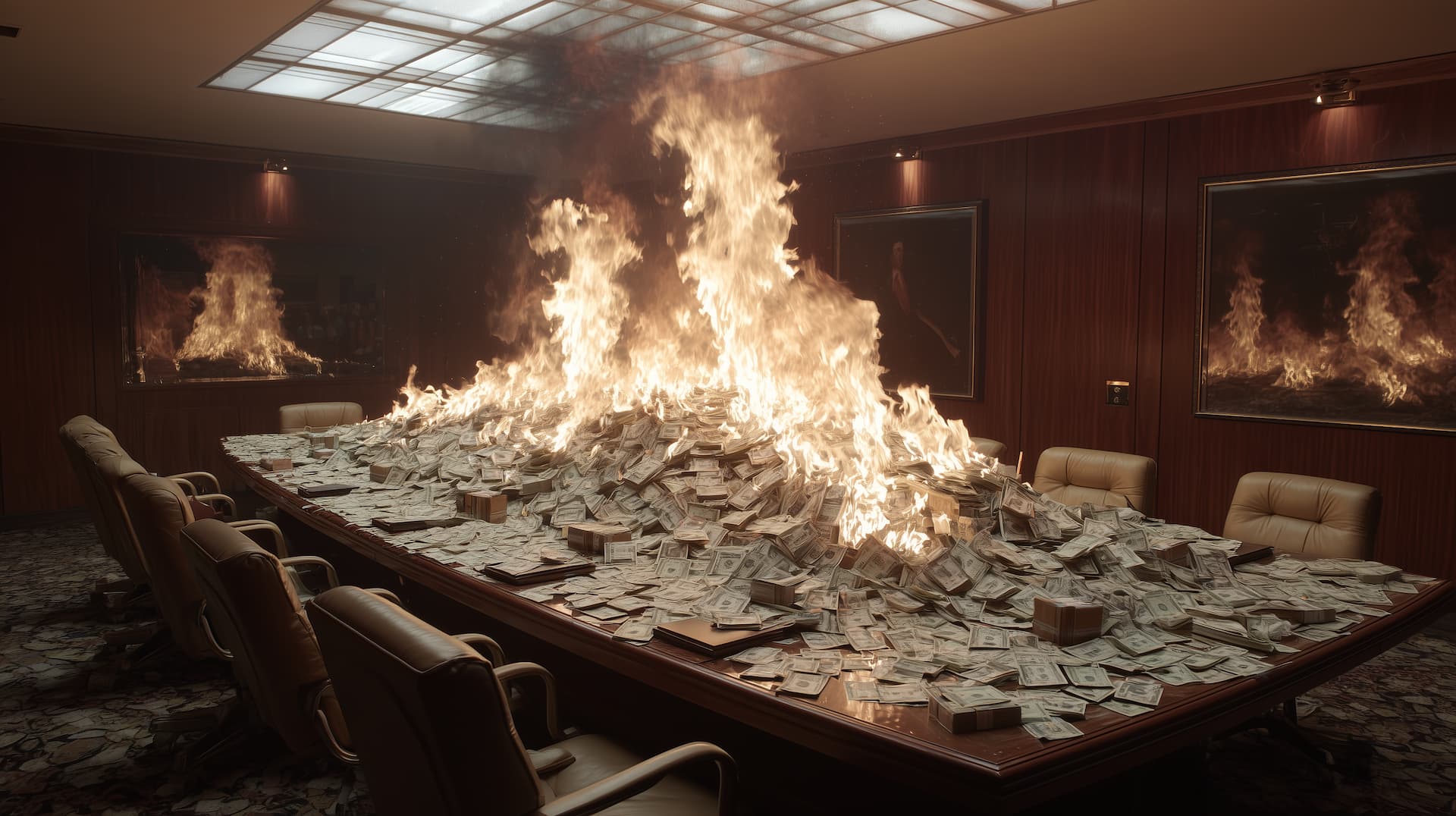
What Systemic Discounting Actually Costs
The surface cost of discounting is obvious: a 10% discount on a $150,000 deal is $15,000 in lost margin. Do that six times a year and the number is $90,000.
But the deeper costs are less visible and more damaging.
Anchor erosion. Every discount resets the buyer’s reference point for what your services cost. As detailed in How Discounts Quietly Erode Your Future Brand Power, the discounted price becomes the new “real” price in the buyer’s mind. Your full rate is now perceived as inflated. Next time, the negotiation starts from the lower number — and the pressure is to go even lower.
Client quality degradation. Price-sensitive buyers are, statistically, the most expensive to serve. They’re more likely to scope-creep, more likely to churn, and less likely to refer. When your brand attracts buyers on price rather than value, you fill your pipeline with clients who consume disproportionate resources and generate disproportionately low lifetime value. As one managing director of a professional services firm told us: “Our worst clients are always the ones who negotiated hardest on price.”
Team morale. Salespeople who are consistently forced to discount learn, over time, that the market doesn’t value the company at the price they’re being asked to sell. This creates a corrosive cycle: the salesperson loses confidence in the price, which makes them quicker to offer concessions, which reinforces the buyer’s expectation that the price is negotiable. The brand bleed becomes a confidence bleed.
Competitive positioning. Every time you discount, you send a signal to the market — and to competitors — about where you sit in the value hierarchy. Companies that hold price consistently signal authority. Companies that discount signal flexibility, which in procurement language means “there’s room to push.”
The Diagnostic: Is Your Discounting Individual or Systemic?
Before you can fix the problem, you need to know which problem you have.
| Signal | Individual Problem | Systemic Problem |
|---|---|---|
| Who discounts? | One or two reps | Most of the team |
| When does it happen? | Late in negotiation | Early — sometimes before proposal |
| What does the buyer say? | “Can you do better on price?” | “We’re comparing on value for money” |
| What’s the competitor dynamic? | Specific competitor undercuts | Multiple competitors seem “equivalent” |
| Does it improve with coaching? | Yes — better reps hold price | No — even your best reps discount |
If the pattern is individual, the fix is sales coaching and better negotiation frameworks.
If the pattern is systemic, the fix is upstream. The brand, the messaging, the proof architecture, and the proposal structure need to do more value-framing work before the price conversation begins. No amount of negotiation training will overcome a brand that hasn’t earned the right to charge what it charges.
What Brands That Hold Price Actually Do Differently
Companies that rarely discount share a set of characteristics that have nothing to do with sales tactics and everything to do with how their brand operates upstream.
They name the cost of the problem, not the cost of the solution. Lincoln Electric doesn’t sell welding systems. They sell reduced fabrication time, fewer rework cycles, and lower total cost of ownership. By the time the buyer sees the price, it’s measured against what the problem costs — not what the product costs. That reframe makes the price feel small by comparison.
They structure proof around outcomes, not activities. Their case studies don’t say “we delivered a project.” They say “we reduced X by Y% in Z months.” The specificity creates an implicit value anchor that makes the fee feel proportionate.
They make “different” visible before “better.” They don’t compete on being a slightly superior version of the same thing. They’ve defined a different frame entirely — one where the comparison isn’t between their price and a competitor’s price, but between their approach and an entirely different way of solving the problem.
They give their salespeople language that holds. The value proposition isn’t an internal document the sales team has to translate on the fly. It’s a set of clear, specific, repeatable phrases that travel from the website to the proposal to the negotiation table without losing their meaning.
When these elements are in place, the salesperson walks into the room with the hardest work already done. The buyer already understands the value. The proof has already made the case. The price isn’t a surprise — it’s an expected consequence of the positioning.
The Field Test
Pull the last 10 closed deals where a discount was offered. For each one, ask:
- Did the buyer see our website before the sales conversation?
- Did they encounter quantified case studies during their evaluation?
- Did our proposal frame the cost of their problem before presenting our price?
If the answer to any of these is “no” or “I don’t know,” the discounting isn’t a sales problem. It’s a brand architecture problem — and the solution is building the value frame upstream, where it compounds across every deal, not fighting it one negotiation at a time.
Your sales team shouldn’t have to earn the right to charge your price in every single conversation. Your brand should have done that work before they walked in.
The Brand Gravity Momentum Session™ identifies where the value gap lives — and builds the upstream foundation that lets your team hold price with confidence.
HP Field Notes — Strategic brand intelligence for business leaders. Browse more at Highly Persuasive →