B2B SEO & AI Awareness That Drive Leads—Not Just Rankings

The rules of search have changed. AI-generated answers are now capturing a significant share of how buyers find and evaluate suppliers — before a single website is visited. We build for both: traditional search rankings and the AI layer that increasingly decides which companies appear on the shortlist.

B2B Buyers Don't Find Suppliers Through Awareness. They Find Them Through Evaluation-Stage Search — and Increasingly, Through AI.

Commerical SEO & AI Visiblity for Business

Something changed in how buyers find suppliers, and most SEO work hasn’t adjusted to account for it.

For most of the last decade, the model was clear: rank in Google for the queries buyers use, earn the click, convert the traffic. That model still functions. It’s no longer complete.

AI-generated search results — synthesised answers appearing at the top of a growing proportion of queries — are changing the dynamic. Buyers get answers without clicking. AI systems cite sources, surface company names, and effectively build shortlists before a single website is reviewed. The question isn’t only “do I rank in the top ten” anymore — it’s “does the AI answering my buyer’s questions know I exist, and does it trust me enough to reference me?”

The companies appearing in AI-generated results share a recognisable profile: clear topical authority, deep expertise signals, structured proof, and consistent positioning across every surface AI systems index. Which, not coincidentally, is the same profile that produces strong traditional search rankings. There’s no conflict between the two. We build both.

BRAND CREDIBILITY GAP DIAGNOSTIC™

If you want to quantify the commercial cost before any conversation, the Brand Credibility Gap Cost Diagnostic™ maps the gap between your brand’s current signal and the revenue it should be generating — in under 5 minutes.

B2B SEO & AI Search Visibility

Every B2B SEO engagement at HP is built around commercial-intent keyword architecture and the evaluation-stage buyer. The specific components are scoped to what the diagnostic identifies as the highest commercial leverage.

seo optimization

Commercial-Intent Keyword Architecture

The keyword strategy that maps to how B2B buyers actually search at the evaluation stage — not at the awareness stage. Sector-specific terminology, procurement-level queries, geography and vertical modifiers, and the long-tail evaluation phrases that carry high commercial intent at low search volume. The architecture that distinguishes between traffic that has commercial potential and traffic that does not.

seo content creation services

Authority Content & Thought Leadership

The content layer that builds topical authority in the categories B2B buyers search for at evaluation stage. Produce the substantive, commercially specific content that positions a company as the authoritative voice on the problems its buyers are trying to solve — not blog posts for volume, but content built to the depth that triggers AI citation and that passes the expertise threshold of procurement-level buyers.

Google Ads Agency Bangkok Thailand

AI Search Visibility & Entity Optimisation

The emerging layer of search that most B2B companies are not yet optimising for. AI search engines — ChatGPT, Perplexity, Gemini, Google AI Overviews — generate supplier recommendations based on entity understanding, content authority, structured data, and citation patterns. A company that is not building these signals is gradually becoming invisible to the portion of B2B buyers who are beginning their shortlisting process through AI queries. The AI visibility work HP does is built on the same technical and content foundation as traditional SEO — calibrated for the specific signals AI systems use to evaluate credibility and recommend sources.

hotel seo & AI search

Schema Markup & Structured Data

The structured data layer that tells search engines and AI systems specifically what a company does, who it serves, what it has proven, and how to categorise it within its market. Schema markup for services, case studies, FAQs, author credentials, and organisational structure produces the rich signals that separate a company from the undifferentiated mass of content on the web. For B2B companies targeting Western markets from ASEAN, schema architecture is a particularly direct lever on AI categorisation — it provides the explicit signals that compensate for the lower brand recognition that otherwise creates tier misclassification.

MARKETING Color 07

Technical SEO & Site Architecture

The structural foundation that enables everything else. Core Web Vitals, indexing status, crawlability, schema markup, internal linking architecture, site speed, and the technical configuration that determines whether search engines and AI systems can access, understand, and appropriately categorise the content the site contains. Technical SEO is the unglamorous work that most SEO programmes either neglect or implement incorrectly.

Page Speed Optimization

SEO-Aligned Proof Architecture

Case studies, testimonials, and authority content built to the structural standard that both search engines and buyers require. Case studies optimised for the search queries a prospective buyer would run when looking for evidence of specific prior experience. Author credentialing and expertise signals that give Google's E-E-A-T framework and AI systems the authority signals they look for when deciding whether to recommend a source. The overlap between what search algorithms reward and what B2B buyers find persuasive is larger than most SEO programmes acknowledge.

cafe and restaurant seo case study - the hub
Cafe & Restaurant SEO Case Study: 478%+ Increase in Page One Keywords in 90 Days

Cafe & Restaurant SEO Case Study: 478%+ Increase in Page One Keywords in 90 Days

hotel brand design agency bangkok
Hotel Brand Identity Design – Ease Hotel | Hospitality Branding Firm

Hotel Brand Identity Design – Ease Hotel | Hospitality Branding Firm

B2B Brand Identity System & Corporate Profile
KSH Industrial — B2B Brand Identity System & Corporate Profile

KSH Industrial — B2B Brand Identity System & Corporate Profile

brand identity design
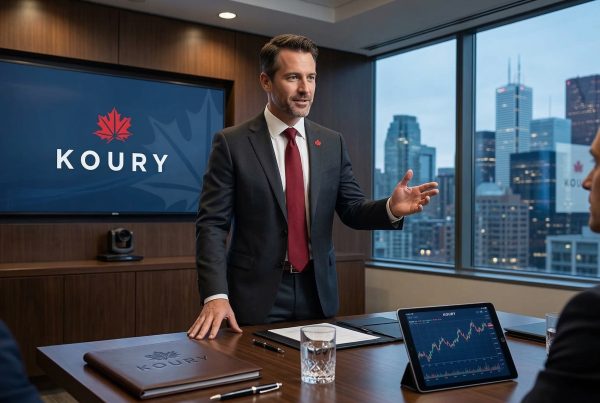
Koury Capital — Venture Capital Brand Identity & Institutional Credibility

Koury Capital — Venture Capital Brand Identity & Institutional Credibility

hotel branding agency
Hotel & Resort Branding Case Study – The Crystal – Koh Samui

Hotel & Resort Branding Case Study – The Crystal – Koh Samui

B2B Industrial Brand & Market Repositioning: How a Myanmar Hardwood Manufacturer Built a Global Pipeline from Scratch
GGI Myanmar – B2B Industrial Brand & Market Repositioning

GGI Myanmar – B2B Industrial Brand & Market Repositioning

Industrial Advertising
B2B Branding & Advertising Design for Advance Tyre – Industrial Marketing Case Study

B2B Branding & Advertising Design for Advance Tyre – Industrial Marketing Case Study

Trusted by Brands in B2B, Manufacturing, Industrial, Logistics, SaaS, Services, Consulting, F&B, Hospitality, Corporate & More

61801166 10157209676327629 5961530515130417152 n
Quality Work

HOW AN ENGAGEMENT STARTS

Every SEO engagement starts with a Brand Gravity Momentum Session™ — a free 20-minute live working session where we review the current search presence, identify the gaps between where you currently rank and where the commercial opportunity actually sits, and outline what a strategy built around your specific ICP and positioning would need to address first. A senior-level read of where you currently are and what the highest-leverage moves are.

The Search Landscape Has Two Layers Now. Most B2B Companies Are Only Visible in One.

Traditional search — the ranked results in Google — is still where the majority of B2B organic traffic originates. It remains important and it remains the foundation. But a second layer has developed alongside it, and its growth rate is sufficient to make ignoring it a commercial risk for any B2B company building a serious search strategy in 2026.

AI-generated answers — in Google’s AI Overviews, in ChatGPT’s browse function, in Perplexity’s research interface, in Gemini’s synthesis mode — are now surfacing supplier recommendations, category explanations, and comparative analyses in response to the kinds of queries B2B buyers run at evaluation stage. These answers do not require a click on a ranked result. The AI synthesises the answer from its training data and from the content it has indexed — and either names your company as a relevant provider or names a competitor.

The mechanism that determines which companies appear in those AI-generated answers is not primarily different from the mechanism that determines which companies rank in traditional search. It is built on the same foundations: topical authority, content depth, entity recognition, and structured data. A company with a strong traditional SEO position will have a meaningful head start on AI visibility. The additional layer of work is calibrating the content, the schema architecture, and the entity signals specifically for the way AI systems assess credibility rather than how traditional ranking algorithms do.

For B2B companies in ASEAN targeting Western buyers, this layer is particularly commercially significant. Western AI systems have lower inherent entity recognition for ASEAN companies than for Western competitors. A company that has not built explicit entity signals — structured data, consistent brand mention across authoritative sources, schema markup on all service and credential pages — will be less likely to appear in AI-generated recommendations for Western B2B buyers, regardless of its actual capability.

HP’s AI visibility work is not a separate programme. It is an extension of the same search authority strategy, calibrated to the specific additional requirements AI systems apply. Every company that should be appearing in AI-generated answers in its category is not yet doing so. The window to establish that visibility before the category hardens is shorter than most companies in B2B currently appreciate.


The Commercial Cost of Search Invisibility in B2B Is Compounding, Not Static.

The commercial cost of a weak B2B search position is not the same cost every year. It compounds. Every month that a competitor is building topical authority in the keywords a company’s buyers use, the gap between their search position and the company’s grows wider. Every month that a competitor is producing the content that AI systems are indexing as authoritative in the category, the AI’s entity understanding of that competitor deepens. The starting position for closing that gap in twelve months is worse than the starting position today.

The urgency in AI search visibility specifically is a function of how AI training and citation dynamics work. AI systems develop strong priors about which companies are credible in which categories based on the content they have indexed over time. A company that builds entity strength and content depth early establishes a citation advantage that compounds as the AI system continues to encounter its content across multiple sources. A company that enters the AI visibility conversation late is starting from a lower base against competitors whose authority the AI has already formed.

For B2B companies where search is a primary source of inbound pipeline — or where it should be — the question is not whether to invest in SEO and AI visibility. It is whether the current investment is structured around the right intent stage, the right keyword architecture, and the right content depth to produce evaluation-stage pipeline rather than awareness-stage traffic.

The Brand Gravity Momentum Session™ includes a real-time review of the current search position, the keyword architecture, and the specific gaps between where the company is visible and where its target buyers are searching.

B2B SEO & AI Search Visibility – Frequently Asked Questions

Q1: How is B2B SEO different from standard SEO?

The structural differences are commercial rather than technical, though they produce different technical requirements. B2B search behaviour is characterised by longer evaluation cycles, multiple stakeholders each running different queries, and high-value keywords at low search volume that carry far more commercial potential than high-volume awareness-stage terms. A manufacturing company needs to rank for the specific procurement-level query a Western buyer runs when they are qualifying suppliers — not for the broad category term that generates traffic from early-stage researchers.

The content requirements are also more demanding. B2B buyers in industrial, engineering, and professional services categories are evaluating expertise before they evaluate price. Content that does not demonstrate specific, sector-relevant knowledge at the depth that matches their own internal understanding of the problem will not convert — regardless of where it ranks. The SEO programme for a B2B company needs to produce content that passes the credibility threshold of a procurement-level buyer, which is a higher standard than the content that performs well in B2C or SME SEO contexts.

HP’s B2B SEO work is built specifically for this environment. The keyword architecture, the content depth, and the proof architecture are all calibrated to the evaluation-stage B2B buyer rather than to the awareness-stage searcher that most SEO programmes optimise for.

Q2: What is AI search visibility and why does it matter for B2B companies?

AI search visibility is the degree to which a company appears in the answers generated by AI systems — ChatGPT, Perplexity, Gemini, Google AI Overviews — when users ask questions in the company’s category. For B2B companies, this matters commercially because a growing proportion of B2B buyers are beginning their supplier research through AI queries rather than through traditional search. A query like “which ASEAN-based TIC laboratories are qualified for pharmaceutical ingredient testing” produces an AI-generated answer that either includes your company or doesn’t. If it doesn’t, you don’t exist in that evaluation process.

The mechanism that determines AI visibility is built on the same foundations as traditional SEO — topical authority, content depth, entity recognition, structured data — with additional emphasis on the consistency of brand mentions across authoritative external sources, the depth of the schema markup that allows AI systems to understand what the company does and who it serves, and the breadth of content that covers the evaluation-stage questions buyers ask in the category. A company with a strong traditional SEO position has a meaningful advantage on AI visibility and needs to extend its existing work rather than build from scratch. A company with a weak search position needs both.

Q3: How long does B2B SEO take to produce pipeline results?

SEO operates on longer timelines than paid advertising, and the specific timeline for B2B is governed by three variables: the current search position and technical health of the site, the competitiveness of the target keyword territory, and the pace at which content and authority can be produced.

As a general orientation: technical SEO improvements and existing-page optimisations typically produce measurable ranking movement within 60 to 90 days of implementation. New content targeting evaluation-stage keywords in moderately competitive categories typically reaches meaningful ranking positions within three to six months. Building topical authority in a competitive category — where well-resourced competitors are producing high-quality content at volume — typically takes six to twelve months before the compounding effect of authority becomes visible in pipeline metrics.

The important qualifier on all of these timelines is that they assume the content quality is sufficient to pass the credibility threshold of both search algorithms and the B2B buyers who find the content. Content produced for volume without the depth that a procurement-level buyer requires will rank temporarily and fail to convert — which is a common failure mode in B2B SEO programmes that are measured on traffic rather than pipeline.

Q4: Can we appear in AI search results if we are based in ASEAN and targeting Western buyers?

Yes, and the approach for ASEAN companies targeting Western buyers has specific requirements beyond standard SEO practice.

AI systems have lower inherent entity recognition for ASEAN companies than for Western competitors in the same category. This is not a content quality issue — it is a signal architecture issue. Western AI systems have been trained primarily on Western-market content, which means that ASEAN companies with equivalent capability and content depth are starting from a lower entity recognition baseline. The interventions that close this gap are specific and address-able: consistent schema markup across all service and credential pages, structured data that explicitly maps the company’s capabilities to the categories Western buyers search for, and external entity signals — mentions in authoritative industry publications, directory listings, chamber memberships, and partner references in the target market — that give AI systems the cross-source validation they use to assess credibility.

This is directly adjacent to HP’s Procurement Trust Gap™ work. The commercial mechanism that causes Western procurement teams to tier-classify ASEAN suppliers below their capability level is the same mechanism that causes AI systems to surface Western competitors preferentially. Addressing the signal architecture — the visible layer of how the company presents across every digital touchpoint — addresses both simultaneously.

Q5: How does SEO connect to the broader Brand Gravity™ system?

SEO is the Attraction component of the Brand Gravity™ System — the function that brings buyers with commercial intent into contact with the brand at the moment they are actively evaluating. It is the mechanism that determines whether the organic search landscape produces pipeline or produces traffic without commercial consequence.

The commercial effectiveness of SEO is bounded by the quality of what the buyer finds when they arrive. A company that ranks highly for the right evaluation-stage keywords but whose website has unclear positioning, weak proof architecture, or a visual identity that signals a lower tier than the company actually operates at will produce search impressions and poor conversion rates. The SEO is doing its job; the brand signal is not.

This is why HP integrates SEO within the broader brand and positioning framework rather than treating it as an independent channel. The keyword architecture is built around what the target buyer is searching for and what the brand needs to prove to them. The content is built on the positioning brief. The proof architecture in the content is calibrated to the evaluation criteria of the specific ICP being targeted. The result is a search programme whose pipeline production is multiplied by the clarity of the positioning behind it — rather than limited by it.

Recent Clients

Built for high-trust, conversion-critical industries. Our work has increased revenue for B2B, hotels & resorts, SaaS, and real estate brands globally.

The Crystal 01
escape
ease
beestro
mm
fw
Advance 01
Mudon Grey 01
FG 01
SNG LOGO DISPLAY GREYED OUT 01
gg6 blackwhite
DRESS C
Siam
Old man 01
The Circle Logo Greyscale 01
Capricci Greyscale 01 01
KSH Greyscale Logo 01
freshly
LOGO DISPLAY GREYED OUT11 01
LOGO DISPLAY GREYED OUT6 01
LOGO DISPLAY GREYED OUT5 01
LOGO DISPLAY GREYED OUT2 01
LOGO DISPLAY GREYED OUT1 01
logo 1 1 e1602667210270
LOGO DISPLAY GREYED OUT 01

The brand identity that Highly Persuasive developed & designed for us is exactly the type of image we wanted to convey for the Beestro. Highly recommended!

Christopher O'LearyCo-Founder--The Beestro Bangkok

"I find your services are amazing. You are way better than our local services. I find the money is worthy spent. We can always get what we want with you. Not so expensive. And very responsive."

Aung TheinManaging Director - Kaung Swan Htet Trading Co.

"We've been working with Highly Persuasive for almost 2 years many of our potential clients and guests visited our website & always comment on the website. "

Aung Soe KyawDirector--GGI Myanmar

"Our monthly subscriptions for new customers signups increased substantially from 7 to 22 in the first month alone. This was almost exclusively due to the landing page redesign and subsequent graphic enhancements!"

Nat SilapornMarketing Manager-- Fitness First

"Our content marketing strategy was lacking in authenticity and value. We brought on Highly Persuasive as a marketing consultant who opened our eyes to the value of inbound marketing. As I write this (2 months post campaign), we have seen a dramatic increase in not only the quantity of organic traffic, but more importantly, the quality."

Phil HobbingMarketing Manager -- Alvarez & Marshall Singapore

"We needed a digital experience to match the new space. Highly Persuasive helped bring our vision to life and got us ranking on Google for keywords we didn’t even think about."

Hassan MirzaOwner - The Hub Samui

"Before the new site, our pages were broken and we were basically invisible in Google. Now we get over 500 inquiries a year from people who found us directly on Google with no ads."

Ralph BealeOwner - Lamai Muay Thai Camp - Koh Samui

"I needed something clean and simple that actually worked. They built a one-page site that shows up and loads fast. It gets me leads every single week without me having to do any marketing."

Nick TaylorOwner - Samui Sound Hire

"We’re in a competitive market, but the new website, SEO and ads now feel like one cohesive machine"

Jeff C.Owner - Skydive Thailand

We used to depend on walk-ins. Now we get steady direct bookings online. This year we're up 183% in the past 7 months.

Oui P.Have A Spar Massage & Spa - Koh Samui

"As a property developer, credibility is everything. The rebrand gave us that—and the site now gets inquiries from buyers we actually want."

Lee StrattonDirector - Bophut Property Developers

"We finally feel like we’re in control of our bookings—not just reacting to OTA commissions and seasonality. That’s a massive win."

Giulia F.General Manager, Cala Verde Resort

"They made sense of our scattered marketing. For the first time, we’re seeing real traction from Google ads without increasing our spend."

Cynthia J.Strategy Director, Oxbridge Consultancy

Reach More Of The Right Clients – Organically

If you’re serious about elevating how your business shows up, sells, and gets remembered — let’s talk.
Tell us a bit about where you are and what you want to change.