Before most serious buyers ever call or send an email, they spend at least twenty minutes researching you.
They look at your website. They read how you describe yourself. They compare what they find against what they already know about the market. They scan for specific signals — whether your work matches the tier they’re operating in, whether your proof is specific enough to be credible, whether the company they encounter online feels like the kind of company they’d be comfortable defending to their own stakeholders.
That research happens before first contact. Before any conversation. Before you know they exist. When the signal is right, serious buyers arrive pre-convinced. Price resistance softens. The right clients find you first. When there’s room to strengthen the signal, that commercial potential sits unrealised — and no amount of execution effort closes a positioning gap.
Engagements across manufacturing · professional services · engineering · logistics · consulting · hospitality · F&B · legal · property · SaaS — in Thailand, Singapore, Australia, the UK, Europe, and North America.
As Seen In:








BRAND CREDIBILITY GAP DIAGNOSTIC™
If you want to quantify the commercial cost before any conversation, the Brand Credibility Gap Cost Diagnostic™ maps the gap between your brand’s current signal and the revenue it should be generating — in under 5 minutes.
WHAT STRONG BRAND GRAVITY™ PRODUCES
Brand Design & Brand Strategy Services That Build Brand Gravity™
The gap between your commercial capability and what the market perceives about you is where pricing power, close rate, and deal quality are won or lost. The Brand Gravity™ System closes that gap — through positioning, identity, and the commercial signal architecture that makes the right buyers choose you before the conversation starts.

Know your market, buyer, and where your brand can win.
We interview customers, scan competitors, and map perceptions to spot the gaps your brand can own. Clear evidence replaces guesswork, so decisions feel obvious and the team aligns fast.

Corporate identity built to signal the right tier at every touchpoint. Mark, typography, color, photography, layout — assessed before a buyer reads a word. Every visual element carries a categorisation signal. The question is whether that signal is placing the company in the tier it belongs in or a tier below it.

The commercial argument that makes choosing you feel rational and every alternative feel like the risk. Where you compete, what territory you own, why the right buyer should choose you over every available option. Without clear positioning, identity is decoration. With it, every other investment in the brand compounds.

The diagnostic work that precedes execution — identifying what the actual commercial problem is before any brief is written or budget committed. An agency takes a brief and executes. A consultancy examines whether the brief is asking for the right thing. When those are different questions, the distinction determines whether the investment produces commercial results or well-made work in the wrong direction.

The specific, defensible territory in the market that the brand occupies — and the commercial logic of why that territory is worth holding. Positioning is the upstream decision that every downstream element of the brand expresses. A brand without a clear position is describing itself. A brand with one is making a case.

Getting the brand into the market at the standard the strategy requires. Website, sales materials, pitch decks, LinkedIn presence, proposal templates, demand generation. The execution that turns strategic clarity into visible commercial reality — built on the positioning foundation rather than independent of it.

The language system that turns capability into conviction. Positioning statement, value proposition, narrative architecture, sector-specific messaging, and the Brand Narrative Playbook™ that ensures every person representing the company commercially tells the same coherent story — without requiring oversight of every conversation.

The sustained commercial reputation that makes the right buyers seek you out before a competitive process begins. The Brand Gravity Council™ — HP's Chief Brand Officer retainer model — provides the ongoing senior brand thinking that keeps positioning coherent as the business evolves, markets shift, and competitive pressure intensifies.
Explore how every part of your business works harder when it’s part of a brand gravity system.
Recent Client Work

The Edgewater Hotel — Direct Booking Growth & Hotel Marketing Programme
The Edgewater Hotel — Direct Booking Growth & Hotel Marketing Programme

Hotel Brand Identity Design – Ease Hotel | Hospitality Branding Firm
Hotel Brand Identity Design – Ease Hotel | Hospitality Branding Firm

KSH Industrial — B2B Brand Identity System & Corporate Profile
KSH Industrial — B2B Brand Identity System & Corporate Profile
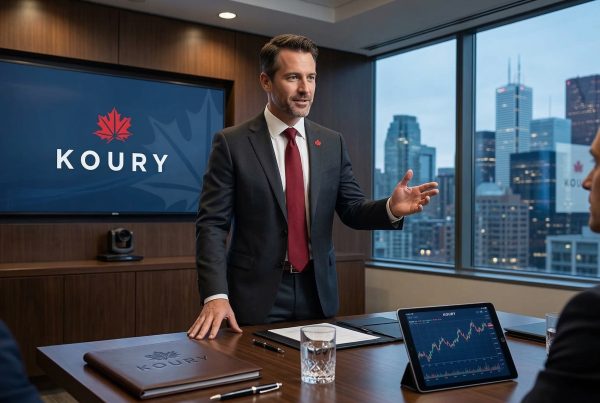
Koury Capital — Venture Capital Brand Identity & Institutional Credibility
Koury Capital — Venture Capital Brand Identity & Institutional Credibility

Hotel & Resort Branding Case Study – The Crystal – Koh Samui
Hotel & Resort Branding Case Study – The Crystal – Koh Samui

B2B Branding & Advertising Design for Advance Tyre – Industrial Marketing Case Study
B2B Branding & Advertising Design for Advance Tyre – Industrial Marketing Case Study

Cafe Brand Identity Design – The Hub Samui Case Study
Cafe Brand Identity Design – The Hub Samui Case Study
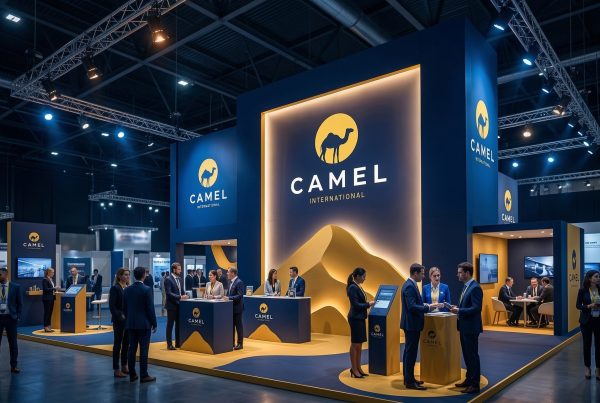
Camel International — B2B Food Ingredients Supply Chain Identity
Camel International — B2B Food Ingredients Supply Chain Identity

Restaurant Brand Strategy, Identity & Menu Design Case Study – Escape Gastro Pub
Restaurant Brand Strategy, Identity & Menu Design Case Study – Escape Gastro Pub
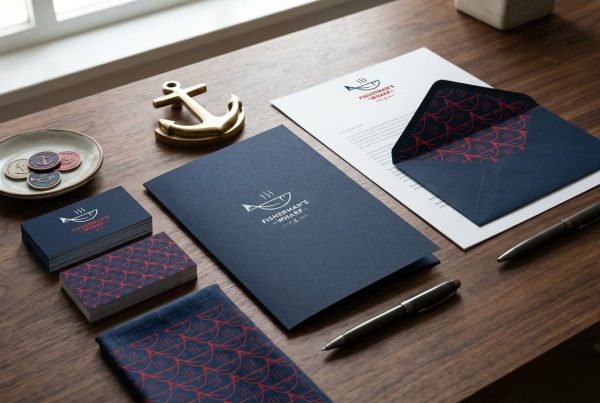
Brand Strategy & Identity Design for Fisherman’s Wharf
Brand Strategy & Identity Design for Fisherman’s Wharf

Spa Branding – Identity Design Case Study | Highly Persuasive
Spa Branding – Identity Design Case Study | Highly Persuasive

Café Brand Strategy & Identity Design for The Circle Café – Restaurant Branding
Café Brand Strategy & Identity Design for The Circle Café – Restaurant Branding
The Components of a Complete Brand System
Each component does a specific commercial job. The most effective brand systems are built as coherent architecture — every element reinforcing the same positioning — rather than as a collection of separately commissioned assets.
Trusted by Brands in B2B, Manufacturing, Industrial, Logistics, SaaS, Services, Consulting, F&B, Hospitality, Corporate & More

Quality Work
“Our customers are incredibly diverse, from families to healthy-eaters and vegans. We needed a brand that could speak to all of them. Highly Persuasive delivered a fresh, modern identity that perfectly captures our vibe. The new menu is a perfect example—it’s clearer, more appealing, and our average check size has increased by 15% in the 6 months since the rebrand.”
Hassan M, – The Hub Samui
Big Picture Brand Thinking in 20 Minutes
Is Your Brand Persuading or Just Presenting?
Most brand opportunities aren’t visible from the inside. The positioning that could work harder for the company you are now. The messaging with clearer articulation that could accelerate decision velocity. The identity that, strengthened in the right places, would better signal the level you’re already operating at.
The Brand Gravity Momentum Session™ is a free, 20-minute live working consultation. We look at your website, pitch materials, and key assets in real time — and identify the 3 to 5 areas with the greatest commercial opportunity. Where your brand could work harder, where clearer signal would reduce evaluation time, and where a targeted change would have the most impact on pipeline, pricing, or close rate. You leave with a clear picture of where the highest-value opportunities sit — and a recommended path to capture them.
The Brand Gravity™ System
A strategic framework for diagnosing why some companies are easy to choose — and others aren’t. Built on the five forces that shape every brand in every market, and the eight components that either generate commercial gravity or create friction against it. We don’t prescribe a fixed set of deliverables. We diagnose which forces are working against you, identify the highest-impact interventions, and build from there.
The Brand Gravity Momentum Session™ is where we map which forces are working in your favour and which aren’t — and show you exactly what fixing the gap changes commercially. Free. 20 minutes.
Frequently Asked Branding Questions
1. What is the difference between a branding agency and a brand strategy consultancy?
An agency’s commercial model is built around execution: they receive a brief, apply creative skill to it, and produce the deliverables the brief specifies. The quality of the output depends on the agency. The commercial outcome depends on the brief — which the agency takes as given, because the brief is the client’s responsibility.
A brand strategy consultancy’s model is built around diagnosis: examining what the actual commercial problem is before any brief is written. The deliverables emerge from the diagnosis rather than preceding it. When the presenting problem and the underlying problem are the same thing, this distinction matters less. When they are different — when a company believes it needs a new website but the actual constraint is unclear positioning, or believes it needs better marketing but the actual problem is that the marketing is amplifying a weak signal — the distinction determines whether the investment produces commercial results or well-made work in the wrong direction.
Highly Persuasive operates as a consultancy. Every engagement begins with a diagnostic. The deliverables are specified by what the diagnosis reveals.
2. How does brand strategy connect to commercial outcomes like pricing power and close rate?
The mechanism is behavioral rather than theoretical. Buyers in high-stakes decisions — commercial procurement, agency selection, professional services engagement — are managing risk as much as evaluating quality. The primary concern driving their evaluation is not “will this be good?” but “will I be able to defend this choice if it goes wrong?”
A brand with clear positioning, consistent visual authority, and specific proof architecture answers that question before the conversation begins. The buyer who arrives pre-convinced that choosing you is defensible — who has already categorised you as the right tier, the right fit, the right risk level — is a different commercial conversation from one who arrives with that question still open.
The commercial consequence of closing that gap is measurable: shorter evaluation cycles, fewer competitive comparisons, reduced price sensitivity, and higher close rates on the right work. These are the consistent results across companies that have closed a positioning gap rather than continuing to compete on execution quality alone.
3. When does a company need a full rebrand versus a brand refresh or focused intervention?
A full rebrand is the right answer when the positioning itself has shifted materially — the company has moved upmarket, entered a new category, undergone significant ownership or leadership change, or is targeting a meaningfully different buyer than the one the original brand was built for. When the strategic brief has changed, the identity needs to change with it.
A brand refresh is the right answer when the positioning is sound but the execution is limiting commercial performance — when the identity no longer signals the tier the company is operating at, when the messaging has drifted, or when specific elements are creating friction without the whole system needing to be rebuilt.
A focused intervention is the right answer when the constraint is specific and bounded. The Brand Gravity Momentum Session™ is designed to establish which situation applies before any commitment to scope is made.
4. What does the Brand Gravity™ engagement process look like from start to finish?
Every engagement begins with the Brand Gravity Momentum Session™ — the free 20-minute diagnostic that establishes where the commercial gap sits and what scope would address it. From there, engagements follow a consistent sequence, with depth determined by what the diagnosis reveals.
Brand discovery covers the market context, competitive landscape, buyer research, and the commercial evidence that establishes what the brand is actually doing versus what leadership believes it is doing. Brand strategy development produces the positioning architecture, the narrative framework, and the strategic brief that every downstream deliverable is built on. Brand identity and messaging execution translates the strategy into the visual and verbal systems deployed across commercial touchpoints. Brand activation deploys those systems — website, sales materials, pitch architecture, demand generation — in the sequence that produces commercial results fastest.
Not every engagement covers all phases. The diagnostic determines where the highest-leverage starting point is and what sequence makes sense.
5. We operate in Asia but target Western buyers. Why does our brand underperform in procurement even when our capability is equal?
This is one of the most commercially significant and least-discussed patterns in international procurement. Western buying committees — consciously or not — categorise suppliers into tiers before evaluating technical capability: Strategic Partner, Qualified Vendor, and Commodity Supplier. The criteria they use to assign those tiers have very little to do with actual competence. They are almost entirely driven by brand signals: how the company presents itself, the sophistication of its communications, the calibration of its visual identity against the pricing level it’s claiming, the quality of its proof architecture, and whether the company’s positioning language matches the register that procurement teams at Western multinationals use internally.
A company operating from Bangkok, Kuala Lumpur, Jakarta, or Ho Chi Minh City with genuine technical depth in engineering, testing, manufacturing, or professional services can rank in the bottom tier of that categorisation on the basis of brand signals alone — before a single conversation happens. This is not bias in a legal sense. It is pattern-matching under uncertainty, which is how procurement teams manage risk at scale when evaluating suppliers they have no prior relationship with.
The commercial consequence is significant. Companies placed in the Commodity Supplier tier compete on price by default. They are evaluated later in the process, given less access to decision-makers, and expected to offer concessions that Strategic Partner-tier competitors never face. The gap is not closed by capability improvements. It is closed by closing the signal gap — aligning how the brand presents in Western contexts with the trust signals Western procurement actually uses to calibrate tier placement. The Brand Gravity Momentum Session™ is where we map the specific gap and show what closing it changes in practical commercial terms.
6. What is brand positioning and why does it matter commercially?
Brand positioning is the strategic decision about which specific territory in a market a company claims as its own — what it stands for, who it stands for, and why a buyer should choose it over every available alternative. The word “specific” is the operative one. Positioning that applies to every company in a category is not positioning. It is description. The commercial value of positioning comes from its precision: the more exactly it maps to the situation and evaluation criteria of the right buyer, the more commercially productive every downstream investment becomes.
The commercial mechanism works at the point of evaluation. When a serious buyer is assessing three suppliers who have passed the initial competence threshold, the decision comes down to perception of fit, risk, and tier. A company with clear positioning answers those three questions before the sales conversation begins. The buyer who encounters the brand online, reads the positioning language, scans the proof architecture, and concludes that this company is built exactly for their situation arrives at the first conversation in a materially different state from one who arrives uncertain.
The downstream consequences of that difference are measurable. Buyers who arrive pre-convinced ask fewer qualification questions, apply less price pressure, involve fewer competing suppliers in the evaluation, and close faster. Each of those outcomes has a commercial value. Pricing power, in particular, is almost entirely a function of perceived uniqueness: a company that occupies a clear, specific position in the buyer’s mind is evaluated against its own standard rather than against whoever quoted the lowest price.
Positioning also determines the quality of the inbound pipeline over time. A company with clear positioning that is consistently expressed across every touchpoint — website, proposals, case studies, social presence, leadership communications — attracts buyers who have already self-selected as a good fit. The pipeline contains fewer wrong-fit opportunities, which reduces the time and cost of qualification, shortens average sales cycles, and increases the close rate on the opportunities that do enter the funnel.
The Brand Gravity Momentum Session™ is the starting point for any positioning engagement. In twenty minutes, we assess where the current positioning is doing commercial work and where there is specific opportunity to strengthen it — with a direct read on what closing that gap would change commercially.
7. How much does brand strategy and identity work cost?
Brand strategy and identity investment is scoped based on the specific commercial problem the engagement needs to address, the complexity of the competitive environment, the number of stakeholders involved in the diagnostic process, and the breadth of the deliverables the situation requires. There is no fixed price because there is no fixed problem.
As a general orientation: a focused positioning engagement for a company with a clearly bounded commercial challenge — a specific market it is entering, a single positioning gap it needs to close before a major bid — typically runs in the range of $8,500 to $25,000. A full brand strategy and identity engagement covering the complete diagnostic, competitive landscape, positioning architecture, identity system, and Brand Narrative Playbook™ for a mid-market company typically falls between $30,000 and $75,000. Ongoing advisory relationships through the Brand Gravity Council™ are structured as monthly retainers, typically ranging from $3,500 to $12,000 per month depending on engagement intensity and scope.
The relevant commercial frame for evaluating the investment is not what the engagement costs in isolation. A company spending $60,000 on website and identity work from an execution-oriented agency without a clear strategic brief is typically spending more, not less, than a strategy-first sequence costs — and the execution is less likely to produce commercial outcomes without the positioning work preceding it. The diagnostic that precedes the execution is the part of the investment that determines whether the execution addresses the right problem.
The second commercial frame is the ongoing cost of operating without clear positioning. Every percentage point of pricing discount given to close a deal that should have held at full price, every sales cycle extended by a buying committee that cannot clearly articulate why your company is the right choice, every right-fit prospect who shortlisted a better-branded competitor — these have aggregate commercial values. The Brand Gravity Credibility Gap Cost Diagnostic™ quantifies this gap specifically for your situation before any commitment to an engagement is required.
Every engagement at Highly Persuasive begins with the Brand Gravity Momentum Session™, which establishes what the appropriate scope is and what the investment level would be before any commitment is made.
8. How long does a brand strategy and identity engagement take?
Timeline is determined by scope, and scope is determined by what the diagnostic reveals. As a general framework: a focused sprint engagement addressing a specific, bounded problem — a positioning statement needed before a website brief is written, a messaging architecture for a new market entry, a competitive positioning assessment before a fundraise — typically runs three to six weeks from the diagnostic session to completed deliverables.
A full brand strategy and identity engagement covering the complete sequence — commercial evidence review, brand signal assessment, competitive landscape analysis, positioning strategy, messaging architecture, identity design, and Brand Narrative Playbook™ — typically runs eight to sixteen weeks for a mid-market company. The timeline is governed by three variables: the depth of the discovery and research phase, the number of revision cycles built into the identity design process, and the bandwidth of the key stakeholders required for input and approval.
For engagements with a specific commercial deadline — a trade show, a fundraise, a major bid — we scope the timeline against that date and determine the minimum viable sequence that produces the right deliverables in time. This sometimes means sequencing the work differently: producing the most commercially urgent deliverable first and completing the broader system afterward.
The most common timeline extension in any brand engagement is the stakeholder review cycle. When a company has three or more internal decision-makers who each need to review and approve work, the elapsed time between deliverable production and approval can extend significantly beyond the production time itself. Setting up a clear internal approval process before the engagement begins is the single most reliable way to keep a brand engagement on schedule.
The Brand Gravity Momentum Session™ establishes the realistic timeline for a specific engagement based on the starting position, the scope of the work, and the commercial objective. That conversation happens before any commitment is made.
9. What is a brand identity system and what does it include?
A brand identity system is the complete set of visual and structural decisions that determine how a company presents itself across every surface it occupies. At its simplest, it is the answer to the question: what does this company look like, consistently, at every touchpoint a buyer encounters? At its most commercially significant, it is the signal architecture that places the company in the right tier of evaluation before a single word is read.
The core components of a complete identity system are the mark, which includes the primary logo, any symbol or monogram, and the approved lockup variations for different contexts; the color system, which specifies the primary palette, secondary palette, and the application logic that governs where each color is used; the typography system, which specifies the type families, the hierarchy of weights and sizes, and the rules for how type is set across different formats; the graphic language, which covers the patterns, textures, illustration style, iconography, and any proprietary visual elements that give the system its character beyond the logo; and the photography direction, which defines the visual standard for imagery used across the brand.
Beyond those core components, a complete identity system includes the application architecture: the rules, templates, and examples that show how the system is applied across the specific contexts the company inhabits. For a B2B company, this typically covers proposals and presentation templates, email signatures, business cards and stationery, website visual standards, social media templates, exhibition and signage applications, and document covers. For a product company, it extends to packaging design and point-of-sale materials. For a company with a physical environment, it covers environmental graphics and wayfinding.
The distinction between a logo and an identity system is not a question of design quality. It is a question of completeness. A logo without the system around it produces inconsistency over time as the brand is applied by different people across different contexts. An identity system with clear application rules produces consistency without requiring oversight of every execution, which is the condition that allows a brand to scale without losing the integrity of the commercial signal it was built to send.
10. What is the difference between brand strategy and marketing strategy?
Brand strategy and marketing strategy operate at different levels of the commercial hierarchy and address different questions. Understanding the difference is important because commissioning one when the other is what the situation requires produces predictably unsatisfying results.
Brand strategy addresses the upstream questions: what specific territory in the market does this company claim, what commercial argument does it make for selection, how is it differentiated from every available alternative, and what does it stand for in the mind of the buyer? The output of brand strategy is a positioning architecture — the commercial brief that every downstream communication asset is built to express. Brand strategy is not primarily about channels, messages, or campaigns. It is about the claim the company is making in the market and whether that claim is specific enough, credible enough, and differentiated enough to produce commercial preference.
Marketing strategy addresses the downstream questions: which channels reach the right buyers at the right stage of their evaluation, what content and messaging will move them from awareness to consideration to selection, what budget allocation across channels produces the highest return on marketing investment, and how do we measure whether the marketing is working? Marketing strategy assumes a positioning brief exists and works to amplify it effectively. Without a clear positioning foundation, marketing strategy produces activity rather than pipeline, because there is no coherent commercial argument for the activity to amplify.
The practical consequence of this hierarchy is a sequencing imperative. A company that invests in marketing strategy before brand strategy has been established is amplifying an unclear signal. More traffic arriving at a confusing positioning produces more confused visitors, not more qualified buyers. More content produced without a clear narrative framework produces volume without authority. More paid advertising behind a generic value proposition produces clicks without conversion.
The relationship between the two disciplines is sequential rather than competitive. Brand strategy establishes what needs to be true in the buyer’s mind. Marketing strategy determines how to make it true across the specific channels, formats, and touchpoints that reach the right buyer at the right stage. In HP’s engagement model, brand strategy precedes marketing strategy — and the Brand Gravity Momentum Session™ establishes which is the relevant starting point for a specific company’s current situation.
11. How do you measure whether a rebrand has worked?
The question of measurement is one that should be settled before a rebrand engagement begins, not after the work is delivered. A rebrand without agreed success metrics is a creative exercise. A rebrand built around specific commercial objectives, with baseline data and defined measurement criteria established at the outset, is an investment with a measurable return.
The commercial metrics that a rebrand can be expected to influence fall into several categories. Pipeline quality metrics capture whether the inbound pipeline is changing in composition — whether the proportion of right-fit opportunities is increasing, whether the average contract value of inbound leads is shifting, whether the types of companies initiating contact are moving toward the intended ICP. These metrics are often more commercially significant than volume metrics because they reflect whether the brand positioning is attracting the right buyers rather than simply generating more activity.
Close rate metrics capture whether a higher proportion of engaged opportunities are converting to clients, and whether the speed of conversion is changing. A repositioned brand that clearly answers the evaluation questions buyers bring to the process should produce faster closes on better-fit opportunities. Deal velocity — the number of days from first contact to signed engagement — is one of the more sensitive indicators of whether the brand is doing the qualification work it is supposed to do.
Pricing metrics capture whether the commercial conversation is changing. A company that successfully repositions from commodity supplier to strategic partner should see a shift in how price resistance manifests: less frequent, less aggressive, arriving later in the process. This is difficult to measure precisely but visible directionally through sales team feedback and win/loss analysis.
Brand signal metrics — website dwell time, repeat visits, social profile engagement, LinkedIn profile views on key executives — capture whether the brand’s increased clarity is producing increased commercial attention. These are leading indicators rather than commercial outcomes, but they typically move before the pipeline metrics do and confirm that the repositioning is registering in the market.
The Brand Gravity™ diagnostic establishes the baseline across these metrics before the engagement begins. The structured reviews built into HP’s ongoing advisory relationships track progress against that baseline at agreed intervals.
12. What is brand messaging architecture?
Brand messaging architecture is the structured system of language that carries a company’s positioning into every commercial communication — consistently, across every person who represents the company and every touchpoint where the company speaks. It is the verbal equivalent of the visual identity system: the set of rules and materials that ensures the commercial story being told in a sales conversation is the same commercial story being told on the website, in the proposals, in the case studies, and in the CEO’s keynote.
A complete messaging architecture has several layers. At the foundation is the positioning statement: the precise articulation of what the company does, for whom, how it is different from alternatives, and what the commercial consequence of that difference is. The positioning statement is not a tagline or a marketing claim. It is an internal reference document that governs all downstream language decisions.
The next layer is the value proposition hierarchy: the three to five commercial arguments for selection, ranked by importance to the primary buyer, each supported by specific evidence and expressed in the language the buyer uses to think about the problem rather than the language the company uses to describe its solution. Value propositions are meaningless unless they are specific — “we deliver faster” is a claim; “engineering firms using our process reduce tender submission time by an average of forty percent” is a proposition.
Below that sits the messaging matrix: the specific language calibrations for different buyer types, sectors, and engagement stages. A CEO evaluates differently from a procurement director. A company in the pre-selection stage of an evaluation needs different information from one in due diligence. The messaging matrix provides the guidance for navigating these differences without losing the coherence of the central commercial argument.
The operational layer is the Brand Narrative Playbook™: the practical field manual that takes all of the above and turns it into usable tools for the sales team, the marketing function, the leadership presenting at industry events, and the account managers writing proposals. The Playbook contains the elevator pitch, the responses to common objections, the language for describing the company’s work in the buyer’s sector specifically, and the examples and proof points that have been tested and approved for use.
The commercial consequence of having this architecture is not just consistency. It is that every person representing the company commercially is making the same case in the same register, which compounds the buyer’s exposure to the correct signal across every interaction rather than introducing noise.
13. What does brand discovery involve and why does it come first?
Brand discovery is the structured investigation of what a brand is actually doing in the market — commercially, perceptually, and competitively — before any strategy is developed or any creative work is produced. It is the diagnostic phase that ensures the strategy addresses the actual problem rather than the assumed one.
The commercial rationale for beginning here is straightforward. The gap between what leadership believes about a brand and what the market actually computes from the signals it encounters is almost always larger than expected, and often points in a different direction from the assumed problem. A company that believes its primary challenge is differentiation may discover through the diagnostic that buyers actually find it highly differentiated but don’t trust the proof. A company that believes it has a pricing problem may discover that the pricing is not the issue at all — the issue is that the brand signal is placing it in a lower tier before the price conversation begins.
Discovery covers three distinct territories. The internal perspective: interviews with founders, senior leaders, commercial team members, and where appropriate, long-standing clients — not to discover what the company wants to claim, but to understand what the company actually believes about itself and where the internal narrative is coherent versus inconsistent. Inconsistent internal narratives produce inconsistent external signals, and the source of that inconsistency is usually a strategic question that has never been explicitly answered.
The competitive landscape: a systematic analysis of how competitors are positioning, what language they are using, what territory they are occupying, and where the positioning white space is. Most companies have a reasonably good understanding of their direct competitors but a much weaker understanding of how those competitors are presenting commercially and what that means for their own differentiation options.
The buyer perspective: where available, structured conversations with past buyers, current clients, and lost prospects — not about the product or service, but about the evaluation process. What signals did they use to shortlist? What made the company stand out or fail to stand out? What were the risk concerns that shaped the decision? This perspective is frequently the most commercially valuable and the most often skipped.
The output of brand discovery is not a strategy. It is the evidence base on which a strategy can be built with confidence — one that addresses the real commercial gap rather than the assumed one.
14. Can brand strategy and identity work be done effectively remotely?
The short answer is yes, and most of HP’s engagements are delivered entirely remotely. The more useful answer addresses where remote delivery requires specific process adaptations and where in-person work produces meaningfully different outcomes.
Brand strategy work — the diagnostic, the competitive analysis, the positioning development, the messaging architecture — is highly suited to remote delivery. The core inputs are information, analysis, and structured conversation, all of which travel well across video calls, shared documents, and asynchronous working sessions. The Brand Gravity Momentum Session™ is conducted entirely remotely and is consistently effective in surfacing the commercial gaps it is designed to identify. Stakeholder interviews, discovery workshops, and strategy presentations are all deliverable to the same quality standard remotely as in person.
Brand identity design has no inherent requirement for physical presence. The design process — brief development, concept development, refinement, system build, and application design — is entirely document-based, and the collaboration between client and design team is managed through structured feedback cycles rather than physical co-working sessions. The exception is environmental design: signage, wayfinding, and large-format applications benefit from physical review of materials and on-site assessment of the context the brand will inhabit.
The area where in-person engagement consistently produces better outcomes is the discovery process — specifically the stakeholder interview component. Conversations that happen in person, in the physical environment where the company operates, typically produce richer and more candid information than the equivalent conversation on video. The informal time around structured sessions — the conversation on the way to a meeting room, the observation of how the team interacts — contributes context that is difficult to replicate at a distance.
For clients in Bangkok, Singapore, and the broader ASEAN market, HP’s on-the-ground presence means that discovery sessions can be conducted in person where the situation warrants it. For clients in other markets, the remote delivery model is the standard and performs effectively within it.
15. What is the Brand Narrative Playbook™ and who uses it?
The Brand Narrative Playbook™ is the operational manual that turns brand strategy into usable commercial language for every person representing the company. Where the brand strategy document is the strategic architecture — the positioning logic, the competitive analysis, the commercial argument — the Playbook is the practical translation of that architecture into the tools the commercial team actually reaches for in their daily work.
The Playbook is designed to solve a specific and common problem: the gap between a completed brand strategy and its consistent deployment across the company. Most brand strategy engagements produce a strategic document that the leadership team has reviewed and approved, and then sits in a shared folder while sales presentations continue to describe the company in legacy language, proposals continue to lead with capability rather than commercial argument, and the marketing team continues to produce content that reflects what they think is important rather than what the positioning architecture specifies.
The Playbook closes that gap. Its core sections are the elevator pitch in multiple lengths — a single sentence, a ninety-second verbal version, and a three-paragraph written version — all calibrated to the same core claim. The value proposition hierarchy, with the specific language and evidence for each of the three to five primary commercial arguments, written in buyer language rather than internal language. The messaging matrix covering the key buyer types, sector variations, and how the language shifts for different evaluation stages without losing the coherence of the central argument.
The objection handling section is frequently the most used: the specific, pre-approved responses to the objections that consistently surface in sales conversations and proposal evaluations. These are built on the brand’s actual evidence and positioned to maintain commercial authority rather than becoming defensive. The case study summaries are the short-form versions of the full case studies, written in the register that works for verbal reference in a sales conversation.
The audience for the Playbook is every person who represents the company commercially: the CEO presenting at an industry event, the BD team on first calls, the account managers writing proposals, the marketing function producing content, the new hire who joins in six months and needs to understand the commercial story without months of cultural osmosis. A Playbook that is actually used is short enough to be read, specific enough to be directly applicable, and governed enough that the language it contains has been tested and approved rather than improvised.
16. How does brand identity design affect pricing power?
The relationship between visual identity quality and pricing power operates through a well-documented behavioral mechanism: buyers use visible signals of quality to set their expectations about the quality of what they cannot directly evaluate before purchasing. In most B2B and premium consumer contexts, the product or service cannot be fully assessed before commitment. The identity system is part of the available information a buyer uses to estimate whether the investment is likely to be worth the price asked.
This is not a superficial or irrational process. It is a rational response to information asymmetry. When a buyer cannot directly assess the quality of an engineering firm’s work, a management consultancy’s thinking, or a professional services firm’s advice before engaging them, the brand signal becomes evidence. A visual identity that signals precision, care, and investment in quality communicates that the company takes the standard of its output seriously — and by extension, that the price it charges for that output is likely to be justified. An identity that signals ad-hoc assembly, inconsistency, or an absence of investment in how the company presents communicates the opposite, regardless of the underlying quality of the work.
The pricing consequence is consistent across sectors. Companies whose identity systems are calibrated to the tier they are operating at experience less price resistance in sales conversations, more frequently win competitive evaluations against cheaper alternatives, and receive fewer requests for discounts on engagements where the scope is comparable. These outcomes are attributable to the identity system specifically because they manifest before the buyer has had the opportunity to evaluate the actual quality of the work — which means the identity is doing the commercial work of establishing tier perception before any other evidence has been reviewed.
The calibration point is important. An identity that is higher in visual quality than the tier the company is actually operating at creates a different problem: buyers arrive with expectations that the engagement cannot meet, which produces disappointment and negative referral. The goal of identity design in HP’s system is calibration — ensuring the visual signal is consistent with the actual commercial tier, neither understating nor overstating it.
The Brand Gravity Momentum Session™ includes a real-time review of the identity against the competitive context and the buyer’s likely first-impression evaluation. This typically produces specific observations about where the identity is doing commercial work and where it may be creating friction.
17. What makes a brand identity system scalable?
A scalable identity system is one that can be applied consistently by different people, across different contexts, to different formats, without producing visual inconsistency or requiring expert oversight of every execution. Most identity systems fail at scale not because the original design is poor but because they were not designed with scale in mind: the decisions are embedded in the designer’s judgment rather than codified in rules, the application architecture covers only the contexts that existed at the time of the original brief, and the guidance provided is too abstract to be directly useful to a non-designer applying it in a new situation.
Scalability begins in the brief. A brand identity built for a single-location business with five employees requires different architectural decisions than one built for a company planning to add locations, hire a large team, expand into new markets, or engage multiple external agencies over time. The brief should specify the scale the system needs to serve and the contexts it needs to perform in over a three-to-five-year horizon, not just the immediate application requirements.
The design decisions that most directly affect scalability are the color system, the typography system, and the rules around the logo. A color system with too many variants creates inconsistency across applications when different people make different color choices from an overly large palette. A typography system that relies on specialist typefaces creates inconsistency when those typefaces are unavailable in standard presentation or document software. Logo rules that are too restrictive prevent the brand from adapting to new contexts without violating the guidelines; rules that are too permissive allow drift.
The application architecture is where scalability is most concretely built or lost. A system with templates for the primary commercial applications — presentation decks, proposal covers, document headers, social media formats, email signatures — can be applied consistently by non-designers because the structural decisions have already been made. A system without templates requires each new application to involve a designer, which is expensive, slow, and inconsistent.
The Brand Gravity™ identity system is built with a three-to-five-year application horizon in mind. The Brand Guidelines document that forms part of every identity engagement is designed to be genuinely usable by the team maintaining the brand after the engagement ends — not a showcase document but a practical reference built around the specific contexts that team will encounter.
18. How does brand strategy work for professional services firms specifically?
Professional services firms — consulting practices, law firms, engineering advisory businesses, financial advisory firms, architecture practices — face a commercial challenge that is structurally different from most product or service businesses: the quality of the core deliverable cannot be assessed before the purchase is committed to. A manufacturer can demonstrate their product works before signing a contract. A consulting firm cannot prove the quality of their thinking in advance. The entire commercial decision is made on the basis of trust, perceived expertise, and inference about likely quality.
The commercial consequence of this dynamic is that brand strategy for professional services firms is disproportionately about proof architecture and positioning specificity compared to most other brand strategy work. General claims of expertise are worthless in this environment because every competitor makes them. The specific, credible demonstration of exactly the right expertise for exactly the right type of situation is what moves a buyer from interested to committed.
Positioning specificity is the first lever. A professional services firm that positions itself as expert in a specific sector, specific transaction type, specific geography, or specific problem category is speaking more precisely to the evaluation criteria of its target buyer than one that claims breadth. The breadth may be real, but it is not what wins engagements. Buyers under uncertainty about which firm to trust default to the one whose positioning most closely matches the specific situation they are trying to address. Specificity reduces the perceived risk of a wrong choice.
Proof architecture is the second lever. Case studies for professional services firms need to be built to answer the procurement-level question rather than the general interest question. The reader is not asking “is this firm capable?” — they have already decided they are. They are asking “has this firm solved this specific problem, for a company that looks like mine, with an outcome I can point to?” The structure, specificity, and commercial language of the case study determines whether it answers that question or merely describes a past project.
Thought leadership and authority content is the third lever, and for professional services firms it is one of the more commercially productive brand investments available. Content that demonstrates genuine intellectual depth on a specific problem that the target buyer is navigating establishes expertise before the first conversation, arrives in the buyer’s awareness at the evaluation stage rather than the cold-outreach stage, and compounds over time in a way that paid advertising cannot.
19. What is the difference between brand identity and logo design?
Logo design is one component of a brand identity system. It is the mark — the symbol, wordmark, or combination of both — that serves as the primary visual signature of the brand. A logo design engagement produces the mark and its basic variations: primary, secondary, reversed, monochrome. It is a design deliverable with a defined scope.
Brand identity design is the complete system built around that mark. It includes the logo, but it also includes the color system, the typography system, the graphic language, the photography and imagery direction, the iconography, the motion and animation standards where those are relevant, and the full application architecture that shows how all of these elements work together across every context the brand inhabits.
The practical difference becomes clear at the deployment stage. A company with a logo but no identity system faces a design decision every time a new application needs to be created: what colors should the website use? What font should go on the proposal cover? What does a social media post look like when no template exists? Each of those decisions, made independently by different people at different times, produces a different answer — which means the brand looks different in every context it appears in, which undermines the commercial function of the brand signal.
A company with a complete identity system has answered all of those questions in advance. The application architecture specifies the correct decision for each context and provides templates for the most common ones. Consistency across every touchpoint is the result — not because every execution is supervised, but because the system was designed to produce consistency without supervision.
The investment difference is also significant. Logo design is typically a smaller, faster engagement — a matter of weeks. Identity system design, done properly, typically takes four to eight weeks from brief to completed system, depending on the complexity of the mark and the breadth of the applications the system needs to cover. For companies at a meaningful commercial stage, the investment in the full system rather than the mark alone is almost always the commercially correct decision: the value of the mark is entirely dependent on the consistency with which it is applied, and consistency requires the system.
20. How does brand strategy help with talent acquisition and retention?
Brand strategy is typically framed around its commercial impact on buyers — the clients, customers, or procurement committees whose choices determine revenue. Its impact on talent acquisition and retention is equally significant and more often overlooked until the cost of overlooking it becomes visible.
The mechanism operates the same way it operates on buyers. Candidates evaluating employers do substantially the same kind of research that buyers do when evaluating suppliers. They look at the company’s website. They read how it describes itself. They assess the quality of the brand signal as evidence of the quality of the organisation. A company whose external brand is internally inconsistent, aesthetically below the tier it claims to operate at, or whose positioning is unclear sends a signal to potential hires that reflects on the quality of the internal environment.
For professional services firms, technology companies, and consulting practices specifically, this effect is pronounced because the talent they need to attract is often making an assessment of institutional quality as part of their decision. A senior engineering consultant choosing between two firms of equivalent reputation will be influenced by the quality of how each firm presents commercially. A high-potential candidate for a leadership role will research the brand with the same rigour they apply to clients. The brand that signals clarity, investment in quality, and a coherent sense of what the company is — is a better recruitment asset than one that doesn’t.
Retention operates through a related mechanism. Employees whose company has a clear, well-articulated brand positioning are better able to explain what their company does and why it matters in social and professional contexts. This sounds like a small thing, but the ability to speak clearly and with conviction about your employer’s purpose and commercial distinctiveness is a component of professional identity and pride of association. Companies with weak or unclear brand positioning deprive their employees of this — which is a friction on engagement and retention that is rarely attributed to brand but is consistently visible in how employees describe the company externally.
The overlap between employer branding and commercial brand positioning is direct. The same positioning clarity, proof architecture, and narrative specificity that makes a company easier for buyers to choose makes it easier for talent to commit to. Both are evaluations under uncertainty. Both are resolved the same way: through the quality and coherence of the signals the company sends before the direct relationship begins.
Client Reviews & Testimonials
Built for high-trust, conversion-critical industries. Our work has increased revenue for B2B, hotels & resorts, SaaS, and real estate brands globally. Trusted in high-consideration markets where one click is worth > $1 k.


















Request A Free Brand Gravity Momentum Session™
The gap between your current commercial signal and the one that wins the right work at the right price is almost always smaller than it looks from the inside. Two or three specific interventions — identified clearly in a 20-minute session — is usually enough to see it.
The Brand Gravity Momentum Session™ is free, senior-led, and takes 20 minutes. We look at your brand in real time and identify the 3 to 5 areas with the greatest commercial opportunity — where targeted work would have the most impact on pipeline, pricing, or close rate.
The Brand Gravity™ Practice — Every Discipline, One Commercial System
→ Brand Strategy & Consulting — The commercial argument that makes choosing you feel rational and every alternative feel like the risk.
→ Brand Positioning & Differentiation — The specific, defensible territory the brand owns in its market.
→ Brand Identity Design & Visual Systems — The signal system that carries positioning into every visual touchpoint.
→ Brand Messaging & Narrative Architecture — The language system that makes positioning legible and commercially persuasive.
→ Brand Consulting & Advisory — Diagnosis before execution. The work that determines whether the brief is asking for the right thing.
→ Brand Authority & Reputation Management — The sustained commercial reputation that compounds over time.
By Sector: → B2B Branding — Industrial, engineering, manufacturing, professional services, logistics. → Hospitality Branding — Hotels, resorts, and destination properties. → Restaurant & Cafe Branding — F&B concepts built for commercial clarity.