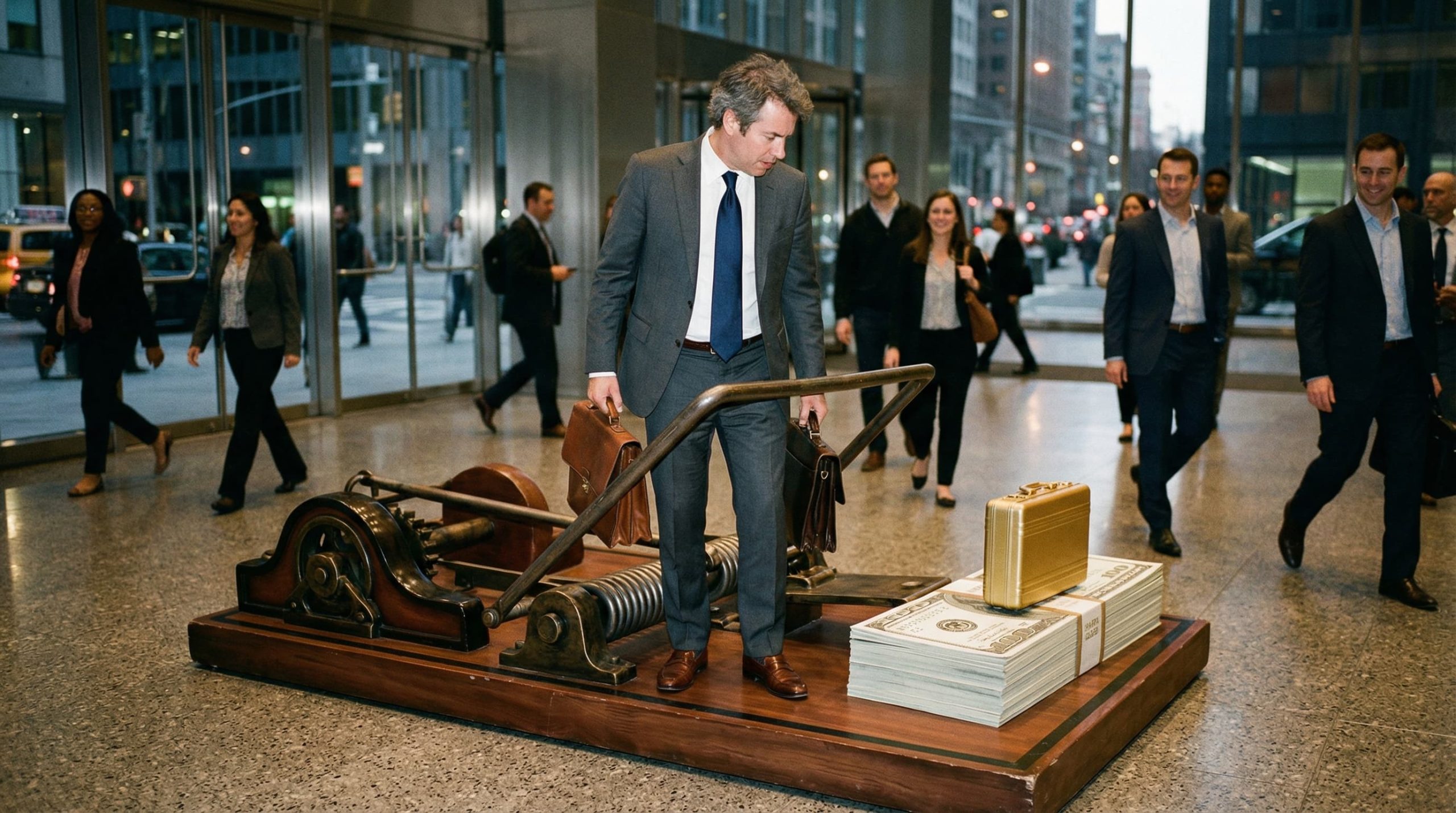

The Commodity Trap: How Technically Superior Companies Get Priced Like Generalists
DemandSignals™ | Highly Persuasive
There’s a moment in most high-stakes sales cycles that almost nobody talks about.
It happens after the second or third proposal.
The buyer has seen what three or four credible suppliers can do. The capabilities look roughly equivalent. The case studies feel interchangeable.
And so the committee does what committees do when the options look the same: they start negotiating on the one dimension they can compare objectively.
Price.
The technically superior company — the one with demonstrably better processes, deeper expertise, and stronger results — ends up in a price conversation it should never have entered. Not because it’s priced wrong. Because the buyer couldn’t tell the difference between them and a supplier that actually is cheaper for good reason.
That’s the commodity trap. And it’s almost never a pricing problem.
What’s Actually Happening
The trap has a specific structure.
Your differentiation is real. Your team is better trained. Your methodology is more rigorous. Your outcomes data is stronger.
You know this because you’ve lived it — in client relationships, in post-project reviews, in the conversations where clients tell you they’ve never had a partner who operates like this.
But that differentiation lives inside the relationship. It’s not visible before the relationship begins.
From the outside — from the vantage point of a buyer who’s evaluating you against three other firms — your website looks broadly similar to your competitors’. Your proposal follows a similar structure. Your case studies make similar claims. The signals you’re sending don’t match the substance you’re holding.
This is what brand perception does to pricing power: when buyers can’t see the quality difference, they don’t pay for it. Why would they?
The Heuristic That's Working Against You
Buyers use mental shortcuts to evaluate complex decisions. One of the most consistent: when quality is ambiguous, price becomes the proxy.
But here's where it gets expensive.
When you drop your price to win, or allow the negotiation to centre on fees, you don't just compress this deal's margin. You send a signal. A high price says "we believe our work justifies this." A discounted price — or worse, a price that matches a generalist alternative — says "we're in the same category as these other firms."
The buyer doesn't conclude you're generous. They conclude you're comparable.
Discounting quietly erodes your future brand power — not just in the deals you've discounted, but in the market's long-term perception of what you're worth. Each time you compete on price, you deepen the category association you're trying to escape.
The commodity trap compounds.
The Price-Quality Loop That Works Against You
Here's the mechanism in full.
When buyers can't evaluate quality directly — which they can't, before the work has been done — they look for proxy signals. Price is one of the most reliable. A high fee implies the company believes its work justifies the premium. A fee that matches the generic market rate implies the opposite.
The technically superior company that allows itself to be dragged into commodity-level price negotiations is inadvertently sending two signals simultaneously. First: our work is priced like the generalists we're competing against. Second: we're willing to accept that comparison.
Neither signal is intentional. Both are real.
The remedy isn't raising your price arbitrarily. It's building the external signals that justify the price before it's questioned. When a buyer arrives at your proposal already convinced they're looking at a specialist — because the website made that clear, the conversation confirmed it, and the case studies were specific enough to be distinguishable — the fee conversation starts from a different place entirely.
Why we're trapped in price wars is almost always a signal problem, not a pricing problem. The fee is fine. The signals that should precede it aren't in place.
Two Companies That Understood This
Fastenal sells industrial fasteners. Nuts, bolts, screws. The definition of commodity product in the eyes of most buyers.
They broke the commodity frame not by changing what they sold but by changing what they sold around it. On-site inventory management. Procurement cost analysis. Supply chain optimisation. The fasteners became almost incidental. Fastenal became a systems partner — one whose value couldn't be measured in per-unit pricing because it wasn't priced that way.
Parker Hannifin did something similar in motion and control technology. They could have competed on component specifications. Instead they built their commercial position around total system engineering — the cost of unplanned downtime, the value of precision in complex environments, the risk reduction of having one accountable partner rather than four. The comparison set shifted from component suppliers to strategic operational partners.
Same fundamental capability. Completely different buyer conversation.
The trap isn't sprung by what you sell. It's sprung by the frame you allow the buyer to use when evaluating what you sell.
If your differentiation isn't legible before the relationship begins, it doesn't exist in the evaluation. Buyers can only pay for what they can see.
The Brand Gravity Momentum Session™ identifies exactly where your commercial signals are failing to communicate what your work is actually worth — and what needs to change to shift the conversation before the first proposal goes out.
The Four Places the Trap Is Set
Most technically superior companies fall into the commodity trap at one of four specific moments. Knowing which one applies tells you where to intervene.
The website. If your homepage describes your capabilities in the same language your competitors use, you've invited a price comparison before anyone has spoken to you. Buyers categorise you from the first paragraph. What your website communicates to buyers without your team present is the first moment the trap is either set or avoided.
The proposal. A proposal structured around inputs — your team, your process, your timeline — invites buyers to compare inputs with competitors'. A proposal structured around outcomes — what changes, what risks are eliminated, what the client's situation looks like twelve months from now — creates a different comparison. The buyer is no longer asking "is their process better than the others?" They're asking "is this outcome worth this investment?" Completely different question.
The first conversation. How you open the first meeting tells the buyer which category to put you in. If you lead with credentials, you're signalling that this is a credential evaluation. If you open with insight — something specific about their situation that demonstrates you've been paying attention — you're establishing a different kind of authority from the first minute.
The case study. Most B2B case studies read identically regardless of who produced them. Problem. Solution. Result. Percentage improvement. The technically superior firm has better stories than its competitors — more nuanced, more specific, more honest about what the challenge actually looked like. But if those stories are written in the same format as every other firm's case studies, the superiority is invisible. Why most B2B case studies fail to persuade is precisely this: they prove competence rather than demonstrating distinction.
The Commodity Trap Scorecard
Score each of the following 1–3. (1 = this is us, 3 = we do this well)
1. Our homepage describes what makes us specifically different from our closest three competitors. (1 = sounds the same as everyone else / 3 = a competitor couldn't say this)
2. Our proposals lead with the specific outcome the client will achieve, not our methodology. (1 = heavy on process and credentials / 3 = outcome-first throughout)
3. Our case studies include a specific, named challenge that only we've solved in this way. (1 = generic problem/solution format / 3 = the story couldn't be told by a different firm)
4. Our pricing conversations start from value delivered, not from time or resources spent. (1 = we often get anchored to market rates / 3 = we set the frame before the fee comes up)
5. A buyer who's never met us can explain in one sentence why we're different from our competitors. (1 = unlikely / 3 = confirmed by multiple new clients)
Score: 13–15: You've broken the commodity frame. 9–12: You're partially trapped — the signals are inconsistent. 5–8: The trap is fully set. Your quality is invisible from the outside.
The Cost Calculation
Before getting to the field test, it's worth making the commodity trap's cost concrete.
Take your average fee per engagement. Estimate the percentage of competitive evaluations you lose on price — not because the competitor was genuinely better, but because the buyer couldn't distinguish between you well enough to justify the premium. For most technically superior companies in professional services and B2B industrial sectors, that number sits between 20% and 40% of qualified opportunities.
Apply that percentage to your annual revenue. The resulting number is the rough annual cost of operating without commercial signals that match your actual capability.
It's not a marketing budget question. It's a revenue question. The clarity premium — the measurable price uplift that comes from being clearly understood before the fee conversation starts — is one of the most consistent findings in B2B commercial research. Buyers pay more when they understand faster what makes a company the right choice.
The Field Test
Before your next proposal goes out, test it against one question: Could a direct competitor send this proposal with their name on it instead of ours — and have it read as equally credible?
If the answer is yes, the proposal is confirming a commodity comparison rather than preventing one.
The fix isn't a better proposal template. It's a clearer commercial position — one specific enough that the proposal becomes evidence of something the buyer couldn't get elsewhere. That's what B2B branding actually does in commercial terms. It makes the difference visible before the conversation even starts.
The technically superior company loses more deals than it should. Not on quality. On legibility.
The commodity trap isn't a pricing problem. It's a perception problem — and perception is set before your team walks in the door. The companies that escape it have built commercial signals that make their quality visible in the evaluation, not just in the relationship.
The Brand Gravity Momentum Session™ maps where your differentiation is invisible to buyers evaluating you for the first time — and builds the signal architecture that makes your actual capability commercially legible before the price conversation starts.
HP DemandSignals™ — Strategic brand intelligence for business leaders. Read more at Highly Persuasive →