Brand Strategy, Identity, Design, Positioning & Messaging
Before most serious buyers ever call or send an email, they spend at least twenty minutes researching you.
They look at your website. They read how you describe yourself. They compare what they find against what they already know about the market. They scan for specific signals — whether your work matches the tier they’re operating in, whether your proof is specific enough to be credible, whether the company they encounter online feels like the kind of company they’d be comfortable defending to their own stakeholders.
That research happens before first contact. Before any conversation. Before you know they exist.
When the signal is right, serious buyers arrive pre-convinced. Price resistance softens. The right clients find you first. When there’s room to strengthen the signal, that commercial potential sits unrealised — and no amount of execution effort closes a positioning gap.
Engagements across B2B, manufacturing · professional services · SaaS · logistics · hospitality · legal · property — in Thailand, Singapore, Australia, the UK, Europe, and North America.
As Seen In:








BRAND CREDIBILITY GAP DIAGNOSTIC™
If you want to quantify the commercial cost before any conversation, the Brand Credibility Gap Cost Diagnostic™ maps the gap between your brand’s current signal and the revenue it should be generating — in under 5 minutes.
WHAT STRONG BRAND GRAVITY™ PRODUCES
Brand Design & Brand Strategy Services That Build Brand Gravity™
Companies with clear positioning consistently outperform on the metrics that matter. McKinsey & Company’s research across B2B markets shows a 20% EBIT margin premium for companies with strong brand positioning over category-weak competitors. Bain & Company analysis finds that a 1% improvement in pricing power typically generates a 6–14% uplift in operating profit.

Brand Discovery & Research
Know your market, buyer, and where your brand can win.
We interview customers, scan competitors, and map perceptions to spot the gaps your brand can own. Clear evidence replaces guesswork, so decisions feel obvious and the team aligns fast.

Brand Identity Design & Logo Systems
Corporate identity built to signal the right tier at every touchpoint. Mark, typography, colour, photography, layout — assessed before a buyer reads a word. We design identity systems where every element earns its place commercially, not just aesthetically.

Brand Strategy Consulting & Go-To-Market
Where you compete, what ground you own, why buyers should choose you over every alternative. Most companies describe their capabilities. We build the commercial argument that makes choosing you feel rational and every competitor feel like the risk.

Digital Sales Enablement
Prove the brand fast. Move buyers forward. Your website is the most visible brand asset. We build pages that show proof quickly, reduce friction, and convert visitors into enquiries and sales.

Brand Positioning & Differentiation
The foundation everything else sits on. Where you compete, what narrative you own, why the right buyer should choose you over every alternative. Without clear positioning, identity is decoration. With it, every other investment compounds.

Proof Architecture & Business Assets
Claims without evidence are noise. Case studies framed around commercial outcomes, testimonials structured to answer procurement's actual questions, credentials presented as risk reduction. The proof layer that makes choosing you feel safe.

Brand Messaging Architecture & Brand Narrative
The language system that turns capability into conviction. Positioning statement, value proposition, narrative architecture, sector-specific messaging, and the internal Brand Narrative Playbook™ that ensures every person representing the company tells the same coherent story.

Brand Activation & Marketing
Getting the brand into the market. Website, sales materials, pitch decks, LinkedIn presence, proposal templates. The execution that turns strategy into visible commercial reality.
Explore how every part of your business works harder when it’s part of a brand gravity system.
Recent Client Work

The Edgewater Hotel — Direct Booking Growth & Hotel Marketing Programme
The Edgewater Hotel — Direct Booking Growth & Hotel Marketing Programme

Hotel Brand Identity Design – Ease Hotel | Hospitality Branding Firm
Hotel Brand Identity Design – Ease Hotel | Hospitality Branding Firm

KSH Industrial — B2B Brand Identity System & Corporate Profile
KSH Industrial — B2B Brand Identity System & Corporate Profile
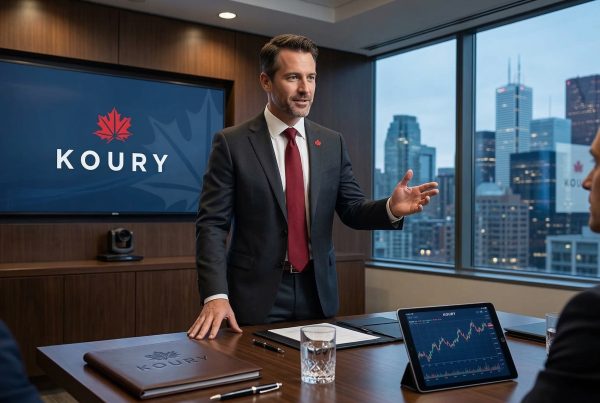
Koury Capital — Venture Capital Brand Identity & Institutional Credibility
Koury Capital — Venture Capital Brand Identity & Institutional Credibility

Hotel & Resort Branding Case Study – The Crystal – Koh Samui
Hotel & Resort Branding Case Study – The Crystal – Koh Samui

B2B Branding & Advertising Design for Advance Tyre – Industrial Marketing Case Study
B2B Branding & Advertising Design for Advance Tyre – Industrial Marketing Case Study

Cafe Brand Identity Design – The Hub Samui Case Study
Cafe Brand Identity Design – The Hub Samui Case Study
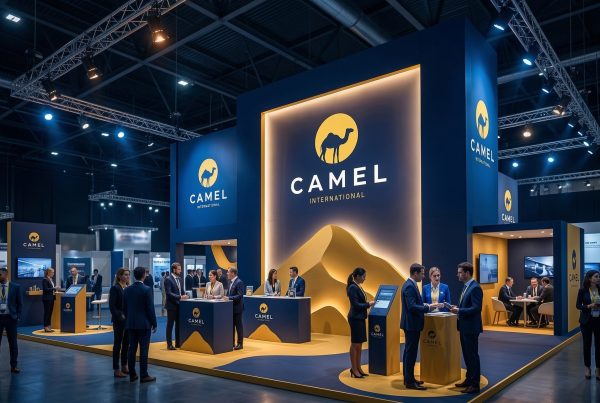
Camel International — B2B Food Ingredients Supply Chain Identity
Camel International — B2B Food Ingredients Supply Chain Identity
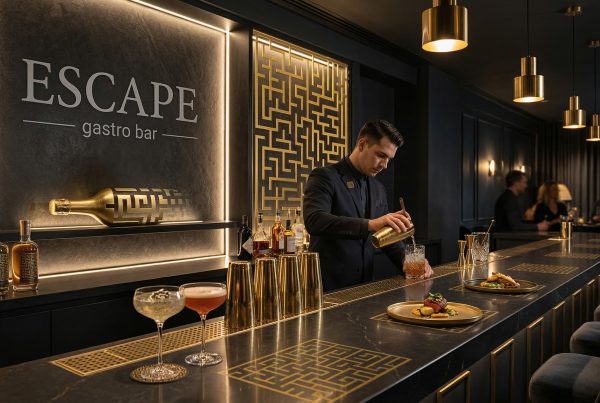
Restaurant Brand Strategy, Identity & Menu Design Case Study – Escape Gastro Pub
Restaurant Brand Strategy, Identity & Menu Design Case Study – Escape Gastro Pub

Spa Branding Case Study – Have A Spar Spa, Koh Samui | Highly Persuasive
Spa Branding Case Study – Have A Spar Spa, Koh Samui | Highly Persuasive
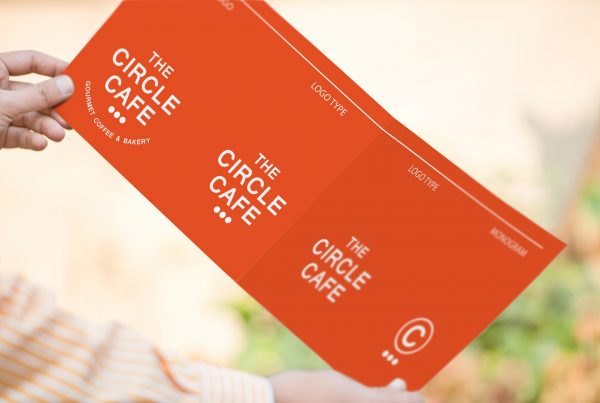
Café Branding & Identity Design for The Circle Café – Restaurant Branding
Café Branding & Identity Design for The Circle Café – Restaurant Branding
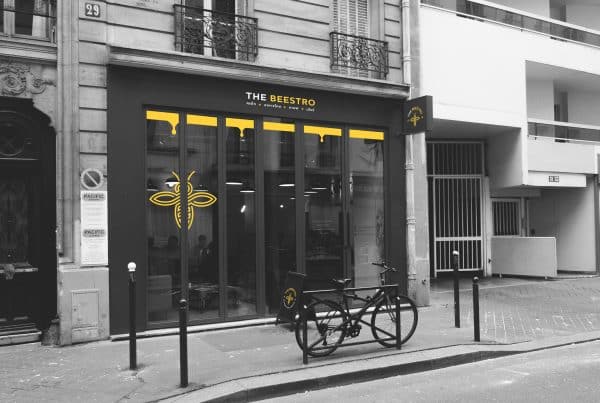
Restaurant Brand Identity Design for The Beestro – F&B Branding in Bangkok
Restaurant Brand Identity Design for The Beestro – F&B Branding in Bangkok
Trusted by Brands in B2B, Manufacturing, Industrial, Logistics, SaaS, Services, Consulting, F&B, Hospitality, Corporate & More

Quality Work
“Our customers are incredibly diverse, from families to healthy-eaters and vegans. We needed a brand that could speak to all of them. Highly Persuasive delivered a fresh, modern identity that perfectly captures our vibe. The new menu is a perfect example—it’s clearer, more appealing, and our average check size has increased by 15% in the 6 months since the rebrand.”
Hassan M, – Owner – The Hub Samui
What Makes Up A Strategic Brand Identity?
Most branding agency firms focus soley on design. Logo, corporate identity, website. But strategic branding take a more informed approach.
Big Picture Brand Thinking in 20 Minutes
Is Your Brand Persuading or Just Presenting?
Most brand opportunities aren’t visible from the inside. The positioning that could work harder for the company you are now. The messaging with clearer articulation that could accelerate decision velocity. The identity that, strengthened in the right places, would better signal the level you’re already operating at.
The Brand Gravity Momentum Session™ is a free, 20-minute live working consultation. We look at your website, pitch materials, and key assets in real time — and identify the 3 to 5 areas with the greatest commercial opportunity. Where your brand could work harder, where clearer signal would reduce evaluation time, and where a targeted change would have the most impact on pipeline, pricing, or close rate. You leave with a clear picture of where the highest-value opportunities sit — and a recommended path to capture them.
The Brand Gravity™ System
A strategic framework for diagnosing why some companies are easy to choose — and others aren’t. Built on the five forces that shape every brand in every market, and the eight components that either generate commercial gravity or create friction against it. We don’t prescribe a fixed set of deliverables. We diagnose which forces are working against you, identify the highest-impact interventions, and build from there.
The Brand Gravity Momentum Session™ is where we map which forces are working in your favour and which aren’t — and show you exactly what fixing the gap changes commercially. Free. 20 minutes.
Frequently Asked Branding Questions
1. Our sales cycle is too long and high-value deals keep stalling. How is that a brand problem?
A stalled deal is rarely a sales failure; it is a narrative failure. In any high-stakes decision, the buyer’s primary emotion is fear—the fear of making a mistake that could damage their career. When a prospect goes silent, it is because your brand has failed to overcome that fear.
This invisible headwind is what we call Brand Friction™. It is the accumulation of doubt, confusion, and perceived risk that your current brand creates. It manifests as a sales cycle burdened by endless questions, consensus-building by committee, and a final, fatal hesitation. The prospect does not choose a competitor; they choose the safety of doing nothing.
Our first order of business is not to “improve your messaging.” It is to conduct a forensic diagnosis of your commercial process to identify the precise points where friction is killing your momentum. We analyze the argument your brand is making—from the first ad a prospect sees to the final proposal they sign—to find the narrative gaps that create uncertainty.
The solution is to re-engineer that argument. We build a powerful, cohesive brand narrative that anticipates and neutralizes the buyer’s unspoken fears. It builds such a powerful case for the cost of inaction that staying with the status quo becomes the riskiest decision of all. The result is a measurable increase in deal velocity, not because your salespeople are pushing harder, but because your brand is pulling with an irresistible logic.
2. We're constantly forced to compete on price. How do we build a brand that can command a premium?
Competing on price is not a strategy; it is a symptom of brand failure. It is the market’s polite way of telling you that you are a commodity. Any attempt to escape this trap by adding one more feature or offering a slightly better service is a fool’s errand. The solution is not to play the game better; it is to change the game entirely.
The antidote to commoditization is Brand Gravity™. This is the state where your brand exerts a natural and powerful pull on your ideal customers. It is the condition of being seen not as one of many options, but as the only logical choice. A brand with gravity does not need to compete on price because it is not competing on the same terms as everyone else.
Creating this state is a matter of disciplined strategy, not creative fancy. It begins with a dispassionate analysis to uncover your “special genius”—the one defensible point of view, proprietary process, or unique insight that you can own. This becomes the new center of gravity for your brand.
We then build your entire commercial system around this one core idea. Your website ceases to be a catalog of services and becomes a manifesto for your philosophy. Your sales presentations stop listing features and start teaching customers a new and better way to see their own business. Every piece of your brand becomes an instrument for re-framing the market in your favor.
This is the only sustainable path to pricing power. When you have successfully changed the battlefield, the conversation is no longer about what you cost. It is about what it costs them not to work with you.
3. Our messaging is inconsistent. What is the process for creating a story that sticks?
An inconsistent message is the sign of an unfocused strategy. The problem is not that your teams are poor communicators; it is that your leadership has not given them a single, powerful story to communicate. To fix the message, you must first fix the strategy.
The process begins with Diagnosis. We conduct a forensic audit of your brand’s current narrative—both internal and external. We interview your leaders, your salespeople, and, most importantly, your customers. We seek to understand the gap between the story you believe you are telling and the story the market is actually hearing.
With this evidence in hand, we move to Strategy. We facilitate a series of workshops with your leadership team to make the hard choices that are the foundation of a great brand. We forge a consensus around a single, powerful strategic position and craft the Core Brand Narrative—the foundational story that will serve as the undisputed logic for the entire company.
The final phase is Systematization. A strategy is useless without a system to enforce it. We codify the new narrative into a Brand Narrative Playbook™. This is not a fluffy document of values; it is a practical field manual for your commercial teams, containing the elevator pitch, key talking points, and answers to common objections. We then train your teams until the new story becomes second nature.
Only then do we begin the work of rewriting your website and redesigning your sales materials. This disciplined process ensures that the final message is not just creative, but is a consistent and effective commercial weapon
4. Why should a successful, established company invest in a rebrand?
For an established company, a rebrand is not about fixing something that is broken. It is about ensuring the business remains vital and relevant for its next decade of growth. A brand that was perfectly suited for the market of yesterday can become a dangerous liability in the market of tomorrow. The investment is an offensive strategy, not a defensive repair.
There are three primary commercial drivers for such an investment. First, to Increase Efficiency. Your current brand may be successful, but it is almost certainly inefficient. It forces your highly-paid sales team to spend time correcting outdated market perceptions. It forces you to spend more on marketing to cut through the noise because the brand itself no longer has a sharp, compelling edge. A strategic rebrand is an investment in a more efficient commercial engine.
Second, to Expand Pricing Power. An established brand can often become taken for granted. A rebrand is a powerful opportunity to re-state your value to the market on new, more ambitious terms. It is a strategic moment to re-position your firm around a higher-value narrative, justifying a premium price and improving your margins.
Third, to Win the War for Talent. A-list talent is not attracted to companies that feel static. They are attracted to companies with a clear, ambitious, and modern vision for the future. A powerful rebrand is your single most effective recruiting tool. It signals to the best people in your industry that you are a company on the move.
The question is not whether you can afford to rebrand. The question is whether you can afford to enter the next five years with a brand that was built for the last five.
5. How do you ensure a new brand will actually work in the market?
A brand that is built on internal opinion is destined to fail. The market is an unforgiving judge of corporate vanity. Our process is designed to systematically eliminate this risk by ensuring that the voice of the customer is not just a data point, but is the central, guiding force throughout the entire engagement.
This principle of “outside-in” thinking is non-negotiable. It begins in the Brand Discovery phase. Before any creative work is considered, we conduct deep, qualitative interviews with your best customers. We seek to understand their world so thoroughly that we can articulate their problems and aspirations better than they can themselves. This research provides the raw, psychological insights that inform every subsequent decision.
These insights are then used to build the Brand Strategy. The core narrative and positioning are not invented; they are engineered to be a direct and powerful response to the customer’s deepest, often unstated, needs. We craft a message designed to enter the conversation that is already taking place in your customer’s mind.
Only when this strategic foundation is set do we move to Brand Design. The creative work is then judged against a simple criterion: does this design powerfully and authentically express the strategic promise that we know will resonate with our target audience? In some engagements, we employ Creative Validation, presenting the new identity concepts to a panel of your ideal customers to gauge their gut-level response and ensure the message we intend to send is the message being received.
This disciplined process is what separates professional brand development from amateur guesswork. It is how we ensure that the final brand is not just a beautiful piece of art, but an effective tool of commerce.
6. Our portfolio is a mess of products and services. What is brand architecture?
Brand architecture is the strategic discipline of organizing your portfolio of products, services, and sub-brands to be as clear and profitable as possible. A logical, intentional architecture acts as a “secret salesperson,” guiding customers to the right solution, making it easy for them to buy more from you, and building the value of your entire company. An accidental or confusing architecture, by contrast, creates profound “Brand Friction,” confuses customers, and forces your own products to compete with each other.
Think of it like organizing a department store. A well-organized store has a clear logic: men’s clothing is on one floor, home goods on another. A customer can easily navigate to what they need and discover other related items along the way. A poorly organized store is a chaotic jumble. The customer gets frustrated and leaves, and a huge amount of potential revenue is lost.
There are three primary strategic models for brand architecture:
- The “Branded House”: In this model, a single, powerful master brand is used for everything. The advantage is massive efficiency. Every dollar spent reinforces the master brand, and the trust in that brand makes it easier to launch new offerings. This is the right model when all your offerings share a common promise and target a similar market.
- The “House of Brands”: Here, the parent company is invisible, and each product is its own distinct brand. The advantage is flexibility. It allows a company to target very different markets with very different promises without creating confusion. The cost, however, is significant, as each brand must be built and supported independently.
- The Hybrid Model: This model uses endorsements or sub-brands to strike a balance. It lends the credibility of the master brand while allowing the individual offering to have its own unique identity.
Choosing the right architecture is a critical strategic decision that must be driven by your long-term business goals. The process involves a deep audit of your current portfolio, research into how your customers actually perceive and navigate your offerings, and a clear-eyed analysis of the financial and strategic implications of each model. The result is not just a cleaner sitemap; it is a powerful commercial strategy that unlocks hidden revenue, builds long-term equity, and provides a clear framework for future growth and innovation.
7. What does a real brand strategy process look like, from start to finish?
A real brand strategy process is a rigorous, evidence-based business discipline, not a series of feel-good creative workshops. It is a structured journey designed to move a company from a state of market confusion to a position of strategic clarity and commercial power. The process can be broken down into three distinct, non-negotiable phases: Diagnosis, Strategy, and Activation.
Phase 1: Diagnosis (Typically 4-6 weeks) This is the foundation. Before we can determine where to go, we must have an unflinchingly honest understanding of where we are. This phase is about replacing internal assumptions with external reality. It involves:
- Internal Audit: Deep, confidential interviews with your leadership and key commercial staff to understand the business model, the culture, and the internal perceptions of the brand.
- Competitive Analysis: A forensic deconstruction of your competitors’ brand narratives to identify their strategies and find the unoccupied “white space” in the market.
- Customer Research: The most critical step. We conduct qualitative interviews with your best customers and, more importantly, prospects you lost. We uncover their true motivations, fears, and the language they use to describe their needs. This provides the raw, unfiltered truth about your position in the market.
Phase 2: Strategy (Typically 4-6 weeks) Armed with the data from the diagnostic phase, we facilitate a series of intensive workshops with your leadership team. This is where the hard strategic choices are made.
- Positioning: We forge a consensus around a single, defensible market position.
- Narrative Development: We craft the core brand story—a powerful, persuasive argument that will serve as the foundation for all future communications.
- Playbook Creation: We codify this strategy into a Brand Narrative Playbook™. This is a practical, operational manual for your sales and marketing teams, containing the elevator pitch, key messages, and objection handling.
Phase 3: Activation (Timeline varies, typically 3-6 months+) A strategy is useless until it is brought to life. This phase is about systematically embedding the new brand into every aspect of your business.
- Internal Launch & Training: We ensure your entire team understands, believes in, and can articulate the new brand story.
- Creative Expression: We direct the creation of the new brand assets, starting with the highest-impact items like your website and core sales presentation. This ensures the visual and verbal identity is a powerful expression of the core strategy.
- Market Launch: We help orchestrate the public launch of the new brand to ensure it makes the maximum impact and sets the new trajectory for the business.
This structured process is what separates professional brand strategy from amateur brand decoration. It ensures the final result is not just a new look, but a powerful commercial weapon designed to win with branding consultants in Bangkok
8. Our market is saturated and everyone sounds the same. How do we create a brand that actually stands out?
In a saturated market, the attempt to stand out by being “better” is a fool’s errand. Shouting louder, adding one more feature, or offering a slightly lower price are all tactics of desperation. They are the death rattle of a commoditized brand. The only winning move is not to play their game at all. To truly stand out, you must change the basis of competition.
A winning brand strategy does not try to be a better version of the competition; it works to become something entirely different in the customer’s mind. It carves out a “category of one” by identifying and owning a unique point of view.
The process begins by looking for a different question to answer. Your competitors are all answering the question, “Who is the best provider of X service?” Your job is to find a more interesting, more valuable question that only you can answer. For example, in a crowded industry, instead of answering, “What is the best way to manage tasks?”, a company might stand out by answering a different question: “What is the calmest, most productive way for teams to work together?” They are not selling software; they are selling a philosophy. That is how you stand out.
This requires two things:
- Deep Insight: You must have a genuine, non-obvious point of view about your industry and your customers. This cannot be invented by a marketing committee. It must be born from deep expertise and a willingness to challenge the conventional wisdom. This insight is uncovered during the diagnostic phase of a strategy project, through deep conversations with your experts and your customers.
- Strategic Courage: Once you have this unique point of view, you must have the courage to commit to it. This means you must be willing to say “no.” You must be willing to stop talking about the things everyone else talks about and focus relentlessly on your unique story. Your entire company, from your website to your sales pitch to the way you hire, must become a living embodiment of this one core idea.
This is not easy. It requires discipline and a departure from the comfortable, but ineffective, tactics used by your competitors. But it is the only path to true differentiation. It is how you transform your business from a commodity that competes on price to a destination brand that customers seek out and pay a premium for.
9. What's the real difference between hiring a branding agency versus a brand strategy consultancy?
The difference is the difference between a decorator and an architect. Both are essential to creating a magnificent building, but they solve fundamentally different problems and are engaged at fundamentally different stages of the process. Choosing the wrong one for your problem is a recipe for expensive failure.
A branding agency is a master of expression. Their world is one of aesthetics, creativity, and communication. You hire them to create the tangible assets of your brand: the logo, the website, the ad campaign. Their expertise is in taking a pre-defined message and making it beautiful, memorable, and impactful. They are the expert craftsmen you hire to build the house.
A brand strategy consultancy, by contrast, is a master of positioning. Our work begins long before a single pixel is designed. We are not builders; we are the architects. Our process is not creative, but diagnostic and strategic. We begin by addressing fundamental business challenges: “Why are our sales cycles so long?”, “Why are we losing to cheaper competitors?”, “Why does the market seem confused about our value?”. Our tools are market research, competitive analysis, and financial modeling. Our success is measured not by creative awards, but by hard business metrics: an increase in market share, a reduction in the cost of customer acquisition, or an improvement in profit margins.
Consider the problem of a struggling retail store. The brand agency is the expert you hire to design a beautiful new sign for the front of the store. They will ensure the typography is elegant, the colors are impactful, and the materials are of the highest quality.
The brand strategy consultancy is the expert you hire to determine if the store is in the right neighborhood to begin with.
Our work is to define the core logic of the brand: who it is for, what it promises, and why it is the only viable choice. We create the blueprint. The tangible assets—the logo, the website, the advertising—are merely the execution of that strategic blueprint. To engage an agency to design a new identity without first completing this strategic work is akin to hiring a master carpenter to build a house without an architect’s plans. The result may be beautiful in parts, but it is unlikely to be sound in structure.
10. How do you launch a new brand without confusing our customers or our own team?
A brand launch is not a party. It is a carefully orchestrated military campaign. A successful operation requires meticulous planning, disciplined execution, and a clear understanding that the most important audience is not the external market, but your own internal team. A launch that fails to win the hearts and minds of your employees is destined to fail in the marketplace.
The first and most critical step is the Internal Launch. This must precede any external announcement. Your employees are your primary brand ambassadors. If they are confused, skeptical, or uninspired by the new brand, that sentiment will inevitably poison their interactions with customers. The internal launch should be treated as a major corporate event, led directly by the CEO. It is an opportunity to:
- Explain the “Why”: Clearly articulate the strategic rationale for the change. Employees must understand the business reasons that necessitated the evolution of the brand.
- Tell the New Story: Present the new brand narrative with passion and conviction. This is not the time for a dry recitation of messaging points. It is the time to inspire the team with a bold vision for the future.
- Equip the Troops: Provide every employee, especially those in customer-facing roles, with the tools and training they need to become confident advocates for the new brand. This includes intensive sessions on the Brand Narrative Playbook™.
Only after the internal army is aligned and mobilized should you turn your attention to the External Launch. This is not simply a matter of issuing a press release. It should be a multi-channel campaign designed to tell a compelling story about your company’s transformation. The key steps include:
- Orchestrate the Unveiling: Ensure that all primary brand touchpoints—especially your website and social media profiles—are updated simultaneously to present a unified and consistent new face to the world. A disjointed rollout creates confusion.
- Control the Narrative: Proactively communicate the story of your new brand. This can be anchored by a definitive piece of content from the CEO (a letter, a video, or a keynote presentation), supported by a coordinated media and analyst relations campaign. The goal is to frame the change on your own terms.
- Engage Your Key Stakeholders: Your most valuable customers, partners, and investors should not learn about your new brand from a press release. They deserve personal outreach from your leadership or account teams. This is a critical opportunity to reinforce the value of your relationship and explain how the brand evolution will deliver even greater benefits to them.
A successful launch is a moment of immense strategic leverage. It is a rare opportunity to re-capture the market’s attention, re-energize your employees, and set a new, more ambitious trajectory for the business. It must be treated with the strategic seriousness it deserves.
11. We operate in Asia but target Western buyers. Why does our brand underperform in procurement even when our capability is equal?
This is one of the most commercially significant and least-discussed patterns in international procurement. Western buying committees — consciously or not — categorise suppliers into three tiers before evaluating technical capability: Strategic Partner, Qualified Vendor, and Commodity Supplier.
The criteria they use to assign those tiers have very little to do with actual competence. They are almost entirely driven by brand signals: how the company presents itself, the sophistication of its communications, the calibration of its visual identity against the pricing level it’s claiming, the quality of its proof architecture, and whether the company’s positioning language matches the register that procurement teams at Western multinationals use internally.
A company operating from Bangkok, Kuala Lumpur, Jakarta, or Ho Chi Minh City with genuine technical depth in engineering, testing, manufacturing, or professional services can rank in the bottom tier of that categorisation on the basis of brand signals alone — before a single conversation happens. This is not bias in a legal sense. It is pattern-matching under uncertainty, which is how procurement teams manage risk at scale when evaluating suppliers they have no prior relationship with.
The commercial consequence is significant. Companies placed in the Commodity Supplier tier compete on price by default. They are evaluated later in the process, given less access to decision-makers, and expected to offer concessions that Strategic Partner-tier competitors never face. The gap is not closed by capability improvements. It is closed by closing the signal gap — aligning how the brand presents in Western contexts with the trust signals Western procurement actually uses to calibrate tier placement.
This is not an abstract positioning exercise. It requires understanding which specific signals create the categorisation effect in the target market, what the threshold between tiers looks like in practice, and how to restructure the brand’s visible layer — website, proposal design, messaging, proof architecture, founder credibility signals — to move the supplier into a different mental category before the RFP lands.
We have built this specifically for Asian companies targeting Western buyers. The Brand Gravity Momentum Session™ is where we map the gap and show what closing it changes in practical commercial terms.
Client Reviews & Testimonials
Built for high-trust, conversion-critical industries. Our work has increased revenue for B2B, hotels & resorts, SaaS, and real estate brands globally. Trusted in high-consideration markets where one click is worth > $1 k.










Request A Free Brand Gravity Momentum Session™
The gap between your current commercial signal and the one that wins the right work at the right price is almost always smaller than it looks from the inside. Two or three specific interventions — identified clearly in a 20-minute session — is usually enough to see it.
The Brand Gravity Momentum Session™ is free, senior-led, and takes 20 minutes. We look at your brand in real time and identify the 3 to 5 areas with the greatest commercial opportunity — where targeted work would have the most impact on pipeline, pricing, or close rate.