Your site is evaluated by procurement teams, technical committees, and senior decision-makers — not by the audience that signs off on designs internally. We build for the buyer.
Most websites are designed for internal approval — founders, leadership teams, design stakeholders who want the site to look right and represent the company well. That process produces a website that satisfies the people inside the business. It often fails the people outside it.
The buyer evaluating your company for a significant commercial engagement arrives with a specific purpose: to determine whether you are a credible, capable operator at the level they need. They’re not browsing — they’re assessing. And what they’re looking for is not how the site looks. It’s whether the site tells them, clearly and fast, that you can be trusted with a serious piece of their business.
We build websites around that question. Brand Gravity™ applied to the digital environment — positioning clarity, proof architecture, buyer-experience design, and visual authority calibrated to the tier of client the business is built to win.
Find Where Your Website Is Losing Serious Buyers
Is something small slowing your buyers down?
Ready for buyers who say “Yes” faster?
It’s usually one of three things — positioning clarity, proof architecture, or the buying experience itself. The Brand Gravity Momentum Session™ shows you which one, and what fixing it changes commercially.
Our senior strategists pull up your current site in real time and show you exactly where buyer confidence drops and what would need to change to move qualified buyers from interest to conversation.
Website Design Company Services – What a Well-Built B2B Website Produces
A website built around buyer psychology and commercial intent produces different outcomes from one built around aesthetics. These are the eight commercial differences.

Attract Buyers Who Are Ready to Engage
The right architecture, targeting the right intent signals, brings buyers in evaluation mode — not browsers. Commercial intent built into structure from day one, not retrofitted.

Visible in Search and AI-Generated Results
Every page built for both traditional Google performance and AI search visibility — the layer that increasingly decides which companies appear on a buyer's shortlist before a single website is visited.

Make Decisions Visible
Analytics configured around how buyers move through the evaluation journey — where they arrive, what they read, where they stop. Every change driven by evidence, not assumption.

Commercially Consistent Across Markets
Whether buyers are evaluating from Bangkok, Singapore, Sydney, or London, the brand impression is consistent. Market-specific positioning adjustments where needed, without fragmenting the core message.

Build Trust Before the First Conversation
Proof architecture, credibility signals, and positioning clarity that make a serious buyer confident before they reach out. The site does the trust-building work the first meeting used to have to do.

Shorten the Evaluation Cycle
Structured buyer journeys, clear offers, and specific proof reduce the time between a buyer arriving and a buyer reaching out. Friction in the evaluation path has a direct cost in deal velocity.

Keep the Commercial Asset Performing
Fast-loading, technically sound, and maintained to protect both ranking performance and conversion speed. Every fraction of a second of load time has a measurable cost.

Operate and Update Without Developer Dependency
CMS architecture that lets the business launch pages, update offers, and test messaging without technical bottlenecks. The site should move at the speed of the commercial strategy, not the sprint backlog.
What Every Engagement Includes
Commercial intent architecture, positioning-led copy, proof architecture, technical SEO foundation, Core Web Vitals compliance, AI search structure, analytics and conversion tracking, Google Business integration, schema markup, responsive design across all devices, and a CMS that lets you manage the site without developer dependency.

The Edgewater Hotel — Direct Booking Growth & Hotel Marketing Programme
The Edgewater Hotel — Direct Booking Growth & Hotel Marketing Programme

Hotel Brand Identity Design – Ease Hotel | Hospitality Branding Firm
Hotel Brand Identity Design – Ease Hotel | Hospitality Branding Firm

KSH Industrial — B2B Brand Identity System & Corporate Profile
KSH Industrial — B2B Brand Identity System & Corporate Profile
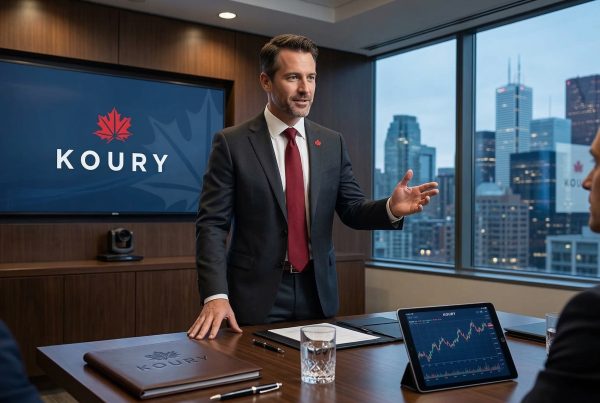
Koury Capital — Venture Capital Brand Identity & Institutional Credibility
Koury Capital — Venture Capital Brand Identity & Institutional Credibility

Hotel & Resort Branding Case Study – The Crystal – Koh Samui
Hotel & Resort Branding Case Study – The Crystal – Koh Samui

B2B Branding & Advertising Design for Advance Tyre – Industrial Marketing Case Study
B2B Branding & Advertising Design for Advance Tyre – Industrial Marketing Case Study

Cafe Brand Identity Design – The Hub Samui Case Study
Cafe Brand Identity Design – The Hub Samui Case Study
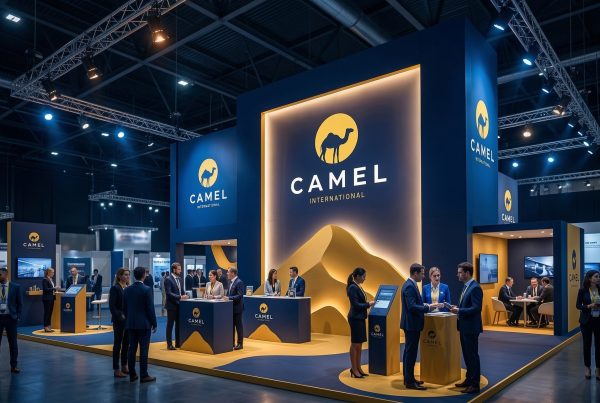
Camel International — B2B Food Ingredients Supply Chain Identity
Camel International — B2B Food Ingredients Supply Chain Identity
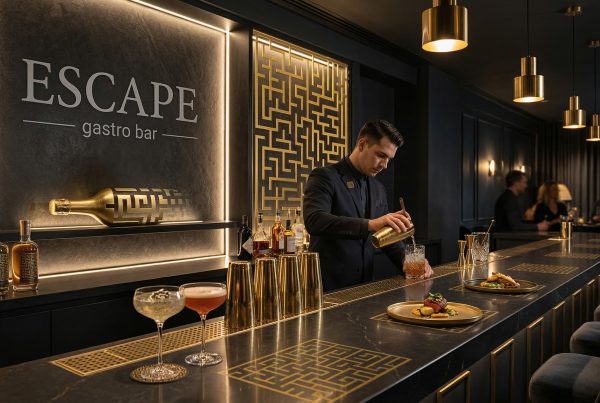
Restaurant Brand Strategy, Identity & Menu Design Case Study – Escape Gastro Pub
Restaurant Brand Strategy, Identity & Menu Design Case Study – Escape Gastro Pub

Spa Website Design Case Study | Thai Massage Business Koh Samui | Highly Persuasive
Spa Website Design Case Study | Thai Massage Business Koh Samui | Highly Persuasive

Spa Branding Case Study – Have A Spar Spa, Koh Samui | Highly Persuasive
Spa Branding Case Study – Have A Spar Spa, Koh Samui | Highly Persuasive

Adventure Tourism Website Design for Skydive Thailand – Conversion, SEO & UX Overhaul
Adventure Tourism Website Design for Skydive Thailand – Conversion, SEO & UX Overhaul
Trusted by B2B, SaaS, Hospitality, Service & Non-Profit clients in Thailand, APAC & worldwide

Quality Work
We’re in the high-tech manufacturing business. We were worried they wouldn’t know how to make our work interesting to customers and partners. We were very wrong. Since the launch, the number of leads from our site has increased significantly.”
— Arnon P., High-Tech Manufacturing

Quality Work
“Highly Persuasive didn’t just give us a great-looking site — they engineered an experience that attracts, converts, and ranks. We’re reaching audiences we didn’t even know were searching for us.”
Hassan M, – Owner – The Hub Samui
Built Around How B2B Buyers Actually Make Decisions
The psychology of the evaluation stage — not the awareness stage
B2B purchase decisions are not made by one person reading one page and converting. They involve multiple stakeholders, extended evaluation periods, risk-assessment conversations, and asymmetric information between the buyer and the vendor they’re considering. Designing a website that performs in that environment requires understanding the psychology driving every stage of that process.
We apply specific, named mechanisms — not vague UX principles — to each stage of the B2B buyer journey.
Reduce Perceived Risk at Every Decision Point
The single biggest purchase inhibitor in B2B evaluation is not price — it is the perceived risk of choosing wrong. Proof architecture, specificity of claims, and social proof calibrated to the buyer’s risk profile are the levers that reduce this. We design these into the structure, not as afterthoughts.
Guide the Evaluation Path Without Friction
Buyers in evaluation mode follow a specific cognitive sequence — they categorise, then assess fit, then look for proof, then evaluate risk, then consider next step. A website that interrupts this sequence with poor information hierarchy, misaligned CTAs, or content gaps at the wrong moment loses the buyer without any visible signal. We map and structure the path.
Signal the Right Tier Immediately
Buyers form category impressions in seconds — and those impressions determine whether they treat you as a strategic option worth engaging or a commodity worth a price comparison. The visual authority of the site, the quality and specificity of the proof, and the clarity of the positioning all contribute to the tier signal. We calibrate each one.
Book a Brand Gravity Momentum Session™ →
Search Performance Built In From Day One
A website that can't be found by the buyers it's built for is a commercial asset that isn't working
Organic search is one of the eight components of Brand Gravity™. A company that ranks for the queries its ideal buyers use has built a passive demand generation asset — one that generates qualified inbound before any conversation happens, because buyers encounter the brand as a credible source before they encounter it as a vendor.
Every website we build is structured for both traditional Google performance and the AI-generated search layer that is increasingly capturing early-stage buyer research. Technical SEO, page architecture, schema, and content structure built in from the start, not retrofitted after launch.
Commercial-Intent Keywords, Not Just Volume
Ranking for high-volume terms that attract the wrong buyers is a traffic problem dressed as an SEO win. We build around the specific queries buyers run when they are evaluating suppliers — the commercial-intent stage, not the awareness stage.
Structured for AI Search Visibility
AI-generated search results are now appearing above organic rankings for a growing proportion of commercial queries. The companies that appear in these results share a recognisable profile: clear topical authority, structured proof, and consistent positioning across every indexed surface. We build for both layers simultaneously.
Intent-Matched Landing Architecture
The right buyer arriving at the wrong page — or the right page with the wrong message — doesn’t convert. We build the full landing architecture, not just the homepage, to match the intent of every inbound source.
Search Authority That Compounds Over Time
Unlike paid media, organic search authority accumulates. A well-built site, producing substantive content across the right topic clusters, generates compounding commercial returns over 12 to 36 months. The investment pays back across its full lifetime, not just during the campaign window.
Book a Brand Gravity Momentum Session™ →
Your Website Is a Component of Brand Gravity™ — Not a Standalone Asset
Brand Gravity™ describes the accumulated commercial force that makes serious buyers choose you before the pitch starts. It manifests as shorter sales cycles, reduced price resistance, inbound from buyers who already believe you’re the right choice.
The website is where that force is either confirmed or undermined. Every upstream investment — in brand strategy, content authority, search performance, paid media, referral — delivers a buyer to your site at some stage in their evaluation. What they find there either validates the signal that brought them, or contradicts it.
Positioning That Survives the First 10 Seconds
A buyer who arrives on your site with high intent and reads generic positioning copy — “trusted partner,” “proven results,” “innovative approach” — becomes a buyer who questions whether they’ve found the right level of operator. Positioning clarity is the first commercial job the site has to do.
The Site Works in Rooms You’ll Never Be In
Buyers research extensively before first contact. Your champion presents your site to their committee. Procurement evaluates it against shortlisted alternatives. Each of these is a sales moment the website is navigating without you in the room. We build for all of them.
Commercial Performance Measured Properly
Analytics configured to track what actually matters: which buyers arrived from which sources, which pages they evaluated, where evaluation stalled, and what finally produced a conversion. Data that answers commercial questions, not just traffic questions.
Book a Brand Gravity Momentum Session™ →
Find Where Your Website Is Losing Serious Buyers
Is something small slowing your buyers down?
Ready for buyers who say “Yes” faster?
It’s usually one of three things — positioning clarity, proof architecture, or the buying experience itself. The Brand Gravity Momentum Session™ shows you which one, and what fixing it changes commercially.
Our senior strategists pull up your current site in real time and show you exactly where buyer confidence drops and what would need to change to move qualified buyers from interest to conversation.
Step 1. Brand Gravity Momentum Session™
A free 20-minute working session where we review your current site, identify the two or three points of greatest commercial friction, and outline what a properly built site would change. This is where we establish whether the engagement makes sense before either party commits.
Step 2: Commercial Brief & Architecture
The positioning question before the design question. We establish who the site is built to win, what the buyer’s evaluation journey looks like, and what the conversion architecture needs to support before a wireframe is drawn.
Step 3: Design, Build & Content
Visual authority calibrated to the target buyer’s tier expectations. Positioning-led copy. Proof architecture. Technical SEO and AI search structure built in. CMS configured for independent management.
Step 4: Launch, Measure, Compound
Launch with analytics configured for commercial insight. Performance measured against the right metrics from day one. Ongoing optimisation as buyer behaviour data accumulates.

Web Design Services – Frequently Asked Questions
What makes a B2B website design agency different from a standard web design company?
The difference is the starting point. A standard web design company begins with aesthetics — how the site looks, what the layout is, which template or framework fits the brief. A B2B website design agency begins with the buyer — who is evaluating your company, what they’re looking for when they arrive, what makes them stay and what makes them leave, and what the site needs to do commercially at each stage of a procurement or evaluation process.
B2B purchases are rarely made by one person in one session. A managing director’s first impression of your site is followed by a technical team’s assessment, a procurement function’s due diligence, and a committee’s eventual sign-off. Each of these is a different buyer with different evaluative criteria, arriving at the same site at different points in the decision cycle. A B2B website needs to hold up to all of them, simultaneously, without the vendor in the room to fill the gaps.
At Highly Persuasive, the design process is structured around that reality. Before a wireframe is drawn, the engagement establishes who the site is built to win, what the evaluation journey looks like for that specific buyer, and what the commercial architecture needs to support. Positioning clarity, proof architecture, and buyer-experience design are the three structural jobs the site has to do — and all three are determined before any visual decision is made.
The result is a website that performs under commercial scrutiny, not just under aesthetic review. That distinction is the difference between a site that earns stakeholder approval and a site that earns qualified inbound from the buyers the business actually needs to win. In most B2B sectors, the gap between those two outcomes is measurable in close rate, average deal size, and sales cycle length. We build for the second outcome.
How long does a B2B website design project take?
The honest answer is that timeline is determined by scope, and scope is determined by the commercial problem the site is being built to solve — not by a standard package structure. A focused engagement for a professional services firm that needs a repositioned website with a clear ICP, five to eight core pages, and a conversion architecture built for senior-level inbound looks different from a full brand and website build for a precision manufacturer entering a new geographic market.
That said, the typical range for a B2B website engagement — from Brand Gravity Momentum Session™ through discovery, architecture, design, build, and launch — is eight to fourteen weeks. The variables that extend timelines are almost always on the content and decision side rather than the production side: copy approval cycles, stakeholder review processes, case study sourcing, and brand asset availability. The production timeline is predictable; the internal alignment timeline is not always.
The engagement structure is designed to minimise that second variable. The commercial brief establishes positioning decisions upfront, before creative work begins, so design reviews are not the point where positioning debates happen. Most timeline slippage in website projects comes from creative work revealing unresolved strategic questions. We resolve the strategic questions first.
For companies with a defined rebrand or a clear brief already in hand, timelines compress. For companies using the website project as the entry point for a broader Brand Gravity™ engagement — which is common — the positioning work runs in parallel with discovery and the additional time it requires is recovered in the reduced revision cycle downstream. The Brand Gravity Momentum Session™ is the right starting point to scope the specific engagement honestly.
What does a B2B website typically cost?
Pricing scales with scope, and scope is determined by what the site needs to do commercially. A focused repositioning of an existing site — new positioning-led copy, restructured information hierarchy, updated proof architecture, technical SEO rebuild — sits in a different range from a full design and build project that begins from a blank commercial brief.
As a general orientation: focused website sprints for companies with an existing brand and clear positioning typically begin around $6,000 to $12,000. Full B2B website engagements — positioning work, full design system, complete page set, content production, and technical build — typically range from $15,000 to $35,000 depending on scope, number of pages, content requirements, and the complexity of the buyer journey being engineered. Enterprise-level or multi-market builds sit above that range.
What determines where a specific engagement falls within those ranges is not the size of the company — it’s the complexity of the commercial problem. A ten-person engineering consultancy targeting a specific procurement audience in two markets may require more strategic depth than a 300-person company with a simple brief and existing brand assets that can be adapted.
The more useful framing for most companies is return on investment rather than cost as a standalone figure. If a well-built website increases qualified inbound enquiries from the right buyer tier by 30% — a result that is consistently achievable with the right architecture and positioning — the commercial value of that increase relative to the investment is almost always favourable within twelve months. The Brand Gravity Momentum Session™ is the right starting point to scope the engagement and determine the realistic commercial impact before any financial commitment is made.
We already have a website. Do we need a full rebuild, or can you improve what we have?
In most cases, the right intervention is not a full rebuild. A full rebuild is warranted when the site’s fundamental architecture — its information structure, its positioning frame, its visual system — is misaligned with the commercial direction of the business. When the site is essentially working but underperforming in specific, identifiable ways, a targeted sprint is a faster and more commercially efficient path.
The most common scenarios for a targeted sprint: the homepage positions the company incorrectly for its current ICP and needs to be rebuilt from a new commercial brief; the proof architecture is weak and case studies need to be restructured for procurement-level evaluation rather than general interest; the conversion path from high-intent visitor to enquiry is broken or unclear; or the SEO and AI search foundation is absent and needs to be built into existing pages without a full visual redesign.
The Brand Gravity Momentum Session™ is specifically designed to answer this question. Within a 20-minute live review of the current site, the highest-leverage gaps become clear — whether those gaps require a page-by-page sprint or a more comprehensive rebuild. The recommendation is always based on the commercial gap, not on the size of the engagement it implies. If a $6,000 sprint fixes the highest-value problem, that is the recommendation. If the current site is working against the commercial direction of the business and the right move is to rebuild, that will be made clear with the reasoning to support it.
Most companies find that targeted intervention — fixing the positioning frame, restructuring proof, and cleaning the conversion path — produces material commercial improvement faster than a full rebuild, and at a fraction of the timeline and investment.
How do you approach copy and content? Do we need to provide it?
Copy is not a client deliverable at Highly Persuasive — it is a core part of the engagement. The distinction matters because positioning-led copy cannot be written from a client brief alone. It requires understanding the buyer’s evaluation psychology, the competitive landscape the company is operating in, the specific proof that needs to be structured and surfaced, and the commercial argument that needs to be made at each stage of the buyer journey.
Clients provide source material: existing brand documents, case study details, service descriptions, technical capability information, and input on the ICP and competitive context. From that material, and from the positioning work done in the commercial brief, we produce the full copy architecture — homepage through service pages, case studies, about, and any supporting content the engagement includes.
The process involves a review and iteration cycle before anything is built. Copy is presented in document format for stakeholder review before it moves to design, specifically so that positioning decisions are resolved at the copy stage and don’t surface as design revision requests later. This is not a minor workflow preference — it is the mechanism that keeps timelines predictable and prevents the most common source of website project delay, which is strategic disagreement discovered during visual review.
For companies where existing copy is already strong and well-positioned, the engagement adapts. The copy audit in the commercial brief phase identifies what works and what needs to change, and the production scope reflects that assessment. There is no default assumption that everything needs to be rewritten — only that everything needs to be commercially sound before it goes live.
Will the website rank in Google and appear in AI search results?
Search performance is built into every website we produce, not offered as an optional add-on. The distinction is structural: a site that is designed for commercial conversion and then optimised for search after launch performs materially differently from one where search architecture is embedded from the first page specification. We build for both simultaneously.
For traditional Google performance, the foundations include technical SEO compliance, Core Web Vitals performance, semantic heading structure, schema markup, internal linking architecture, page speed, and intent-aligned content at the commercial stage of the buyer journey. These are not features — they are baseline requirements of a commercially effective website in 2026.
For AI search visibility, the requirements are different in character but consistent in principle: clear topical authority, structured and specific proof, entity consistency across indexed surfaces, and content depth that AI systems interpret as credible expertise rather than generic description. Companies that build for AI search now are accumulating an advantage that will compound as AI-generated results capture a growing proportion of the queries buyers run when evaluating suppliers. Most of HP’s competitors are not yet building for this layer deliberately. We are.
What a website engagement does not include is ongoing SEO management — content production, link acquisition, and rank tracking over time. Those are available as a separate retainer through the SEO & AI Search practice. The website engagement builds the structural foundation. Ongoing search performance then compounds on that foundation through the content and authority work that follows.
How do you measure whether the website is working?
The measurement framework is set before launch, not after. The commercial objective of the website — qualified inbound from a specific buyer type — determines the metrics that matter, and those metrics are configured into the analytics architecture during the build.
The primary commercial indicator is qualified enquiry volume: how many contacts are initiated by buyers who match the ICP, arriving from the right intent signals, with sufficient seriousness to warrant a response. Secondary indicators include the sources of those enquiries, the pages they engaged with during evaluation, and the conversion path they followed. Tertiary indicators include search performance — ranking positions for target queries, organic traffic volume, and AI search citation frequency over time.
What the measurement framework explicitly excludes as primary indicators: page views, session duration, bounce rate, and social media referral volume. These are data points, not commercial outcomes. A site generating 50,000 monthly sessions and three qualified enquiries per month is performing worse commercially than a site generating 3,000 sessions and 25 qualified enquiries, despite looking better on a standard analytics dashboard.
The analytics configuration we install provides commercial clarity rather than traffic vanity. Within 60 to 90 days of launch, the data is sufficient to identify which sources, which pages, and which conversion paths are producing qualified pipeline — and which are generating activity without commercial return. That data drives the first round of post-launch optimisation, and the cycle continues from there. The website is not a completed asset at launch; it is a commercial system that improves as buyer behaviour data accumulates.
What if our brand needs work before the website can be built?
This is the most common situation we encounter, and it is worth naming clearly: a website built on unclear or incorrect positioning will underperform regardless of its design quality. A technically excellent, visually authoritative site that does not know who it is for, what it stands for, or why a buyer should choose it over available alternatives cannot do the commercial work the business needs it to do. Design quality amplifies the underlying message — it does not replace it.
In practice, this means many website engagements begin with a positioning phase before design work starts. The commercial brief process identifies whether the positioning question is resolved or open. If it is open — if the company is mid-repositioning, entering a new market, or carrying a legacy positioning frame that no longer matches the business it has become — the engagement includes the positioning work as the first phase.
This is not an upsell. It is the correct sequencing. A website built on resolved positioning requires fewer revisions, converts at a higher rate, and holds its commercial performance for longer before requiring a refresh. A website built on unresolved positioning is almost always rebuilt within 18 months as the business clarifies what it is and finds the site no longer reflects it.
The Brand Gravity™ System covers both positioning and the commercial web environment that expresses it. Engagements that begin with a positioning question and move through to a website launch are structurally sound because the foundational decisions have been made before any production begins. The Momentum Session™ is the right starting point to assess where the positioning is and what, if anything, needs to be resolved before the website work can produce its full commercial return
Do you work with companies outside Thailand?
The practice operates across ASEAN, Australia, the United Kingdom, and North America. The majority of website engagements are conducted remotely — all discovery, positioning, copy review, and design review work happens in structured digital sessions that do not require geographic proximity.
The geographic relevance of the Bangkok location is primarily logistical for ASEAN-based companies: time zone alignment with Thailand, Singapore, Malaysia, Indonesia, Vietnam, and the Philippines means that project communication happens within a standard working day rather than across a time zone gap. For companies in Australia, the overlap is workable. For UK and North American companies, engagements are structured around asynchronous review cycles with synchronous sessions at the key decision points — typically the commercial brief review, the copy review, and the design review.
The more commercially relevant dimension of geographic coverage is market knowledge. Building a website for a precision manufacturer targeting procurement teams in Germany requires understanding how German industrial procurement works, what credibility signals matter in that context, and how the visual authority requirements differ from the Thai or ASEAN market. Building a site for an engineering consultancy targeting Western clients from an ASEAN base requires navigating the Procurement Trust Gap™ — the documented dynamic by which Western buyers apply different credibility tier assessments to Asian suppliers before and after brand clarity signals are received.
This is the domain where HP’s cross-market experience creates commercial value beyond standard web design. The website is not just a design artefact — it is the primary market-entry asset for companies expanding across borders, and it carries more commercial weight in that context than in any other.
How is Highly Persuasive different from other web design agencies in Bangkok?
The most direct answer: we are not primarily a web design agency. We are a brand strategy and persuasion consultancy for which website design is one of the commercial outputs. That distinction determines how every engagement is structured.
A web design agency’s brief is to produce a website. Our brief is to produce a measurable improvement in commercial performance — qualified inbound, close rate, deal velocity, pricing power — and the website is the mechanism through which that improvement is engineered. The difference is not semantic. It changes what gets built, how decisions are made during the build, and what the client receives at the end.
In practical terms, this means the engagement begins with the commercial question — who is the buyer, what are they evaluating, what needs to be true about the brand impression for them to move forward — before any design decision is made. Copy is written against a commercial brief, not filled in after the design is approved. Proof architecture is structured to support procurement-level evaluation, not just to look good in a portfolio grid. And the outcome is measured against the commercial objective — qualified inbound from the right buyer type — not against a design award or a client approval.
The comparison to other Bangkok web agencies is, honestly, a category mismatch. The relevant comparison is to brand strategy consultancies that produce commercial web environments: firms like Siegel+Gale or Landor at the global level, operating with a depth of behavioural science application and cross-cultural fluency that those firms cannot provide for mid-market companies at accessible price points. That is the gap HP occupies. The Bangkok location is logistical, not definitional.
What happens in the Brand Gravity Momentum Session™ for a website engagement?
The Brand Gravity Momentum Session™ is a free, 20-minute live working session — senior-led, no slides, no pitch. For a website engagement, it works as follows.
We pull up the current website in real time and review it the way a serious buyer would: arriving with evaluative intent, assessing the positioning clarity in the first ten seconds, reading the proof architecture with procurement-level scepticism, navigating the conversion path as a buyer in evaluation mode. What we look for is where buyer confidence drops, where the positioning frame signals the wrong tier, where proof is absent or unspecific, and where the conversion path requires effort the buyer will not make.
Within 20 minutes, the two or three highest-leverage gaps are identifiable. We name them, explain the commercial mechanism behind each — why this specific gap produces this specific commercial cost — and outline what resolving each one would change in terms of qualified inbound, close rate, or sales cycle length.
The session does not produce a proposal. It produces clarity. By the end, you have a specific, commercially grounded view of where the website is underperforming and what the priority interventions are. Whether those interventions are best addressed through a targeted sprint, a full rebuild, or a positioning engagement that precedes a website project — that is also clear by the end of the session, with the reasoning explained.
If the engagement makes commercial sense for both parties, we scope it precisely. If the highest-leverage fix is something you can implement without external support, we say that. The session is a genuine working consultation, not a structured pitch with a discovery layer.
How does a website engagement connect to the broader Brand Gravity™ System?
The website is one of eight components of Brand Gravity™, which is HP’s framework for understanding the accumulated commercial force that makes serious buyers choose a company before the pitch starts. The eight components are: Market Position, Value Narrative, Proof Architecture, Visual Authority, Buyer Experience, Sales Enablement, Content Authority, and Signal Alignment.
The website primarily addresses three of these directly — Visual Authority, Buyer Experience, and Proof Architecture — and contributes to Signal Alignment when it is consistent with every other brand touchpoint. A well-built website, sitting on clear Market Position and a strong Value Narrative, amplifies all downstream commercial activity: paid media converts better because the landing environment is commercially sound; organic search compounds faster because the content and proof architecture are credible; the sales process shortens because buyers arrive pre-convinced rather than arriving in evaluation mode and leaving unconvinced.
The converse is equally true. A website that signals the wrong tier, presents weak proof, or creates friction in the evaluation path works against every other commercial investment the business makes. Paid media drives traffic to an unconvincing environment. Search rankings deliver buyers who leave without converting. Sales conversations begin in a different place because the brand impression formed before the meeting was incorrect or insufficient.
This is why website engagements at Highly Persuasive begin with the positioning question. The website can only perform what the brand strategy allows it to perform. A technically excellent site expressing a confused or incorrect positioning will underperform. A clear, correctly positioned site with a well-built conversion architecture produces commercial returns that compound over its full lifetime — and that create the conditions for every other HP service, from SEO and content authority to sales enablement and paid search, to produce disproportionate commercial return on the investment behind them.
Client Reviews & Testimonials
Some Of Our Clients
















Let’s Make What You Offer Impossible to Ignore
If you’re serious about elevating how your business shows up, sells, and gets remembered — let’s talk.
Tell us a bit about where you are and what you want to change.