Before most serious buyers ever call or send an email, they spend at least twenty minutes researching you. They look at your website. They read how you describe yourself. They compare what they find against what they already know about the market.
They scan for specific signals — whether your work matches the tier they’re operating in, whether your proof is specific enough to be credible, whether the company they encounter online feels like the kind of company they’d be comfortable recommending to their own stakeholders.
That research happens before first contact. Before any conversation. Before you know they exist. The marketing system that performs in this environment is not the one that generates the most activity. It is the one that produces the right signals at the right moments across every channel a serious buyer uses to evaluate.
Engagements across manufacturing · professional services · engineering · logistics · consulting · legal · SaaS · property · hospitality — in Thailand, Singapore, Australia, the UK, Europe, and North America.
Eight Integrated Capabilities That Drive Demand & Growth
Eight integrated capabilities, built around the Brand Gravity™ System. Each addresses a specific component of the gap between how a company is perceived and how it should be perceived commercially.

B2B Demand Generation & Lead Generation
Always-on demand programmes that build buying committee awareness and commercial interest ahead of the active evaluation stage. The goal is to arrive on a buyer's shortlist before the search begins rather than competing for attention once it has. Built around the specific decision stages of the procurement process in the sectors HP works in — not around a generic B2B funnel model.

B2B Content, SEO & AI Search
Search authority for both traditional Google rankings and the AI-generated answers now capturing a growing share of how buyers research and shortlist suppliers. Commercial-intent keyword architecture, technical SEO, content clusters, and AI visibility signals built as an integrated system. The distinction between awareness-stage and evaluation-stage search intent is where most B2B content investment leaks — we build for the evaluation stage and let the awareness stage feed it.

Conversion Rate Optimization
More pipeline from the traffic and enquiries already arriving. We identify where buyer confidence drops in the evaluation journey and restructure the offer, the messaging, and the conversion path accordingly. The gap between a buyer who arrives interested and one who submits an enquiry is almost always a friction problem rather than an intent problem — and friction problems have specific, addressable causes.

Account-Based Marketing (ABM)
Named-account programmes for companies where ten right clients matter more than a thousand wrong ones. Multi-threaded campaigns designed to reach all relevant stakeholders in target accounts, building the commercial awareness that changes the context in which an outbound conversation arrives. The difference between a cold outreach that lands with a pre-warmed buying committee and one that arrives with no prior signal is measurable in response rate and in the quality of the conversation that follows.

B2B Website Design & Development
Websites built around how serious buyers evaluate suppliers at the moment they're ready to make a decision. Positioning clarity, proof architecture, and buyer-experience design built into the structure from day one rather than retrofitted to an existing layout. The website is the single most visited brand asset in any B2B evaluation process and the one most commonly built for internal approval rather than external conviction.

B2B Brand Strategy & Positioning
The commercial foundation that every other capability in the system builds on. Where the company competes, what territory it owns, why the right buyer should choose it over every available alternative. Positioning is the upstream decision that determines whether marketing investment compounds or leaks. Without it, each channel produces activity. With it, each channel reinforces the same commercial argument.

Paid Search & LinkedIn Advertising
Paid search built around commercial intent rather than click volume. High-intent keyword architecture, intent-matched ad copy, and landing environments that convert the right buyers. LinkedIn targeting by industry, company size, seniority, and function reaches the decision-makers and buying committee members who will never find you through search. Creative designed to earn attention and build commercial awareness rather than demand immediate response.

B2B Sales Content & Proof Assets
Case studies, authority content, thought leadership, and sales enablement materials mapped to each stage of the buyer's evaluation. Built to reduce perceived risk, arm internal champions, and answer the objections that kill deals in committee without the vendor in the room. The proof architecture that makes choosing you feel safe is the last mile of every other capability on this list.
Where Is Your Pipeline Leaking?
In most B2B companies, the gap between the quality of the offer and the strength of the commercial signal is where pipeline is lost — not in the sales conversation.
The Brand Gravity Momentum Session™ is a free, 20-minute live working session. We pull up your current brand environment — website, positioning, proof architecture, sales materials — and identify the two or three points where buyer confidence drops and what changing them produces commercially.
A senior-level read of where your commercial signal is strongest, where it’s creating friction, and what the highest-leverage interventions are.
The Gap Between the Quality of the Offer and the Strength of the Commercial Signal Is Where Pipeline Is Lost.
B2B marketing operates across a fundamentally different decision architecture than consumer marketing. Where consumer purchases are often made by one person, influenced primarily by emotional and habitual triggers, B2B purchases involve multiple stakeholders, extended evaluation periods, asymmetric information between buyer and vendor, and decisions that carry professional risk for the individuals recommending them.
A procurement manager who recommends the wrong supplier for a critical operational contract faces committee accountability, operational disruption, and professional consequences. The primary driver of their evaluation is not desire. It is confidence that the choice is defensible. Marketing that treats B2B buyers as consumers — with urgency tactics, emotional appeals, and generic social proof — consistently underperforms because it addresses the wrong driver at the wrong stage.
The Brand Gravity™ System is the framework Highly Persuasive applies to every B2B marketing engagement. Five forces, eight diagnostic components, one commercial objective: serious buyers arrive pre-convinced that they’ve found the right level of operator before any sales conversation begins. The Brand Gravity Momentum Session™ is where every engagement starts — a free, 20-minute working consultation that identifies where the brand signal is creating the most commercial friction and what the highest-leverage interventions are.
BRAND CREDIBILITY GAP DIAGNOSTIC™
If you want to quantify the commercial cost before any conversation, the Brand Credibility Gap Cost Diagnostic™ maps the gap between your brand’s current signal and the revenue it should be generating — in under 5 minutes.
The Commercial Assets That Create Entry Points — and Close Engagements.
Every engagement below is built on the Brand Gravity™ commercial framework. The diagnostic and narrative process is the same regardless of the deliverable. The commercial argument is established first. The asset is built to carry it.
Recent Projects

Cafe & Restaurant SEO Case Study: 478%+ Increase in Page One Keywords in 90 Days
Cafe & Restaurant SEO Case Study: 478%+ Increase in Page One Keywords in 90 Days

The Edgewater Hotel — Direct Booking Growth & Hotel Marketing Programme
The Edgewater Hotel — Direct Booking Growth & Hotel Marketing Programme

Hotel Brand Identity Design – Ease Hotel | Hospitality Branding Firm
Hotel Brand Identity Design – Ease Hotel | Hospitality Branding Firm

KSH Industrial — B2B Brand Identity System & Corporate Profile
KSH Industrial — B2B Brand Identity System & Corporate Profile
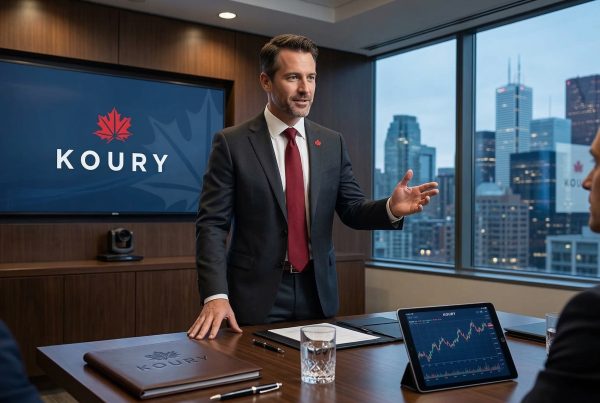
Koury Capital — Venture Capital Brand Identity & Institutional Credibility
Koury Capital — Venture Capital Brand Identity & Institutional Credibility

Hotel & Resort Branding Case Study – The Crystal – Koh Samui
Hotel & Resort Branding Case Study – The Crystal – Koh Samui

GGI Myanmar – B2B Industrial Brand & Market Repositioning
GGI Myanmar – B2B Industrial Brand & Market Repositioning

B2B Branding & Advertising Design for Advance Tyre – Industrial Marketing Case Study
B2B Branding & Advertising Design for Advance Tyre – Industrial Marketing Case Study

Cafe Brand Identity Design – The Hub Samui Case Study
Cafe Brand Identity Design – The Hub Samui Case Study
Trusted by Brands in B2B, Manufacturing, Industrial, Logistics, SaaS, Services, Consulting, F&B, Hospitality, Corporate & More

Quality Work
“Our customers are incredibly diverse, from families to healthy-eaters and vegans. We needed a brand that could speak to all of them. Highly Persuasive delivered a fresh, modern identity that perfectly captures our vibe. The new menu is a perfect example—it’s clearer, more appealing, and our average check size has increased by 15% in the 6 months since the rebrand.”
Hassan M, – Owner – The Hub Samui
Who We Work With
- Industrial, Manufacturing & Engineering
- Professional Services & Consulting
- Cross-Border & APAC B2B
- SaaS & Complex Technology
- Legal & Advisory
- Additional Sectors
Companies where the buyer is a procurement manager, operations director, or technical committee — not a marketing department. Where the sales cycle is long, the decision is risk-weighted, and the wrong choice has operational consequences that don’t just affect budget.
We help industrial and manufacturing companies close the gap between operational capability and market perception — rebuilding the commercial signal so procurement-level buyers in Western markets evaluate them as strategic partners rather than commodity suppliers. The specific challenge for ASEAN-based manufacturers and engineering firms targeting global buyers: the Procurement Trust Gap™, the documented dynamic by which Western procurement teams apply different credibility criteria to suppliers from outside their home markets before and after brand clarity signals are received.
What this means in practice: positioning strategy and messaging architecture that lands with procurement and technical committees, SEO and AI search built around the queries industrial buyers run at the evaluation stage, and proof architecture that reduces the perceived risk of choosing a supplier from outside the buyer’s established shortlist.
Consultancies, advisory firms, engineering services, legal practices, and technical services firms where the deliverable is expertise and the sale is a commitment to a working relationship — not a product.
The commercial challenge in professional services is asymmetric information: the buyer cannot evaluate the quality of the expertise before purchasing it, which means the decision relies disproportionately on trust signals, proof architecture, and the perceived risk of a wrong choice. Marketing that doesn’t address this directly — that describes what the firm does rather than building the trust that lets a buyer commit — fails at the most important stage of the evaluation.
We build the commercial environment that makes trust formation faster and more reliable: positioning that is specific enough to be credible, case studies structured for procurement-level evaluation, authority content that demonstrates expertise before the first conversation, and demand generation that brings the right buyers in at evaluation stage rather than awareness stage.
B2B companies selling into or out of ASEAN — with commercial targets in Western markets, buying committees distributed across time zones, or a brand built for one geographic context that needs to work in another.
The cross-border B2B environment creates specific commercial friction that domestic marketing strategies don’t address. Western procurement teams evaluate Asian suppliers through a different credibility lens before and after brand clarity signals are established. A company that is demonstrably capable in its home market may be categorised as a Tier 3 commodity supplier in a Western procurement evaluation — not because the capability is absent, but because the commercial signal hasn’t been built for the evaluation environment it’s entering.
HP’s cross-cultural positioning work addresses this directly. We build the brand environment — positioning, proof architecture, visual authority, and content — that closes the credibility gap before the first commercial conversation rather than trying to overcome it during the sales process.
Software and technology companies where the purchase is not self-serve, where onboarding involves security review, integration complexity, legal signoff, and multiple stakeholders across technical, commercial, and compliance functions.
The commercial problem: a buying committee where different members evaluate the same purchase against different criteria. The CTO evaluates technical fit. The CFO evaluates commercial risk. The operations team evaluates workflow disruption. The champion evaluates their own credibility for recommending the purchase. Marketing built for one of these audiences typically fails with the others.
We build the positioning and content architecture that addresses the full committee — without requiring a separate marketing strategy for each stakeholder. The commercial brief identifies the evaluation criteria across each audience, and the content and messaging architecture is built to satisfy all of them coherently.
Legal, Advisory & High-Stakes Services
Law firms, financial advisory practices, and high-stakes professional services where the purchase decision is driven by perceived risk rather than by feature comparison — and where trust, credibility, and the specific evidence of relevant prior experience are the primary commercial levers.
The challenge: most legal and advisory marketing describes services rather than building the trust that justifies the fee. A corporate law firm that says “experienced litigation team with international capability” is describing what every competitor also claims. The firm that demonstrates specific, credible experience in the buyer’s exact situation — sector, transaction type, jurisdiction, complexity level — is speaking to the evaluation criteria that actually determine selection.
We build the proof architecture, positioning specificity, and authority content that makes selection on the basis of genuine fit faster and more reliable — and that makes the fee conversation shorter because the value case is already established.
Highly Persuasive also works with property developers, non-profit organisations, food and beverage operators, and tourism businesses where the commercial challenge involves brand friction between what the organisation offers and how it is perceived by the buyers, donors, or guests it needs to reach. Engagements in these sectors follow the same Brand Gravity™ diagnostic framework as B2B work — the commercial physics are consistent across categories.
Frequently Asked Questions
1. What is B2B marketing and how is it different from B2C?
B2B marketing operates across a fundamentally different decision architecture. Where consumer purchases are often made by one person, in one session, influenced primarily by emotional and habitual triggers, B2B purchases involve multiple stakeholders, extended evaluation periods, asymmetric information between buyer and vendor, and decisions that carry professional risk for the individuals recommending them.
A procurement manager who recommends the wrong supplier for a critical operational contract faces committee accountability, operational disruption, and professional consequences. That asymmetry means B2B marketing cannot operate on persuasion alone. It must reduce perceived risk, build genuine credibility, and give buyers the evidence they need to defend their recommendation internally. Marketing built for the wrong driver consistently underperforms regardless of execution quality.
2. What services does a B2B marketing agency typically provide?
A strategic B2B marketing agency covers the full range of commercial inputs that determine how a business is perceived, evaluated, and selected by its target buyers. This spans brand positioning and messaging, which establish the commercial argument for selection; demand generation, which brings qualified buyers into the evaluation funnel; SEO and AI search, which build organic authority and ensure visibility at the commercial-intent stage of the buyer journey; paid search and paid social, which create immediate presence among in-market buyers; content strategy and production, which build topical authority and reduce buyer risk; conversion architecture, which removes friction from the evaluation and enquiry path; and sales enablement, which equips the sales process with materials that work in the buyer conversations the agency will never attend.
The distinction between a strategic B2B marketing agency and a tactical one is the sequencing. Tactical agencies begin with channels. Strategic agencies begin with the commercial brief — the positioning question, the buyer definition, the decision psychology — and then select and configure channels around that brief. The difference in output is measurable in pipeline quality, not just activity volume.
3. How long before B2B marketing produces results?
Different activities in a B2B marketing system operate on different time horizons, and conflating them is where most expectations go wrong.
Paid search produces qualified impressions immediately and qualified leads within days to weeks of a well-built campaign. Conversion architecture improvements — addressing the specific points where buyer confidence drops — typically produce measurable results within 30 to 60 days of implementation. These are the shortest-cycle improvements in any B2B engagement.
Organic search and content authority operate on longer cycles. A well-built SEO strategy producing substantive content across a commercial-intent keyword architecture typically produces material ranking improvement within four to six months and meaningful pipeline impact within six to twelve months. The important qualifier: authority compounds. A site that has built genuine topical credibility over twelve months accumulates ranking power that would require substantially higher paid media spend to replicate through other channels.
Brand positioning and messaging changes operate on the longest cycle. A repositioned brand begins producing commercial signals almost immediately in direct conversations, but its full commercial impact on pipeline, close rate, and pricing power accumulates over twelve to twenty-four months as the new positioning propagates across every buyer touchpoint. The Brand Gravity Momentum Session™ establishes a realistic timeline for a specific engagement based on the actual starting position.
4. How does B2B marketing differ when selling into Western markets from Asia?
There is a documented pattern in how Western procurement teams evaluate Asian suppliers — particularly in industrial, engineering, and professional services categories — that does not apply in reverse. Before clear brand signals are established, suppliers from ASEAN and broader Asian markets are systematically categorised at a lower credibility tier by Western buyers than their actual capability justifies. The credibility gap is not created by inferior capability. It is created by brand signals that do not match Western procurement expectations.
This is what HP calls the Procurement Trust Gap™ — the distance between the tier a company is actually capable of operating at and the tier it is perceived to operate at by buyers in its target markets. The commercial cost is direct: longer evaluation periods, more price sensitivity, more requests for references, and more frequent placement on the commodity shortlist rather than the strategic partner shortlist.
The specific interventions that close the Procurement Trust Gap™ are well-documented: positioning specificity that addresses Western procurement criteria directly, visual authority calibrated to the tier the company claims, proof architecture structured for due diligence rather than general interest, and content that demonstrates genuine expertise in the buyer’s specific problem rather than generic capability claims. These are not cultural adjustments — they are commercial signal adjustments. And they apply equally to companies operating in the reverse direction: Western companies entering ASEAN markets where local credibility signals differ from what performs at home.
5. What makes Highly Persuasive different from other B2B marketing agencies?
The starting point. Most B2B marketing agencies begin with channel selection — which platforms to use, what content to produce, what the campaign calendar looks like. Highly Persuasive begins with the commercial brief: who is the buyer, what are they evaluating, what decision psychology governs the purchase, and what does the brand need to prove before they will commit.
This sequencing difference determines what gets built. Marketing built on unclear or incorrect positioning produces activity. Marketing built on a correctly scoped commercial brief produces pipeline.
The second difference is the Brand Gravity™ framework. Rather than treating brand strategy, marketing, SEO, web design, and sales enablement as separate service lines, HP operates all of them as components of a single commercial system designed to produce the conditions in which qualified buyers arrive pre-convinced. The integration of these components, built around a coherent commercial brief, produces compounding returns that individual channels cannot produce independently.
6. How does B2B marketing differ when selling into Western markets from Asia?
There is a documented pattern in how Western procurement teams evaluate Asian suppliers — particularly in industrial, engineering, and professional services categories — that does not apply in reverse. Before clear brand signals are established, suppliers from ASEAN and broader Asian markets are systematically categorised at a lower credibility tier by Western buyers than their actual capability justifies. The credibility gap is not created by inferior capability. It is created by brand signals that do not match Western procurement expectations.
This is what HP calls the Procurement Trust Gap™: the distance between the tier a company is actually capable of operating at and the tier it is perceived to operate at by buyers in its target markets. The commercial cost is direct: longer evaluation periods, more price sensitivity, more requests for references, and more frequent placement on the commodity shortlist rather than the strategic partner shortlist.
The interventions that close the Procurement Trust Gap™ are consistent across sectors: positioning specificity that addresses Western procurement criteria directly, visual authority calibrated to the tier the company claims, proof architecture structured for due diligence rather than general interest, and content that demonstrates genuine expertise in the buyer’s specific problem. These are commercial signal adjustments, not cultural ones.
7. Should B2B companies invest in paid advertising?
Paid search and paid social both produce results when the underlying commercial brief is correct and the landing environment is built to convert the right buyers. Google Ads capture high-intent search at the moment of active evaluation. LinkedIn reaches decision-makers and buying committee members by role, seniority, and sector — audiences that will never find you through search because they are not yet searching. Both require the same foundation to perform: a clear positioning, a specific value proposition, and a landing environment where buyer confidence is built rather than lost.
The most common failure mode in B2B paid advertising is spending on channels before the positioning is clear. Traffic arriving at an unclear commercial proposition generates impressions and clicks rather than qualified enquiries. The Brand Gravity Momentum Session™ establishes whether the positioning foundation is in place before any paid media investment is committed.

Recent Clients
Built for high-trust, conversion-critical industries. Our work has increased revenue for B2B, hotels & resorts, SaaS, and real estate brands globally. Trusted in high-consideration markets where one click is worth > $1 k.















Let’s Make Your Brand Impossible to Ignore
The Strongest Brands Create the Buying Conditions Long Before the First Conversation Ever Begins
Reserve a 20-minute working session shows you what that looks like for your specific market position — and what the commercial opportunity is to get there. Your brand reviewed live by a senior strategist. Specific findings and a clear 90-day commercial priority path.
Related Services
→ Brand Strategy & Consulting — The commercial positioning foundation. → Brand Positioning & Differentiation — The territory the brand owns. → B2B Branding & Identity — Identity designed for industrial and commercial buyers. → SEO & AI Search — Organic authority for evaluation-stage queries. → Website Design & Conversion — The digital environment that converts serious buyers. → Brand Consulting & Advisory — Diagnosis before execution. → Brand Gravity™ System — The framework every engagement runs through.